The free lunch is over: Why the NATO we knew no longer exists
The cause of the NATO budget imbalance is longstanding, having been addressed by Democrats before. It is an electorally radioactive issue for anyone.
Published
There are times in history when the institutions that underpin the international order crumble. Another canary in the mine singing in vain, and so it goes. Looking back, the warnings were there and were ignored with impunity by the usual suspects. Russia's invasion of Ukraine was the first act of a severe crisis that ended up exploding with the war against Iran that started just a month ago. NATO is fracturing, and today no one can say how far the fracture is from terminal, but what was once a negotiable discomfort became a structural crisis. Objectives such as a shared purpose and defending the West seem to have lost all weight for European leaders. And while we do not know what the future holds for the alliance, we do know that nothing will be as it was before. It is the end of an era.
When the war in Iran began, the United States asked its European allies for minimal collaboration. No troops on the front lines. No declarations of war. In the case of the United Kingdom, for example, minimal use of the base on Diego Garcia in the Indian Ocean. The answer from Keir Starmer was a "no," accompanied by shameful excuses to protect the rights of the Iranian regime, which has not respected any rule of international law since its foundation in 1979, and which massacred tens of thousands of civilians protesting against the government. The British prime minister has a broken moral compass. During World War II, Britain would have perished against Germany had it not been for assistance with equipment, loans and, above all, American soldiers fighting on European soil to prevent Hitler's advance. This seems to have been forgotten. Starmer finally relented, but did so only after making sure that the U.S. and Israel had a lead that seemed to guarantee victory. That timing is no minor detail: it is the portrait of a man who speculated to get into the photo of the winning team. Starmer's fluctuations deserve a treatise on psychiatry.
Emmanuel Macron, as usual, came and went with words but remained at odds with Trump in actions. He called for the war to end as soon as it began without the objectives being met and launched thousands of plans and catchphrases that lasted less than 24 hours, displaying the natural penchant for surrender that characterizes the recent decades of his country. He publicly declared that France did not choose this war. The hypocrisy could not be more transparent; the alliance with Washington does not even deserve the passage of a plane through French airspace. Because that is precisely what happened: France prevented U.S. fighter jets on missions against Iran from flying over its territory. It was a very Parisian way of sticking a dagger into an ally while in the middle of a war.
But if there is a case that deserves separate analysis for its brazenness, it is that of Spain. Prime Minister Pedro Sánchez has spent a lot of effort building his foreign image on his confrontation with Trump. That strategy is useful to him at home, where he is cornered by corruption scandals surrounding his family and his inner circle, and with meager electoral results that lead him to seek the applause of the international far left. Sánchez not only rejected the new agreed defense spending target in NATO, he did not respect the previous one either. He closed national airspace to American aircraft operating against Iran, and denied the use of the Morón and Rota facilities. The internal logic of Sánchez's calculation is understandable. What is hard to comprehend is that anyone believed that such a gamble would have no consequences.
Canadian Prime Minister Mark Carney added to the cowardice among allies with an even more brazen move: first he spoke out in favor of overthrowing the Iranian regime, then retracted when the diplomatic pressure tightened. In the end, Iran's greatest allies were not in Tehran but in European capitals. What unites Starmer, Macron, Sánchez and Carney is not only cowardice, but the inability to point out the enemies of Western civilization and recognize the allies who struggle to sustain it. They ignore even the fact that the regime they are asking not to provoke is the same one that massacred its own people when they came out to demand freedom. Their misery has a cost in lives.
NATO was built on the foundation of an implicit security contract of a cohesive Western bloc presenting a common front in the face of threats. But changes in member administration, membership, economics, politics and ideology have distorted that contract. U.S. presidents, both Republican and Democrat, have been requesting, each in their own ways and with their own agendas, greater commitment from Europe in military investment. And they all failed.
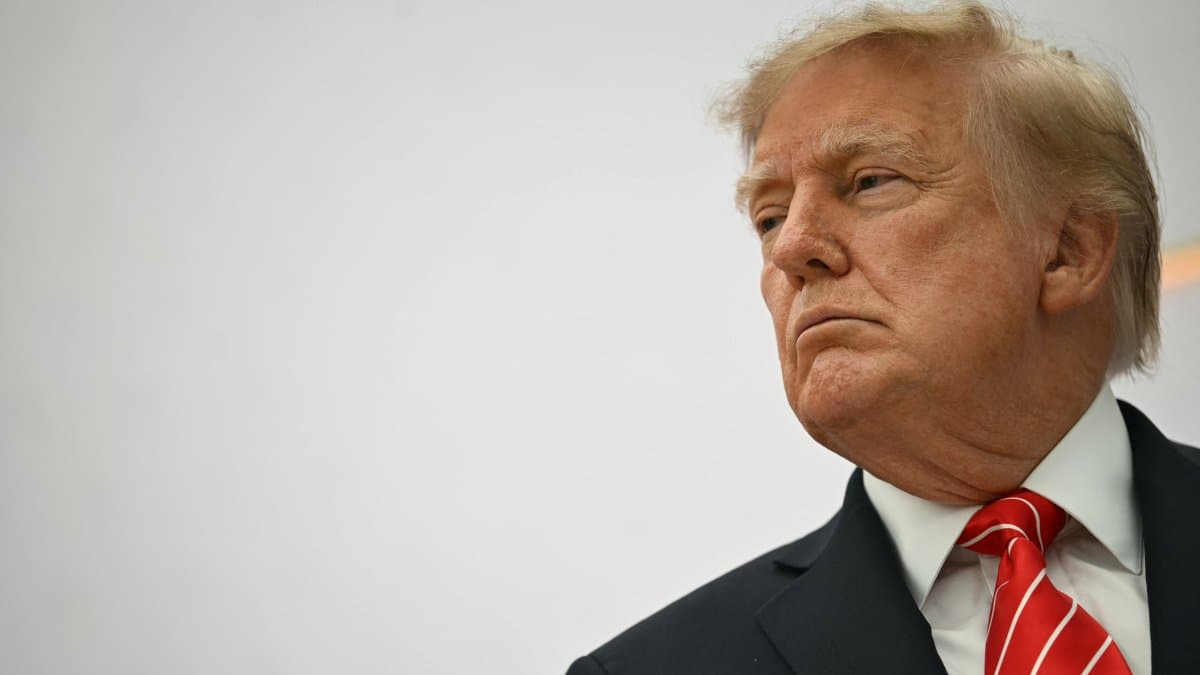
This call became louder with the war in Ukraine, but even with a criminal invasion on their own continent, European leaders barely budged. Some did so with good manners and empty promises, and others directly challenged America's patience. The war against Iran ended that fiction. When Trump asked for support to reopen the Strait of Hormuz, no European ally committed. Trump warned that would be very bad for the future of NATO. It was not a rhetorical threat.
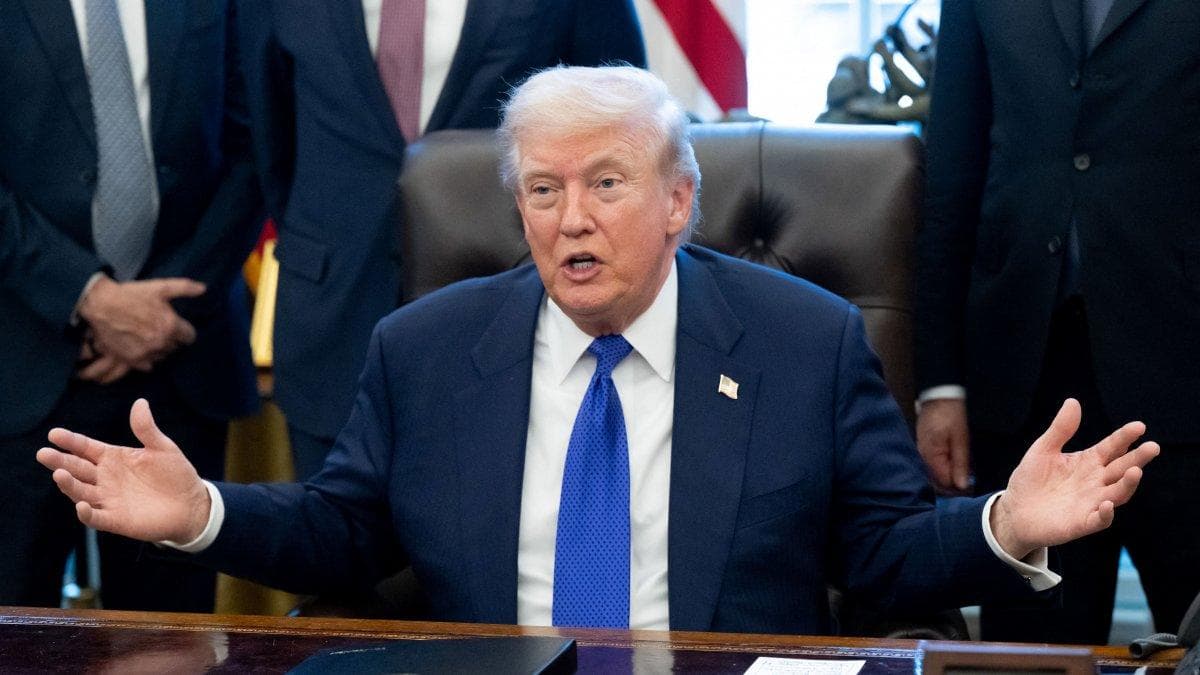
Trump has not just echoed this same complaint. He has taken it to a new level as a logical and legitimate consequence: he has posed the question of whether the U.S. is adequately served by this state of affairs. The fantasy cannot be sustained. That is why Trump is no longer discussing budgets, he is discussing whether NATO makes sense. The question shocks those who have been abusing the situation for decades, but if the United States is committed to Europe's security with troops, intelligence sharing, etc., the least it can expect is reciprocity when its interests are at stake elsewhere in the world.
Politics
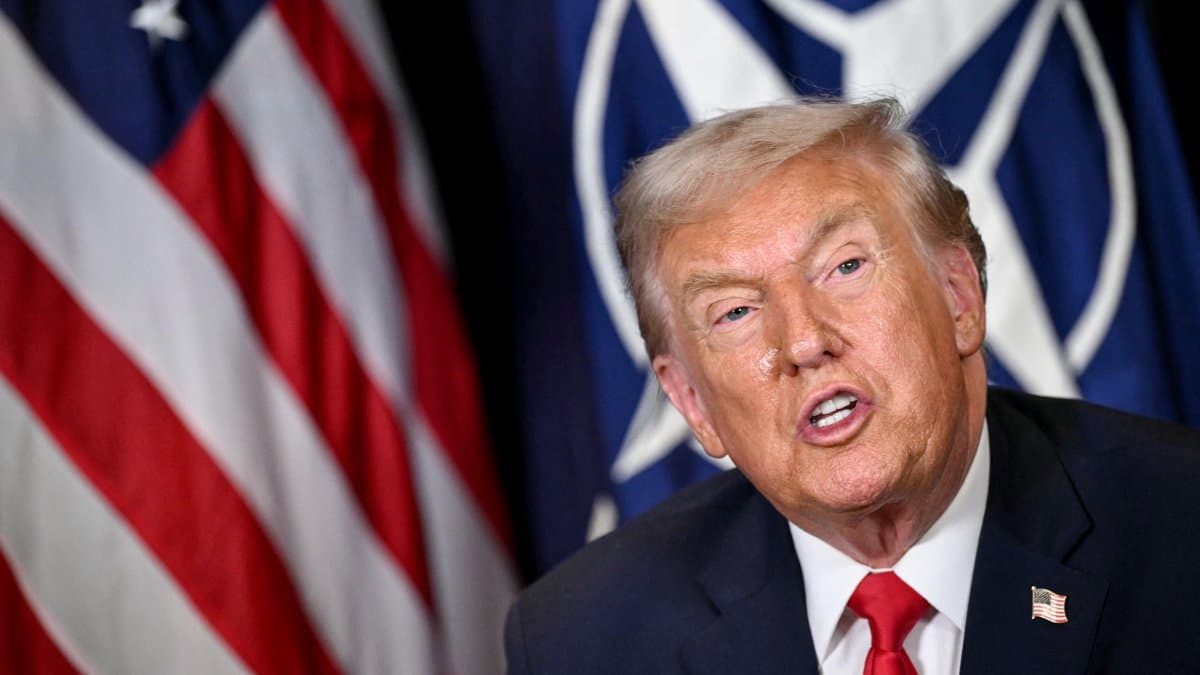
Trump threatens to pull US out of NATO: 'I always knew they were a paper tiger'
Carlos Dominguez
European leaders may no longer fear Trump, after all, he has half a term left and cannot be reelected. Perhaps they calculate that if they can hold out for two years, a new White House tenant will wipe the slate clean on current disputes. But that is unlikely to happen if the one to succeed Trump is Vance or Rubio. So is Europe openly betting on the Democratic Party? It wouldn't be the first time, but the bet is risky. The cause of the NATO budget imbalance is longstanding, having been addressed by Democrats before. It is an electorally radioactive issue for anyone.
But furthermore, openly defying Trump thinking that he cannot leave NATO in the remainder of his term is as obtuse as the rest of the decisions that European leaders have been making. Trump does not need to formally withdraw from NATO to empty it of content. He can reduce Europe's troops to insignificance, reduce or delay funding just as the rest of the members do, and countless other shortcuts. A NATO without real commitment from the U.S. is a fictitious NATO.
The problem is that, while Europe speculates banally, it remains unable to defend itself. Polls show that Europeans are nowhere near ready to go to the front to defend their own borders, let alone those of a neighboring country. The continent's armies were drastically reduced at the end of the Cold War, convinced that history had ended. Recall that no alarm bells went off when Vladimir Putin annexed Crimea in 2014. Why didn't they anticipate Russia's next move if it was so obvious? Clearly, short-term thinking and speculation are not good advisors. Now, some have been trying to rearm for just over three years, but dependence on the United States remains intact. The European Union being able to defend itself would take years and a set of budgetary decisions that none of its member states wants or can afford.
That is why the war against Iran has been a test to see if, even if they were defiant with the budget, at least they shared values and strategic objectives. And here, too, Europe has been a resounding disappointment. The attitude of the vast majority of European leaders and politicians towards Israel has been shameful. For a good part of the European elite, the Holocaust has ceased to be a warning of what happens when hatred against Jews is allowed to grow with impunity.
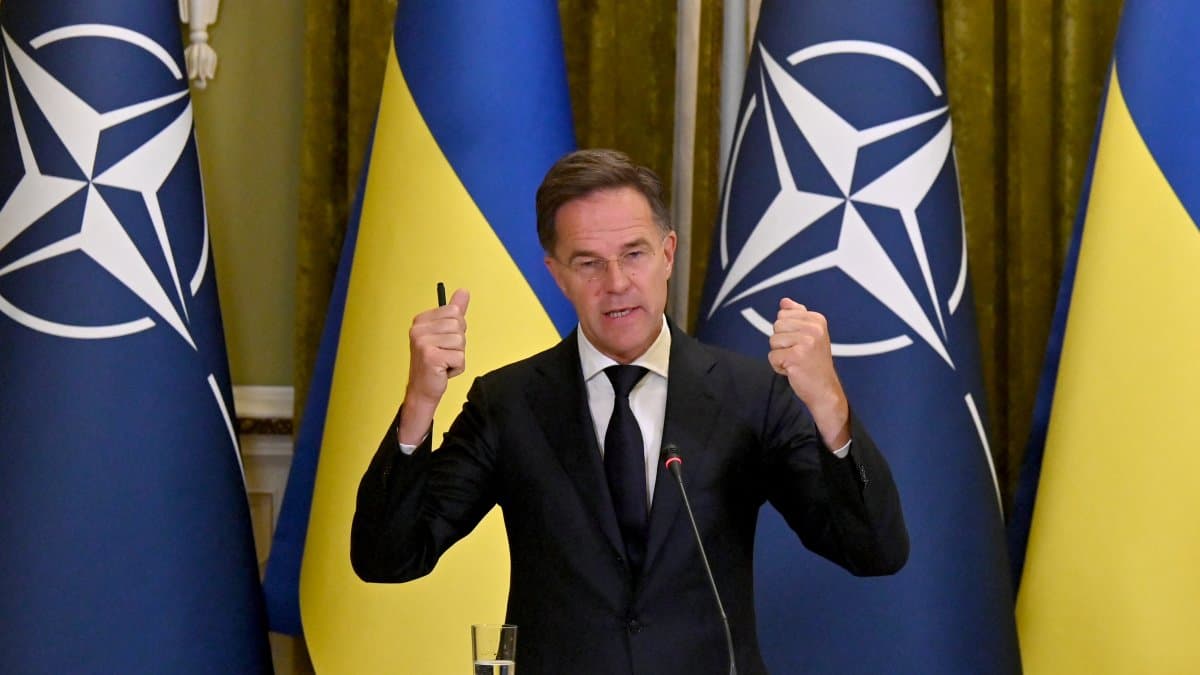
There is something deeply dishonest in the moralistic and do-gooder excuses on the part of leaders who failed to articulate meaningful condemnations for Iranian terrorist activities in the Middle East, Africa and Europe. Iran has openly executed political prisoners. It has imprisoned, tortured and murdered women whose only crime was to demand the same rights as Western women. It has funded Hezbollah, Hamas and the Houthis. It has ordered fatwas on European soil and has openly rejoiced in the death generated by the attacks it promotes. The regime now being the legal reference point for European leaders shows the extent to which "international law" has been twisted to protect the most heinous criminals.
The fate of NATO will remain unclear in the midst of this current turmoil, as will the ways that European public opinion will fluctuate after the war. But we can see that the NATO we knew isn't coming back. The accumulation of contempt, disputes, resentment, diplomatic failures and short-sighted calculations is going to end up reconfiguring the alliance. What lies ahead requires something that current European leaders have shown to be in short supply of: a willingness to take on real costs for real commitments.
What is clear is that the free lunch is over. And those who don't get it in time will pay the most expensive bill.
🛠 Do you think there is an error in this article?
Recommendations
LATEST