Minnesota: when the welfare state becomes a looting machine
House Republicans have launched investigations into Democratic Gov. Tim Walz's tenure, and the Treasury Department is examining whether public funds ended up financing Al Shabaab, the Al Qaeda affiliate.
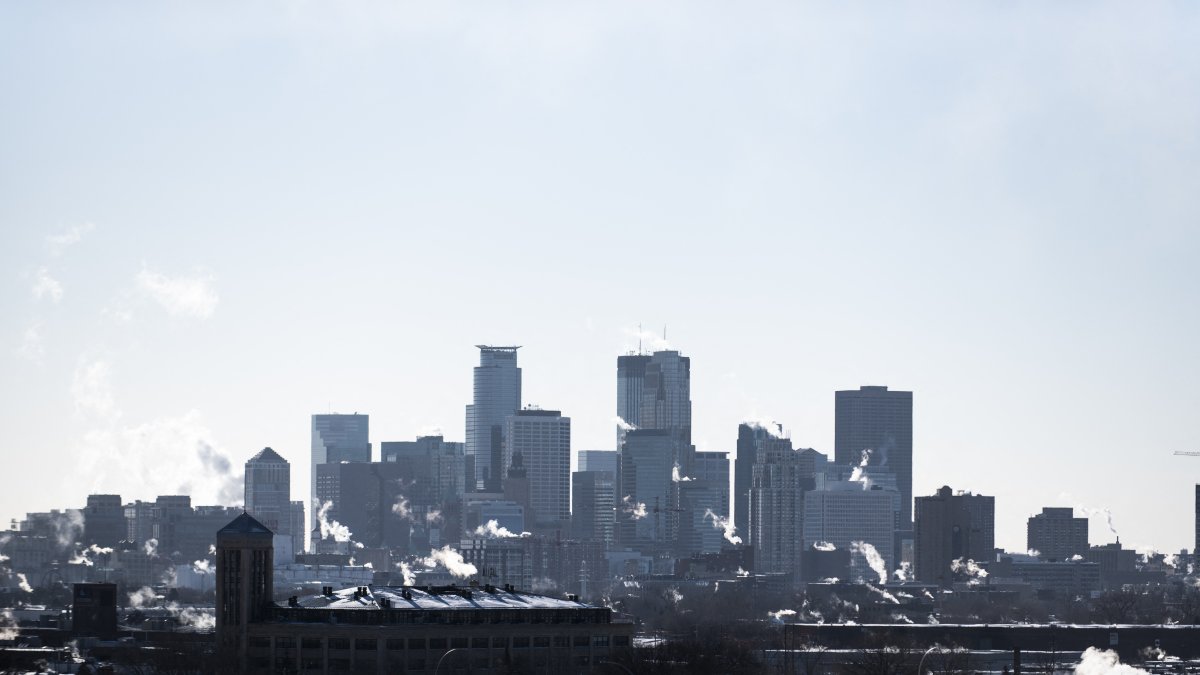
A view of the city skyline on January 30, 2019 in Minneapolis, Minnesota.
The corruption scandal engulfing Minnesota is neither surprising nor an unfortunate set of isolated cases. It is the logical and predictable culmination of a social experiment that has reached its tipping point. For decades, this experiment was presented as living proof that the Welfare State endured any level of expansion on the promise that it could efficiently manage the massive redistribution of resources. Today, that utopia is blowing apart.
Obfuscated by the data that keeps revealing itself, the president has described Minnesota as a hub of fraudulent activities, and although the phrase sounds like hyperbole, the numbers back up his accusations. We are faced with a vast and systematic looting, facilitated by a political class that, the least it can be accused of is incompetence, although it is very difficult to think that it was not mostly complicit. With the vileness of using compassion as a masquerade, it opted for paralysis and complacency rather than accountability.
House Republicans have launched investigations into the Democratic governor's Tim Walz tenure, and the Treasury Department is examining whether public funds ended up financing Al Shabaab, the Al Qaeda affiliate. Meanwhile, federal prosecutors continue to file new charges against dozens of alleged fraudsters. The magnitude of the disaster is such that even the media most committed to defending the Democratic Party can no longer ignore it, and the implications transcend Minnesota to become a warning about the institutional, economic and political future of any state that follows this path.

Just The News
Small Business Administration pauses grants for Minnesota amid fraud scandal
Misty Severi
'Feeding Our Future': The parable of institutionalized fraud
Three years ago, federal prosecutors filed the first charges in what they described as the largest pandemic fraud in the United States. The hundreds of millions of dollars scheme, which now includes more than 75 defendants, revolved around a nonprofit organization called Feeding Our Future that partnered with the Minnesota Department of Education and the federal Department of Agriculture to distribute meals to needy children.
The mechanics of the fraud were puerile. During the pandemic, according to the indictment, Feeding Our Future and its affiliated distribution centers submitted false tally sheets and fabricated invoices to make authorities believe they had distributed food to thousands of children, which they had not. It is estimated that, presumably, this mafia collected millions in administrative fees for phantom distributions and received kickbacks from those running the centers.
The numbers should have set off all the alarms: Feeding Our Future grew from receiving $3.4 million in federal funds in 2019 to nearly $200 million in 2021. Exponential growth in two years. In any serious institution or competitive market, such an explosion would have triggered exhaustive audits. But in Minnesota's public spending paradise, these figures were processed without further scrutiny. Why wasn't this scandal uncovered sooner? Why wasn't the boondoggle headlined in the last presidential campaign, in which, by the way, the biggest culprit "politically speaking" intended to become vice president? Moreover: how didn't Kamala Harris do a little research before choosing such a profoundly incapable vice presidential candidate?
Why wasn't this scandal uncovered sooner? Why wasn't the gaffe headlined in the last presidential campaign, in which, by the way, the biggest culprit "politically speaking" intended to become vice president? Moreover: how did Kamala Harris not do a little research before choosing such a profoundly unfit vice presidential candidate?
An investigation by the Legislative Auditor's Office concluded that the Minnesota Department of Education generated opportunities for fraud by failing to act on obvious red flags or investigate complaints. But the reason for this paralysis is telling: officials were afraid of Feeding Our Future because to previous attempts at oversight it responded by accusing complainants of racial discrimination and depriving needy children of food.
Herein lies a key issue regarding the Welfare State, its overstretch tends toward the infinite, and the do-gooder narrative that sustains and justifies it generates perverse incentives that render it incapable of defending itself. The accusation of racism became an impenetrable shield against any scrutiny and public officials chose the path of least political resistance as tens of millions evaporated.
Feeding Our Future exposed a cascade of systemic vulnerabilities in Minnesota. Recently, a program designed to help seniors and people with disabilities find housing was shut down after large-scale fraud was "discovered" and federal prosecutors charged eight people with defrauding the program by signing up as providers and submitting millions in false and inflated bills. Spending on the program soared to more than $100 million last year, despite initial estimates that it would cost about $2.6 million annually. A mammoth increase that apparently generated no serious review until the collapse was inevitable.
But the most perverse case is that of services for children with autism. Medicaid claims related to autism in Minnesota experienced growth that defied all medical logic. Simultaneously, the number of care providers for children with autism in the state grew from 41 to 328 in a short period. Allegedly bribes were paid to parents who agreed to enroll their children as autistic, inventing businesses that operated in dilapidated premises, if they operated in an actual physical location at all. Many in the Somali community established their own treatment centers, citing the need for "culturally appropriate programming." By the time the fraud scheme was discovered, it was reported that one in 16 Somali four-year-olds had been diagnosed with autism, a rate that can only be explained by fraudulent diagnoses and a sickening lack of scruples.
YouTuber Nick Shirley documented this shamelessness by visiting centers that received millions to care for children but showed no signs of activity. The Quality Learning Center in south Minneapolis hadn't even spelled its name correctly on the sign. When Shirley approached, a woman shouted "Don't open," claiming they were ICE agents. Dozens of fraud scandals have emerged since Walz has been governor. The most recent estimate suggests billions of dollars may have been stolen. Systematic looting.
The issue that most of the people charged in these cases are from the Somali community has become an inconvenient truth. Some media have explained that this is because fraudsters often take advantage of the community's ignorance and lack of integration to recruit friends and family into their fraudulent schemes. Apparently, fraud networks leverage clan loyalty structures to their advantage.
The scam networks have cultivated close ties with officials. Several people involved reportedly were donors or activists for Rep. Ilhan Omar, the Somali congresswoman from Minneapolis whose wealth also also experienced exponential growth. Omar's deputy district director, Ali Isse, advocated for the questioned programs. Omar Fateh, a former state senator who recently ran for mayor of Minneapolis, lobbied Governor Walz to support them. One of the defendants, Abdi Nur Salah, was a senior advisor to Minneapolis Mayor Jacob Frey. Are we paying attention yet?

Society
ICE arrests more than 400 criminal illegal immigrants in Tim Walz’s Minnesota sanctuary
Diane Hernández
Al-Shabaab: does the welfare state fund terror?
But what elevates these frauds from a fiscal scandal to a national security crisis is the fate of the stolen money. Scott Bessent, announced that his department will investigate whether funds from Minnesota public assistance programs made their way to Al Shabaab, the Al Qaeda affiliate in Somalia. These allegations have circulated for years. Somali fraud rings have sent huge sums of remittances from Minnesota. In 2023 alone, the Somali diaspora sent $1.7 billion to Somalia, a sky-high figure when compared to the Somali government's budget for that year. Some of this money would have been directed to Al-Shabaab through a network of "hawalas," informal clan-based money brokers.
Federal law enforcement has long considered the Minneapolis neighborhood of Little Mogadishu a hotbed of terrorist recruitment. In 2015, a Homeland Security task force report revealed that Minnesota led the country in the number of Americans who had joined or attempted to join ISIS. Of those Americans who did so, nearly half came from Minnesota. In this context, Trump announced the end of temporary protections against deportation for Somalis, claiming that gangs are terrorizing people and Somalia is today one of 19 countries facing near-total travel bans and suspension of immigration applications.
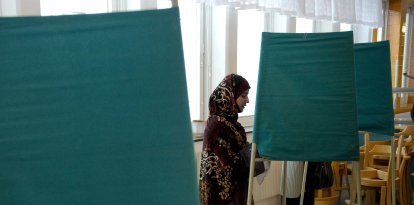
But there is one dimension that compounds the connection of all these elements: the manipulation of the electoral system to perpetuate fraud. Under the current regulations, Minnesota has drastically raised the bar on the "vouching" mechanism, now allowing a single registered voter to vouch under oath for the eligibility of eight other individuals, who are automatically exempt from presenting identification or proof of address to vote. The gravity of the mechanism escalates exponentially in the clause for residential facilities such as nursing homes or shelters, where the law eliminates any numerical cap for accredited personnel, granting a single employee the legal power to validate the identity and residency of an unlimited number of occupants without them showing a single document.
The design institutionalizes a rampage that allows activists or politicized personnel to legally cast hundreds of votes with no real documentary oversight. In a state where protection system fraud has been documented on a massive scale, where sham companies operate from fictitious addresses, and where community-tribal networks have demonstrated the ability to coordinate multi-million dollar scam schemes, this electoral system is an open invitation to electoral fraud. If the State cannot protect its social programs it could not protect the integrity of its elections either.

The Global Pattern: Sweden, Ireland and replicated failure
Minnesota is not an isolated case but a pattern that is replicated wherever welfare states collide with immigration from cultures with radically different values and norms. Welfare fraud is not an immigration problem per se. It is its overreach and ideology that necessarily leads to its corruption and political use.
In Sweden, $375 million in welfare funds were siphoned off by foreign criminal gangs. A government investigation has revealed how the Swedish welfare state has been hijacked by criminal gangs who have been receiving state aid for years, from bogus sickness benefits to unemployment benefits, financing their empires of drug trafficking, extortion and brutal violence. More than $100 million was stolen by imams linked to the Muslim Brotherhood who ran private schools and kindergartens before fleeing the country. And, oh coincidentally, some of the money went to sex clubs in Somalia according to an investigation by the Expressen newspaper.

In Ireland, an investigation into child care centers revealed that 7 of the 10 highest paid companies responsible for caring for vulnerable children are operated by African or Muslim immigrants, with forged documents used to obtain sums of up to €1 million per year per child. The common denominator is the structure: Welfare States designed under premises of high social trust, applied to populations with primary loyalties external to the State, administered by useless, polarized and do-gooder bureaucracies.
This is what happens when a tribal mentality meets an arrogant, guilt-ridden bureaucracy full of prejudices and fancy beliefs for which it forces the sacrificing taxpayer to pay. Every dollar the state extracts in taxes can be captured, diverted, stolen. Every new program is an additional opportunity for fraud. Every bureaucratic layer is another instance where corruption can flourish without consequence.
Progressivism produces not social justice but systemic corruptionand the erosion of the civic norms that make the democratic system possible. A small state, with low taxes, that does not pretend to manage the lives of citizens does not generate the conditions for massive fraud. The lesson is that as long as taxpayers' money and the incentives to usurp it exist, there will always be someone willing to take it. It's the welfare state, stupid.
LATEST