Mexico: embattled Sinaloa governor, accused by the US of protecting the Sinaloa Cartel, returns to office after months-long absence
Rubén Rocha Moya is the highest-ranking official from Morena, the ruling left-wing party, to be accused by U.S. authorities of collaborating with drug traffickers. Manhattan prosecutors charged him in April, along with nine other current and former Sinaloa officials—including a sitting senator—with participating in a network that helped the Sinaloa Cartel smuggle drugs into the United States in exchange for political protection.
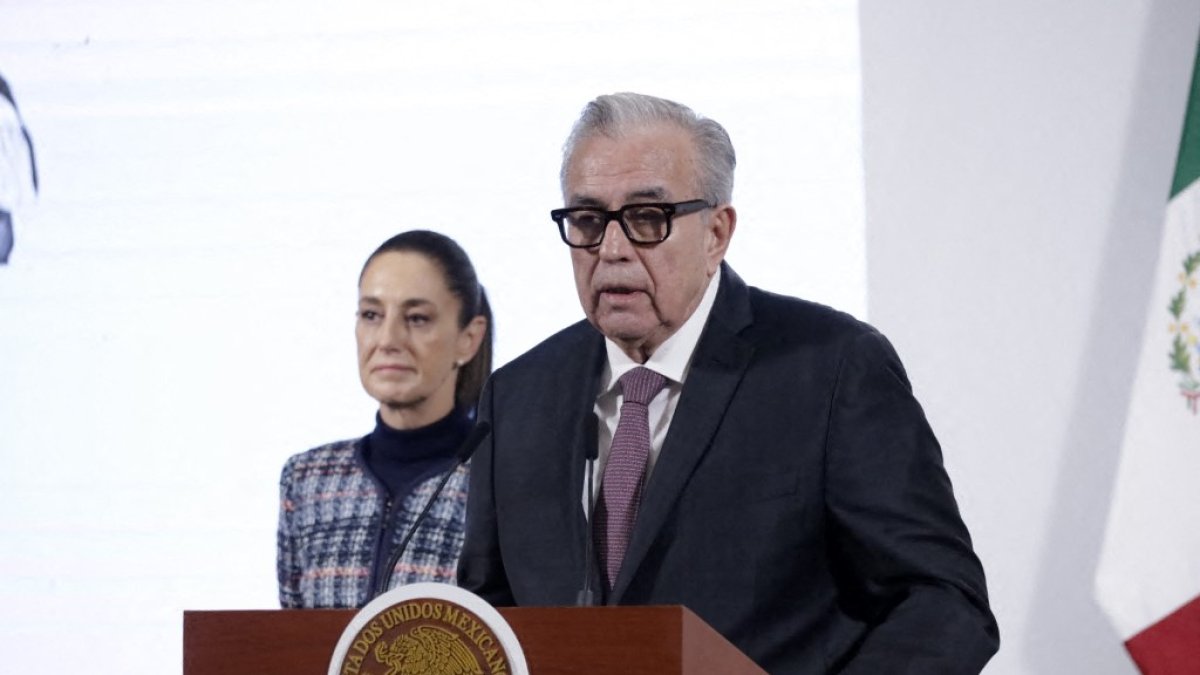
Rubén Muñoz Rocha in a file photo alongside President Claudia Sheinbaum

The governor of Sinaloa, Rubén Rocha Moya, announced Friday that he had resumed his duties as head of the state, ending a three-month leave of absence he had taken after being accused by U.S. prosecutors of protecting the Sinaloa Cartel in exchange for bribes and political support.
Far from resolving the legal matter and the resulting uproar, his return has reignited tensions both within his own party and with the U.S. government.
"I am returning to fulfill my duties as governor of Sinaloa with a clear conscience, with my head held high, and with the strength of the truth on our side," Rocha wrote in a lengthy social media post. The 77-year-old governor asserted that the Mexican Attorney General's Office investigated the allegations against him for 112 days and found no evidence against him. "There is no evidence to support our involvement in any criminal conduct. I have not committed any crime."
Rocha is the highest-ranking official from Morena, the ruling left-wing party, to be accused by U.S. authorities of collaborating with drug traffickers. Manhattan prosecutors charged him in April, along with nine other current and former officials from Sinaloa, including a sitting senator, with participating in a network that aided the Sinaloa Cartel to smuggle drugs into U.S. territory in exchange for political protection. The governor attributed the accusations to "political and interventionist motives of the national and foreign right."
Rocha's return did not go over well even among his own ranks. The influential Morena legislator Ricardo Monreal called on the governor to take another leave of absence while the investigation continues, and the party publicly distanced itself from the announcement, saying it had no prior knowledge of the decision and remains committed to "due process" and accountability.
Criticism also came from the opposition. Jorge Álvarez Máynez, a former presidential candidate and leader of Movimiento Ciudadano, called the return a day of "national shame" and lashed out on social media at the governor of Sinaloa: "The cynicism and impunity embodied in this message make a mockery of our country."
Analyst Carlos Pérez Ricart, an expert on organized crime at the Center for Economic Research and Teaching, stated on social media that this is a "serious political mistake."
"It is one thing to reject Washington's dictates of guilt, and quite another to assume that Rocha retains the authority to govern Sinaloa. Governing requires more than just criminal innocence; it requires political authority," he wrote.
President Claudia Sheinbaum, also of Morena, did not immediately comment on Rocha's return; she canceled her morning press conference on Friday due to the flu, although in the past she has insisted that her government is not protecting the governor and has demanded that Washington provide more evidence to support the case. Since the accusation became public, the Mexican Foreign Ministry has maintained that the extradition request lacks sufficient evidence, while the Ministry of the Interior described Rocha's return as "a personal decision," clarifying that the Mexican prosecutor's investigation remains open.
The case has strained bilateral cooperation at a time when both governments were seeking to deepen their joint fight against the cartels.
In May, the New York Times reported that U.S. federal prosecutors were instructed to apply anti-terrorism laws against Mexican officials suspected of complicity in drug trafficking. So far, at least two former officials from Sinaloa have been arrested in this crackdown: Gerardo Mérida Sánchez, former head of state security, turned himself in to authorities in Arizona in May, while Enrique Díaz, a former finance official, was arrested in Europe.
Upon returning to office, Rocha also regained the constitutional immunity granted to him by his status as governor-elect, according to experts consulted by the NYT. The governor explained that he requested a leave of absence to cooperate with the Mexican investigation as an "ordinary citizen," without immunity, and said he answered "truthfully" before the prosecutor's office.
Despite the backlash his return generated, Rocha appeared determined to complete his term. On Friday, he confirmed that he had not only resumed his post but also intended to serve out his term through October 31, 2027.
LATEST