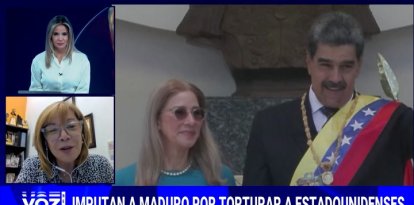
'Chavismo made torture its primary state policy': Venezuelan political prisoner welcomes charges against Maduro, demands justice for victims
Saleh stated that torture was one of Chavismo's main tools of repression and emphasized the importance of ensuring that these crimes are brought to justice.
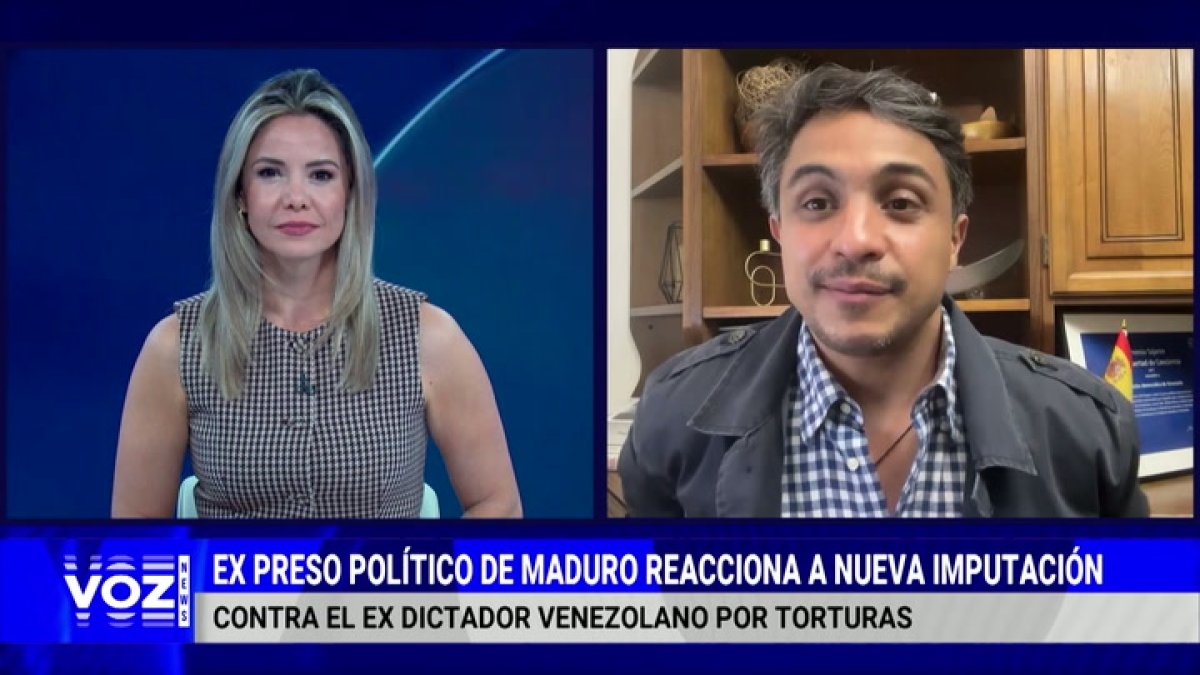
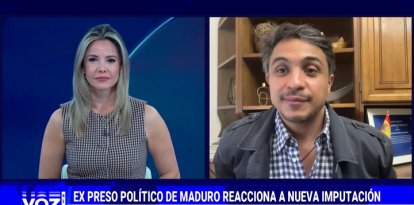
Lorent Saleh on Voz News.

Venezuelan human rights activist and former political prisoner Lorent Saleh welcomed the new charges against Nicolás Maduro and his wife, Cilia Flores, for conspiracy to commit torture, and argued that the dictator must be held accountable for the crimes against humanity attributed to his regime. During an interview with "Voz News," conducted by Karina Yapor, Saleh stated that torture was one of the main tools of repression used by the Chavista regime and emphasized the importance of ensuring that these crimes are brought to justice. "I am very pleased about this, because I also mentioned it in many interviews after Jan. 3: I certainly welcomed the operation to capture the narco-dictator Nicolás Maduro for narcoterrorism, but Nicolás Maduro and the government — the Venezuelan regime — had to be tried for serious crimes against humanity, especially for torture. If anything characterized the regime of narco-dictator Nicolás Maduro, it was torture. They made torture their primary state policy," he asserted.
Saleh, who spent more than four years detained without trial and was tortured in detention centers such as La Tumba and El Helicoide, recalled that he was kidnapped in Colombia and forcibly transferred to Venezuela. "One of the key points is that Nicolás Maduro's regime operated transnationally, as was the case with me. They kidnapped me in Colombia and then held me in La Tumba for several years and in El Helicoide. Everything was well documented. Those were terrible years," he recounted. He also explained that his case prompted protective measures from the Inter-American Commission on Human Rights and statements from the U.N., though he insisted that he was just one among thousands of victims. "I was held for four years, and they never put me on trial — never — not even a preliminary hearing," he noted.
The activist emphasized that the indictment holds personal and familial significance, as he wants his children to learn about what happened in Venezuela through judicial decisions. "It means a lot to me as a father — not just as a victim, but as a father — because I want my children to know what happened. Not just from what I tell them, but for it to be established by a court," he stated. He also expressed gratitude for U.S. support for Venezuelan victims and acknowledged the role of the Donald Trump administration. "I'm not the biggest fan of the U.S. government, but as a victim and as a Venezuelan, I give credit where credit is due. And today I'm grateful for the work that Marco Rubio, in particular, is doing," he added.
Regarding Venezuela's future, Saleh urged that the transition not be limited to the release of political prisoners and called for profound institutional changes. "Not only must all political prisoners be released, but something fundamental that is currently being worked on is the restructuring of the Supreme Court of Justice, the depoliticization and the liberation of institutions," he maintained. He also called on Venezuelans to remain hopeful: "Let's not lose faith; let's not lose hope, because it will be achieved — change is already taking place." In his view, before setting an election schedule, it is necessary to depoliticize the judiciary, elect a new National Electoral Council and allow the return of those in exile and those who have been persecuted.
You can watch the full interview by clicking on the video below.
LATEST