Hurricane Isaiah Leaves at Least Four Dead as It Passes Along the U.S. Coast
The NHC forecasts that Isaias will move north and then north-northeast over the weekend, gradually dissipating as it crosses the Tennessee and Ohio valleys.
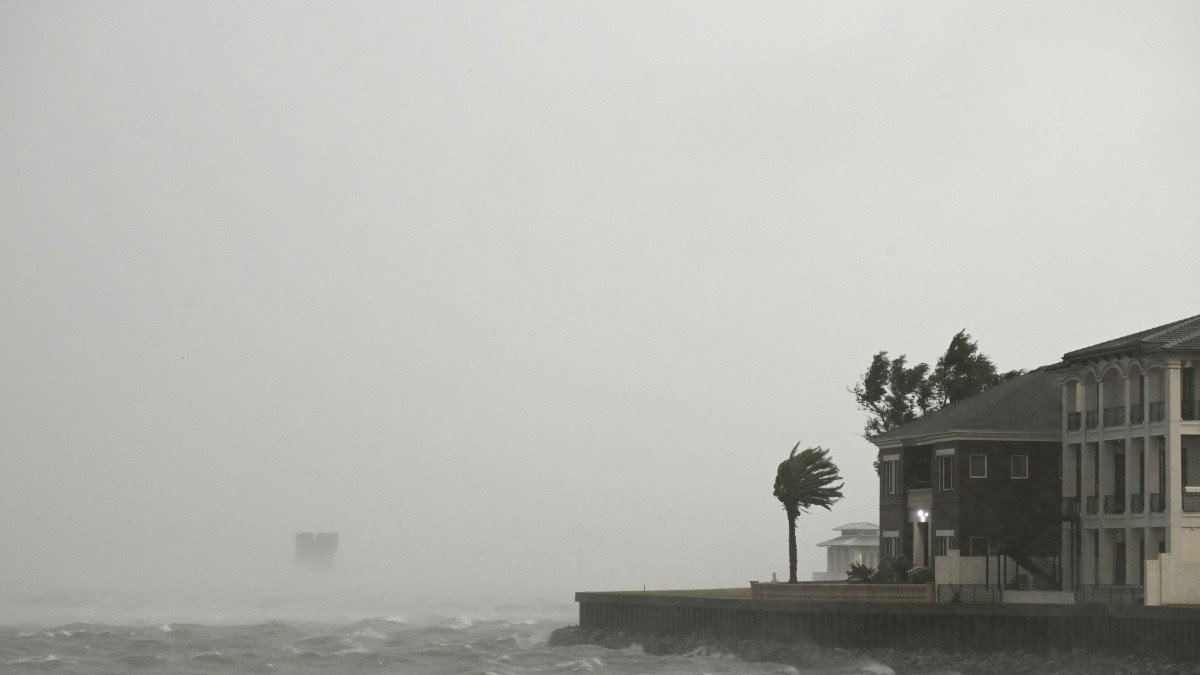
A house is battered by strong winds and storm surge from Hurricane Isaiah in Pensacola, Florida

(AFP) Hurricane Isaias, which was downgraded to a post-tropical cyclone on Saturday, left at least four people dead after making landfall on the U.S. coast of Gulf of Mexico with heavy rain and strong winds.
Isaiah weakened after making landfall Friday night near the resort town of Destin, Florida, as a Category 2 hurricane on the 5-point Saffir-Simpson scale, with maximum sustained winds of 165 km/h.
It is the first hurricane of an Atlantic season dampened by a historic El Niño phenomenon.
"Isaiah has weakened very rapidly over Alabama and has become a post-tropical cyclone," reported the U.S. National Hurricane Center (NHC).
In Florida, a woman died after a tree fell on her house, and another man died in his garage while a generator was running, Escambia County authorities announced.
Meanwhile, the governor of Alabama, Kay Ivey, confirmed the deaths of two people in that state.
More than 600,000 households were without power on Saturday afternoon along Isaias' path through Florida, Alabama, and Georgia, according to the PowerOutage.com tracker.
Near the area where the hurricane made landfall, there were overturned trucks, damaged gas stations, and fallen trees, an AFP reporter observed. In addition, strong winds ripped the roofs off several properties.
The NHC forecasts that Isaias will move north and then north-northeast over the weekend, and will gradually dissipate as it crosses the Tennessee and Ohio valleys.
However, the storm could still bring heavy rain to the northwest coast of Florida, southern Alabama, and Georgia, the agency said.
"I couldn't sleep at all"
The governor of Florida, Ron DeSantis, warned that residents are not completely out of danger.
It is "likely" that water levels will continue to rise in some areas, with total rainfall expected over the weekend ranging from 10 to 20 centimeters, he said at a press conference on Saturday.
In the town of Mary Esther, near where the hurricane made landfall, several residents were clearing debris from their properties.
"I couldn't sleep at all. This morning I woke up and saw the fence down, the banana tree down—everything was destroyed," Tim Pham, 64, told AFP.
"We took shelter, went to the center of our house, did what we had to do, and fortunately, we're on the other side," said Matt Howard, 38.
Isaiah was the first hurricane of the Atlantic season and the first to make landfall on the mainland of the United States since Milton in 2024.
Hurricane season in the Atlantic, which begins in early June and lasts through late November, has been unusually quiet this year due to the El Niño climate phenomenon.
By altering large-scale atmospheric circulation, El Niño tends to suppress cyclones in the Atlantic and intensify them in the Pacific, where several hurricanes have formed this year, including Polo, which reached Category 5.
Several states bordering the Gulf of Mexico, including Florida and Alabama, declared a state of emergency and ordered evacuations beginning Thursday.
Nearly two-thirds of the region's oil production and more than half of its gas production were suspended on Friday, according to a U.S. agency.
To address the situation, the Department of Energy authorized the release of up to four million barrels of crude oil from its strategic reserve to offset the impact of the severe weather.
LATEST