Rubio calls on the entire Venezuelan opposition to join the dialogue with Chavismo
The U.S. Secretary of State confirmed that the next round of negotiations with Delcy Rodríguez's government will begin on October 14. Washington seeks to move toward elections with democratic safeguards, while differences persist among opposition factions and María Corina Machado remains on the sidelines of the process.
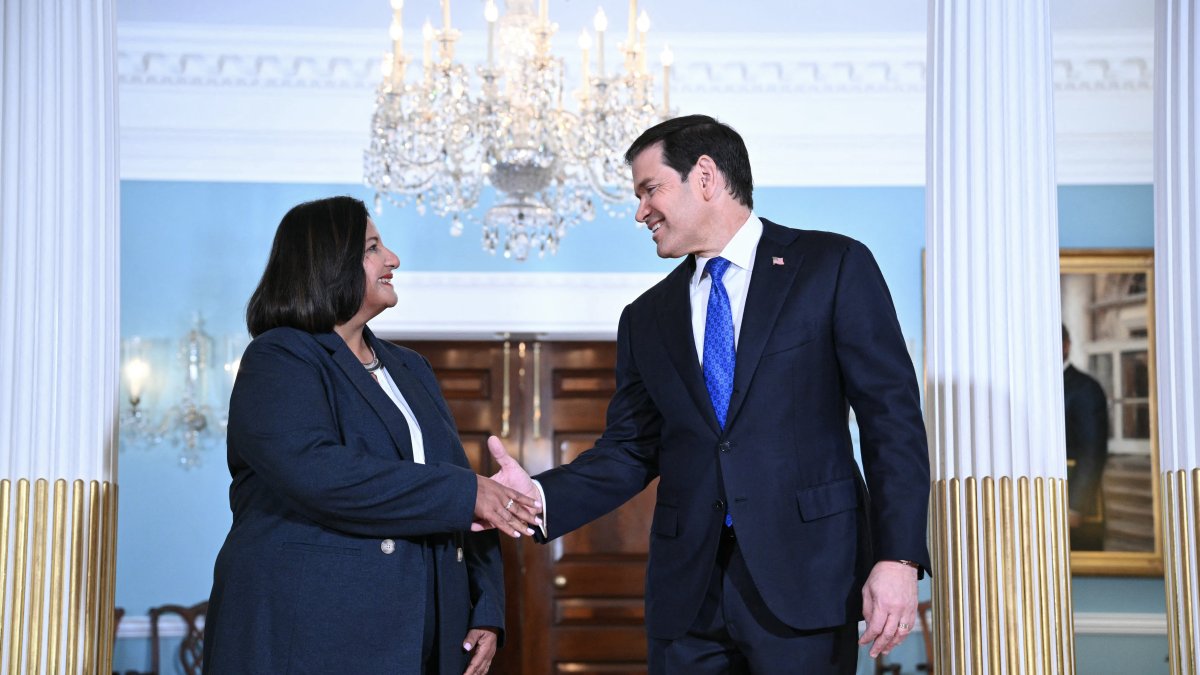
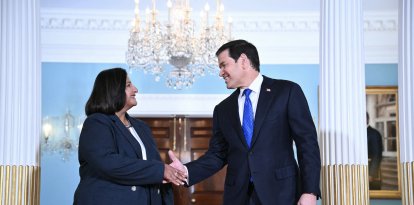
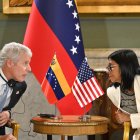
Secretary of State Marco Rubio shakes hands with Venezuelan opposition leader Dinorah Figuera

Secretary of State Marco Rubio urged all sectors of the Venezuelan opposition on Friday to join the negotiations with the interim government of Delcy Rodríguez, in a process spearheaded by Washington to move toward a democratic transition in Venezuela.
During a meeting at the State Department with opposition leader Dinorah Figuera, who is leading the talks with the Chavista government, Rubio confirmed that the third round of negotiations will begin on October 14 and reiterated the Trump administration's support for the initiative.
"We ask all members of the opposition, and all members of society, to participate in and support this process," Rubio said, according to the AFP news agency.
The U.S. Secretary of State assured that Figuera has Washington's "100% support" and defended the negotiations as an opportunity to restore the country's democratic institutions.
"This is the best opportunity Venezuela has had in a long time to restore democracy," he said. "Our hope is not simply that Venezuela hold an election, but also that it have a lasting democracy," he added.
According to the State Department, the next round will focus on finalizing the selection process for the Supreme Court of Justice and establishing safeguards for the participation of citizens and political parties in credible elections.
Differences with María Corina Machado
Rubio's call comes amid divisions within the Venezuelan opposition over the direction and pace of the negotiations.
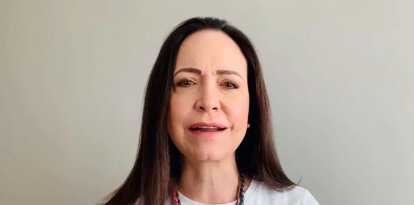
María Corina Machado, leader of Vente Venezuela and one of the main figures opposing Chavismo, remains in exile and is not directly participating in the talks taking place in Caracas.
Although Machado has held meetings with Rubio and other officials from the Trump administration, there are public differences with Figuera regarding the timeline and conditions for bringing about the transition.
According to the Financial Times, Machado has proposed holding presidential elections in July 2027, while insisting on the need to establish democratic guarantees and conditions for her return to the country.
Rubio has previously expressed his personal appreciation for Machado and has assured that the United States does not oppose her return. However, Washington maintains its support for the negotiating team led by Figuera.
Washington's strategy following Maduro's capture
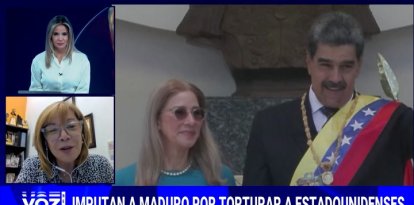
The negotiations are part of the U.S. strategy for Venezuela following the capture of Nicolás Maduro and his wife, Cilia Flores, during a military operation on January 3.
Since then, the Trump administration has promoted a three-stage roadmap: economic stabilization, opening up to foreign investment—especially in the oil sector—and political negotiations leading to elections.
Figuera, president of the National Assembly elected in 2015 and recognized by Washington as the legitimate legislative body, defended the progress made in the process despite the difficulties.
"This is not an easy process, but it is a possible one," said the leader, who also celebrated the recovery of oil investments.
"We believe that following this roadmap, with the support of the United States, will undoubtedly lead our country to progress," she said.
The opposition representative avoided setting a date for the elections and assured that the talks aim to create the necessary conditions for holding them.
Politics
Trump praises Machado, assures her that 'everything will be alright' in response to her request to return to Venezuela
Andrés Ignacio Henríquez
For his part, Trump has expressed satisfaction with Delcy Rodríguez's cooperation, although he believes Venezuela is not yet ready to go to the polls.
The interim government has promoted an amnesty that led to the release of hundreds of political prisoners, but it has not yet publicly committed to establishing an election schedule.
The next round of negotiations will therefore be a test to determine whether institutional agreements can translate into concrete electoral guarantees and whether Washington succeeds in bringing in those sectors of the opposition that remain outside the dialogue table.
LATEST