ANALYSIS.
The dragon against the cross: CCP unleashes a new wave of repression and detentions against Christians
Dozens of evangelical pastors and leaders of other confessions of followers of Jesus have been detained in recent weeks in raids and searches of underground house churches.

A Christian being interrogated by Chinese police officers.

The Chinese Communist Party unleashed a new wave of reppression against Christianity in the country. Dozens of evangelical pastors and Christian leaders were arrested and held in a massive police operation against churches that meet clandestinely in homes to celebrate their rites.
Earlier this month, Open Doors and other Christian groups alerted that at least 70 Chinese Christians had been detained and interrogated by the country's police in the course of a macro-operation against Christianity.
A week later, between October 9 and 11, "almost 30 pastors and Christian leaders affiliated with the Zion Church, one of China's most influential underground church networks, were detained or disappeared in various regions of the country. Among those detained is its founder, Pastor Jin Mingri," Open Doors denounced in a statement.
The whereabouts and situation of most of the detainees are unknown
According to the organization's information, some 16 of these people were released as of October 13, but there is no word on the whereabouts or status of the rest. There is particular concern for Jin Mingri.
Open Doors reported that "some families of detained individuals received official notices of criminal detention issued on October 13 by the Yinhai branch of the Beihai Public Security Bureau, Guangxi province.
Charges under China's new anti-Christian regulations
According to the documents they have been able to access, "Pastor Jin Mingri, Pastor Gao Yingjia, Pastor Yin Huibin, Sister Yang Lijun and Pastor Wang Cong have been formally charged with 'illegal use of information on the Internet'." Charges that appear to be related to the new Online Code of Conduct for Religious Professionals issued last month by the National Religious Affairs Bureau.
House churches (considered unregistered and illegal) in China are coming under increasing pressure from the communist authorities. "Raids have been carried out on numerous gatherings in different regions of the country, and pastors and Christian workers have been interrogated, detained or convicted," Open Doors denounces.
Chinese Christians, however, are not giving up. So reads a letter published on the Internet last October 12 by Chinese economist and Christian Dr. Zhao Xiao to encourage Chinese believers in light of the situation of the Zion Church. "In our hearts there is fear, anger, tears and confusion. This dark night is becoming especially long..... But we also know that the night is not eternal. As the Scripture says: 'the night is far spent, the day is at hand...' (Romans 12:13)."
Christian groups alert on worsening persecution in China
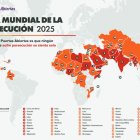
Although the motives for why and when to launch this campaign are unclear, the situation of Christians in the Asian giant has been worsening in recent years. The Open Doors organization, which helps persecuted Christians and annually draws up the map of persecution, warned in 2025:
"More than 80 groups within the house church movement have stopped meeting. Of the original 14 churches, only a handful remain. We have never seen such a massive force being used to address church-related issues; this is something that deserves serious attention."
In the wake of these events, believers and churches are calling for joint prayer. Several influential house churches have challenged official censorship and issued public statements on the Internet publicly expressing their support for the Zion church.
Christians in China at "high risk of persecution" until this year
Since May 1 (after the publication of the last edition of the list) foreign missionaries are strictly forbidden to preach, evangelize and perform other missionary activities in their new restrictions, decreed by the communist government in Beijing. These restrictions have their origin in the latest revision of the "Implementing Rules for the Administration of Foreigners' Religious Activities in the People's Republic of China," which came out on April 25 together with the authorities' interpretation.
LATEST