Cuban dissident José Daniel Ferrer is forced into exile in the United States after decades of persecution by the Castro regime
"Ferrer’s leadership and tireless advocacy for the Cuban people was a threat to the regime, which repeatedly imprisoned and tortured him. We are glad that Ferrer is now free from the regime’s oppression," Secretary of State Marco Rubio said.
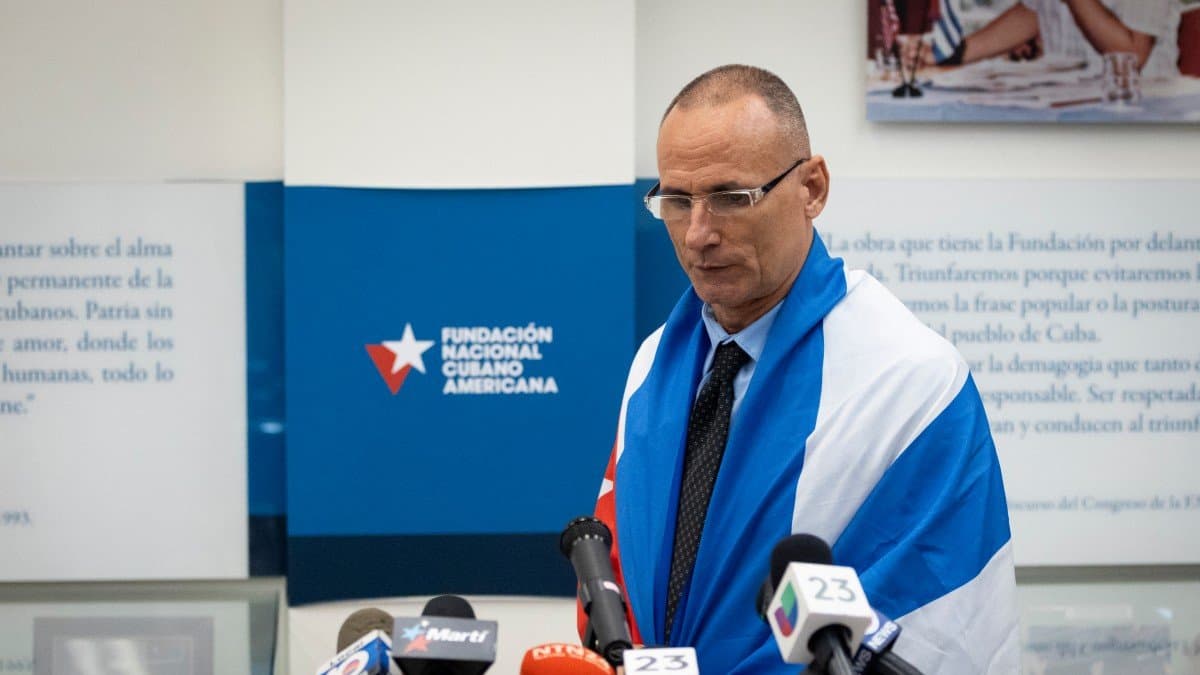

Renowned Cuban dissident José Daniel Ferrer arrived this Monday, October 13, in the United States, after accepting a forced exile following years of persecution, repeated convictions and torture under Castro's communist regime.
The 55-year-old opposition leader was transferred from the Mar Verde prison in Santiago de Cuba to the international airport of that city, where he met with his wife, Nelva Ortega, his youngest son, Daniel Jose, and other relatives before boarding directly to Miami.
As confirmed by the Ministry of Foreign Affairs of the Castro regime, the departure of the leader "follows a formal request from the U.S. Government and the express acceptance of Ferrer Garcia." The Trump administration managed his transfer and protection in coordination with State Department officials.
Secretary of State Marco Rubio welcomed Ferrar.
"Welcome to freedom @jdanielferrer. After years of repression, torture, and abuses from the Cuban regime, Ferrer and his family are in the United States. The Cuban people’s desires for basic freedoms and democracy are an inspiration to many. We reaffirm our commitment to a free, fair, and democratic Cuba," Rubio said on X.
Welcome to freedom @jdanielferrer. After years of repression, torture, and abuses from the Cuban regime, Ferrer and his family are in the United States. The Cuban people’s desires for basic freedoms and democracy are an inspiration to many. We reaffirm our commitment to a free,…
Rubio also maintained that President Donald Trump's administration will continue to press for the release of more than 700 political prisoners still being held on the island.
"Ferrer’s leadership and tireless advocacy for the Cuban people was a threat to the regime, which repeatedly imprisoned and tortured him. We are glad that Ferrer is now free from the regime’s oppression," he said.
"Beatings, torture and humiliation"
On October 3, the Cuban dissident sent a public letter in which he explained his decision to accept forced exile, denouncing "beatings, torture, humiliations, threats and extreme conditions" suffered during his illegal imprisonment. In the text, he stated that his health had seriously deteriorated and that his imprisonment was only a response to the communist regime's ruthlessness against dissidents.
Ferrer had been released from prison in January 2025, under an agreement negotiated with the Vatican during former Democratic President Joe Biden's term, but he was jailed again in April after resuming his political activity on the island. His case, for decades, has been a symbol of the persistent repression against the peaceful opposition in Cuba.
World
Cuba lets go of Maduro's hand in its conflict with Trump: "We're not going to war with the US"
Emmanuel Alejandro Rondón
Upon his arrival in Miami, Ferrer was met by Department of State officials and security agents who guaranteed his departure from Cuba through private channels.
The Bureau of Western Hemisphere Affairs celebrated the release, calling the activist's career "an inspiration to all human rights defenders in Latin America."
.@jdanielferrer’s tireless advocacy for democracy and the wellbeing of the Cuban people is an inspiration. It is our hope that from the United States, he will continue to advocate for the Cuban people’s rights and freedoms. We are glad he is finally free of the regime’s… pic.twitter.com/OG1aHIOaLk
José Daniel Ferrar, symbol of the "Black Spring"
Ferrer belongs to the generation of dissidents and activists imprisoned during the "Black Spring" of 2003, when the regime of Fidel Castro, now deceased, detained 75 opponents, intellectuals and journalists critical of the communist dictatorship reigning on the island. He spent more than a decade in prison before reorganizing his political movement and founding the Unpacu, which promoted nonviolent civil resistance and denounced Cuba's systematic human rights violations, earning the recognition of the international community.
His departure from Cuba puts an end to his own trajectory of repression and internal resistance that lasted more than twenty years. His struggle, now, will continue in exile, like that of tens of thousands of Cuban nationals who fled Cuba.
His case also revives the debate about the lack of freedoms on the island and the persecution still faced by those who publicly oppose the regime of Miguel Díaz-Canel, successor to the Castro brothers.
Meanwhile, the Trump administration reiterated its call to the international community to maintain diplomatic pressure on Havana, demand the release of political prisoners and promote a democratic transition on the island.
🛠 Do you think there is an error in this article?
Recommendations
LATEST