SpaceX successfully launches mega-rocket Starship
The spacecraft tested this week is designed to support a return to the Moon in 2027, and the company has a NASA contract to develop a lunar module version.
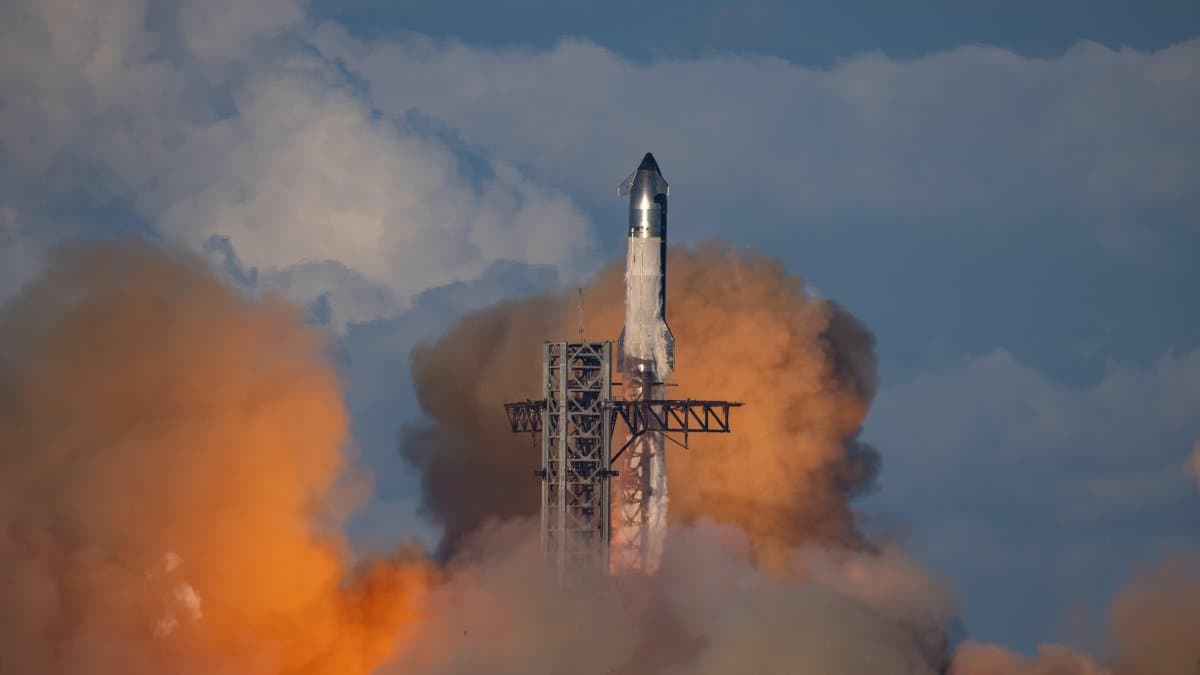

SpaceX's megarocket Starship successfully completed its 11th flight Monday. "Every major objective of the flight test was achieved," the company said.
NASA plans to use the giant rocket, the world’s largest and most powerful, to send astronauts to the Moon, according to AFP. It is also central to Elon Musk’s goal of sending humans to Mars.
On its 11th test flight, Starship lifted off after 6 p.m. local time from Starbase, SpaceX's facility in Texas.
Its booster, known as Super Heavy, splashed down in the Gulf of America as planned, while the spacecraft continued its journey and completed testing.
It splashed down in the Indian Ocean a little more than an hour after liftoff, after releasing simulated satellites as it had on a previous flight. Recovery of the vehicle was not planned.
SpaceX’s last test mission in August was considered a success. However, a series of explosions during that flight raised concerns that the spacecraft might not meet expectations, at least not within the timeframe anticipated by lawmakers and the scientific community.
Previous Starship tests resulted in explosions of the upper stage, including two over the Caribbean and another after reaching space. In June, the upper stage also exploded during a ground test.
NASA’s Artemis program aims to return humans to the Moon, while China is pursuing a rival effort, targeting 2030 for its first crewed mission.
Starship is scheduled to conduct flights to Mars starting in 2026 and to enable Americans to return to the Moon in 2027.
Several challenges remain, particularly refueling once the spacecraft is in space—an extremely complex maneuver that was not tested during this flight.
"Second space race"
Aerospace technology remains a crucial issue, as President Donald Trump's administration openly referred to a "second space race" with Beijing, following the one between the United States and the Soviet Union during the Cold War.
Musk’s company holds a multibillion-dollar federal contract to develop a modified version of Starship as a lunar module.
The manned Artemis III mission is scheduled to reach the Moon in mid-2027, but a NASA safety advisory panel warned that it could be "years late," according to Space Policy Online.
Former NASA administrator Jim Bridenstine recently told a Senate panel that "unless something changes, it is highly unlikely the United States will beat China's projected timeline."
But NASA's acting administrator and Secretary of Transportation Sean Duffy has insisted that the United States will win the "second space race."
“America has led in space in the past, and we will continue to lead in space in the future,” Duffy told reporters last month, dismissing suggestions that China could get there first.
🛠 Do you think there is an error in this article?
Recommendations








LATEST