ANALYSIS
How 'fracking' improved the economy and protected it from geopolitical disruptions to energy supplies
The practice has allowed the value of U.S. energy production to multiply between 2007 and 2015, making the country one of the world's leading exporters of liquefied natural gas (LNG).
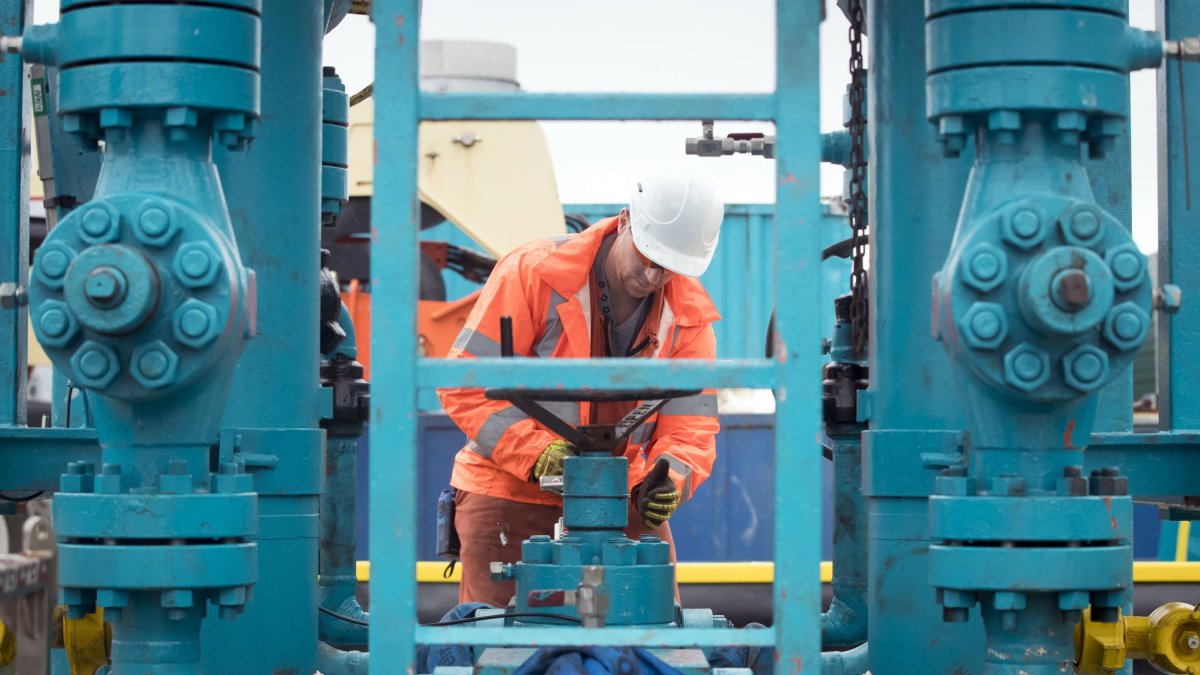
Fracking-File Image.

Hydraulic fracturing or fracking is a relatively new technique that allows the extraction of oil and gas from shale rock. This technological innovation consists of drilling the earth and injecting water, sand and chemicals at high pressure into the rock to release gas in places that were previously inaccessible.
Between 2005 and 2015, fracking represented a boom for the energy industry, but the practice has turned out controversial, as some claim that it distracts companies from investing in renewable energy.
Apart from the controversy generated by fracking, it is worth asking whether the boom in this activity has really brought benefits to the economy.

Just The News
Climate change influencer once chums with Greta Thunberg now calls the movement a 'scam'
Just The News/Kevin Killough
Natural gas production rises
Thanks to fracking, the value of U.S. energy production grew between 2007 and 2015, turning the country from net importer of gas and oil, into one of the major global exporters of liquefied natural gas (LNG). This shift improved the U.S. trade balance and shielded the economy from geopolitical disruptions to energy supply.
In 2015, Catherine Hausman of the Ford School of Public Policy at the University of Michigan and Ryan Kellogg of the University of Michigan Department of Economics and the National Bureau of Economic Research (NBER) presented the first estimates of the large-scale implications of fracking for welfare and distribution, as part of the Brookings Papers on Economic Activity (BPEA) conference.
According to the authors, after a decade of near-zero growth, natural gas production in the United States grew by more than 25% between 2007 and 2013.

Just The News
Canada PM Carney likely to continue Trudeau's climate policy, which could impact U.S. energy costs
Just The News
The benefits to the consumer
Thus, by 2013, the fracking boom in the United States benefited the economy, reducing natural gas prices by 47%. Moreover, by that time, fracking had improved the economic welfare of consumers by $74 billion annually.
"All energy consumers benefited from the boom: residential, $17 billion a year; commercial, $11 billion; industrial, $22 billion; and electric, $25 billion, for a total of $74 billion," the study concludes.
Thus, according to the BPEA paper, household gas bills were reduced by $13 billion annually between 2007 and 2013, equivalent to $200 a year.
In the report, the authors also indicated that the expansion of the natural gas supply reduced its prices by $3.45 per 1000 cubic feet, and that the wholesale price reduction fully passed on to retail prices.
As for the regional effects for the period, the authors state that "the most benefited area is the central-southwest region (Arkansas, Louisiana, Oklahoma and Texas), with $432 per person in consumer benefits, followed by east north-central region (Illinois, Indiana, Michigan, Ohio and Wisconsin), with $259 per person in benefits. The area that gained the least is the Pacific (California, Oregon and Washington), but consumers in this area benefit by $181 a year."
Industry and employment benefit
Likewise, Hausman and Kellogg examined the impact of shale gas on the manufacturing industry in general, a sector that, prior to the fracking boom, had been in decline in the United States for decades.
Although the authors noted that it is difficult to determine a precise causal effect, they conclude that "manufacturing experienced an increase in activity as a result of the shale boom, with a more pronounced effect on fertilizer manufacturing."
In studying the local economic benefits of fracking, author Michael Greenstone from the University of Chicago (UChicago) and his co-authors found in 2016 the costs are outweighed by the benefits, which total $1,200 to $1,900 per year for the average household. Although there is substantial heterogeneity across shale regions.
According to the Energy Policy Institute at the UChicago, the study also revealed the benefits include a 6% increase in average income, driven by rises in wages and royalty payments, a 10% increase in employment, and a 6% increase in housing prices. On the costs side, the study found fracking reduces the typical household’s quality of life by about $1,000 to $1,600 annually—excluding the increase in household income.

JS Ineon Insight transports the first shipment of shale gas from the US
In 2016 Greenstone said that despite the heterogeneity, the overall trend is clear: “All in all, the current data shows that on average the overall benefits to local communities outweigh the costs.”
Moreover, according to a recent analysis by Libre Mercado, the report The Shale Boom and the U.S. Economy: An Aggregate and Local Analysis, published in 2024, by the Becker Friedman Institute at the UChicago, revealed fracking directly contributed more than 6.5% of US GDP growth between 2005 and 2012, and increased the nation's GDP by 5 points between 2005 and 2015.
Likewise, regions above the major shale fields - such as the Bakken and Marcellus - experienced a local employment growth of 35% and an increase in the local wage bill of approximately 28% during the boom from 2005 to 2015.
In 2017 a cumbersome Obama-era rule that placed onerous burdens on fracking was rescinded, enabling the industry to provide both energy and jobs across Pennsylvania and drive the Commonwealth’s number two export—exceeding $1.4 billion in 2019.
Without fracking, emissions increase
In addition to its benefits to the economy, according to a 2021 Department of Energy report, the elimination of fracking would reverse much of the transition from coal to gas emissions, increasing CO2 emissions from the power sector by 16%, NOx emissions by 17% and SO2 emissions by 62%, undermining the significant environmental gains of the shale era.
According to the report: "This outcome undermines the considerable progress the United States power generation sector has made in cutting emissions by 30%, 76%, and 91% respectively for CO2, NOx, and SO2 during the 2005 to 2019 time period."
In 2020 the Energy Information Administration (EIA) also concluded: “U.S. electric power sector emissions have fallen 33% from their peak in 2007 because less electricity has been generated from coal and more electricity has been generated from natural gas and non-carbon sources.”
'Fracking' a real boon to the economy
As policymakers debate energy transition strategies, the rise of fracking offers an example of how to combine innovation with economic resilience and emissions reductions.
LATEST