ANALYSIS
Argentina vs. Spain: The crown will remain Hispanic
Messi's Albiceleste seeks to defend the title it won at Qatar 2022 against a high-pressing Spain that has dazzled the world with its soccer.
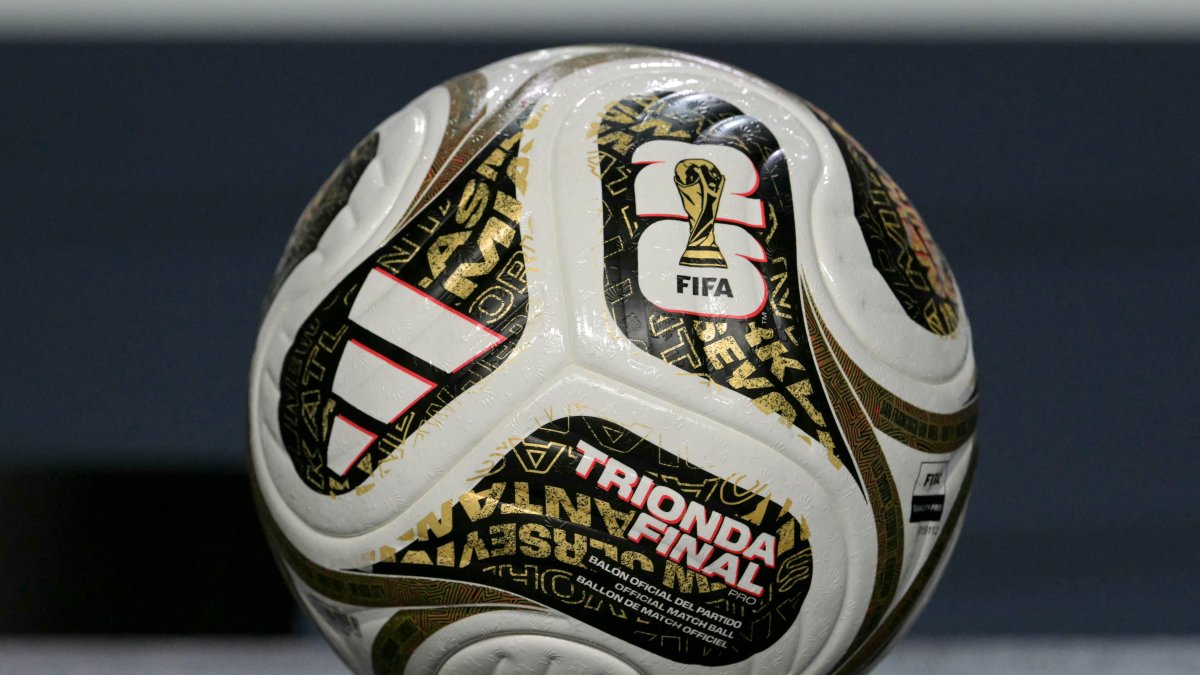
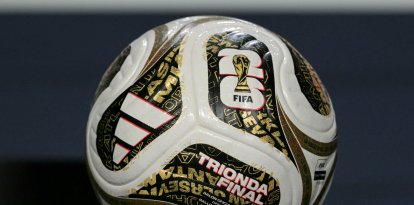
TRIONDA, the official match ball for the 2026 World Cup final

After 39 days of thrills, disappointments, joys, farewells and pure soccer, the biggest edition of the world's most important national team tournament comes to a close. On July 19, at NYNJ Stadium (MetLife Stadium), Argentina and Spain will take the field with a single goal in mind: to be crowned champion of the 2026 World Cup. This match promises plenty of intensity, passion, and more highlights than lowlights. This final will be only the second in history to feature two Spanish-speaking teams.
The Albiceleste, led by Lionel Scaloni, will seek to defend the title it won at the 2022 World Cup in Qatar and secure its fourth victory in the seven finals it has played, while the Roja, coached by Luis de la Fuente, aims to earn its second star following the one won at the 2010 World Cup in South Africa, the only final it has played to date.
Both teams reach this final stage after having followed different paths in this World Cup but with the same conviction that they can defeat their rival and finish on top.
How Argentina reached the final: Resilience and Messi
It hasn't been their most brilliant performance, and they've also been accused of receiving preferential treatment through certain refereeing decisions. But there they are, in their second consecutive final. The Albiceleste has had to draw heavily on its resilience to advance through the tournament, especially in the knockout rounds.
Drawn with Algeria, Austria and Jordan in Group J, Scaloni's men got off to a start in this 2026 World Cup that was the closest thing to a military parade: a perfect record of wins, eight goals scored, and just one conceded. However, the defending champion began to hit a rough patch starting with their match against Cape Verde in the Round of 16.
Against the Africans, a team technically and tactically inferior, the Argentines faced their first major battle. So much so that they needed more than the regulation 90 minutes to eliminate them. Cape Verde pushed an Albiceleste to the limit, but fate smiled on them. The final score was 3-2.

Next up was Egypt in the Round of 16, and once again, another inferior opponent that put Argentina in serious trouble. Scaloni and his players came back from a 0-2 deficit in the final 15 minutes of the match to set the final score at 3-2.
In the quarterfinals, another lower-ranked team, Switzerland, managed to make Argentina work harder than usual. The match went into extra time, where the Europeans' exhaustion and inexperience at crucial moments helped the Albiceleste secure a 3-1 victory.
Finally, England. On paper, this was the toughest match the Argentines faced before the final. However, it was in this match that they demonstrated the greatest composure and authority. The defending champions dominated their opponent from start to finish, closing out the match with a 2-1 victory.
The resilience that the Albiceleste has shown in this World Cup has been led, primarily, by one man: Lionel Messi. The Argentine "No. 10," considered the greatestw player in history, has been largely responsible for his national team reaching a second consecutive final.
At 39 years old, Messi hasn't forgotten what it's like to compete at the highest level, proving why he belongs in soccer's pantheon.

Sports
Messi adds to his legacy: He will tie Cafú for the most World Cup finals played
Alejandro Baños
How Spain reached the final: Direct and dominant
A treat for fans. Spain has proven to be a more solid unit than its opponent this Sunday, winning virtually all of its matches in the 2026 World Cup and many of those victories with dominance. La Roja dreams of returning to a pinnacle it last reached 16 years ago, and to do so, it must maintain the excellence it has displayed on the field.
The start for De la Fuente's men wasn't what they'd hoped for: that draw in the first match against Cape Verde sparked a wave of doubt within the Spanish national team. However, they regrouped and finished in first place in Group H, after defeating Saudi Arabia and Uruguay.
Once the knockout stage began, the Spanish team brought out the steamroller and began to run roughshod over every opponent that tried to crush their efforts. The first to suffer was Austria in the Round of 32; a match that ended with a score of 3-0.
In the Round of 16, things got serious for a Spanish team that didn't back down. Portugal, captained by Cristiano Ronaldo, tried to downplay their opponent, though his attempts were in vain. La Roja ultimately advanced to the next round after winning 1-0.
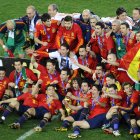
Next up was Belgium in the quarterfinals. And it was more of the same. Spain continued to showcase its talent and dominance on American soil and ultimately defeated the Red Devils by a score of 2-1.
The moment that a certain segment of the fan base predicted would mark the end of the Roja in the tournament came in the semifinals. Drawn against France, everything pointed to the French potentially being the Spaniards' undoing. But that wasn't the case: De la Fuente's men made a statement, eliminating the defending runners-up with a 2-0 victory.
Spain's dominance in the 2026 World Cup is no accident: De la Fuente has managed to build a team that has successfully adapted to the modern era of soccer and incorporated more verticality into its style of play, without losing sight of their core identity as a team that likes to maintain possession and build plays with more patience and fewer counterattacks than others.
While Messi is Argentina's standout player, several names deserve special mention on the Spanish side: Rodri Hernández, Fabián Ruiz, Aymeric Laporte, Mikel Oyarzabal, Pau Cubarsí, Marc Cucurella and Unai Simón are just a few of those shining at this World Cup. Also Lamine Yamal, who is regarded as the leader of this generation.
Argentina vs. Spain: Complete head-to-head history
The 2026 World Cup final will mark the fifteenth time Argentina and Spain have faced each other in history. It turns out that the head-to-head record between the two teams is even: the same number of wins for each (six). In addition, they have tied twice. This will be the second time they face off in an official tournament:
- 1952 (Friendly): Argentina 1-0 Spain
- 1953 (Friendly): Argentina 1-0 Spain
- 1960 (Friendly): Argentina 2-0 Spain
- 1961 (Friendly): Spain 2-0 Argentina
- 1966 (1966 World Cup in England): Argentina 2-1 Spain
- 1972 (Friendly): Spain 1-0 Argentina
- 1974 (Friendly): Argentina 1-1 Spain
- 1988 (Friendly): Spain 1-1 Argentina
- 1995 (Friendly): Spain 2-1 Argentina
- 1999 (Friendly): Spain 0-2 Argentina
- 2006 (Friendly): Spain 2-1 Argentina
- 2009 (Friendly): Spain 2-1 Argentina
- 2010 (Friendly): Argentina 4-1 Spain
- 2018 (Friendly): Spain 6-1 Argentina
The second all-Hispanic final in history
At the 1930 World Cup in Uruguay, the hosts added a third star to their crest (a milestone whose history we explain here) after defeating Argentina 4-2 in a final played at the Estadio Centenario in Montevideo before a crowd of more than 68,000 spectators.
LATEST