England vs Argentina: Six decades of soccer rivalry
From Rattín's ejection at Wembley to the "Hand of God," the "Three Lions" and the "Albiceleste" clash once again with a World Cup final on the line.
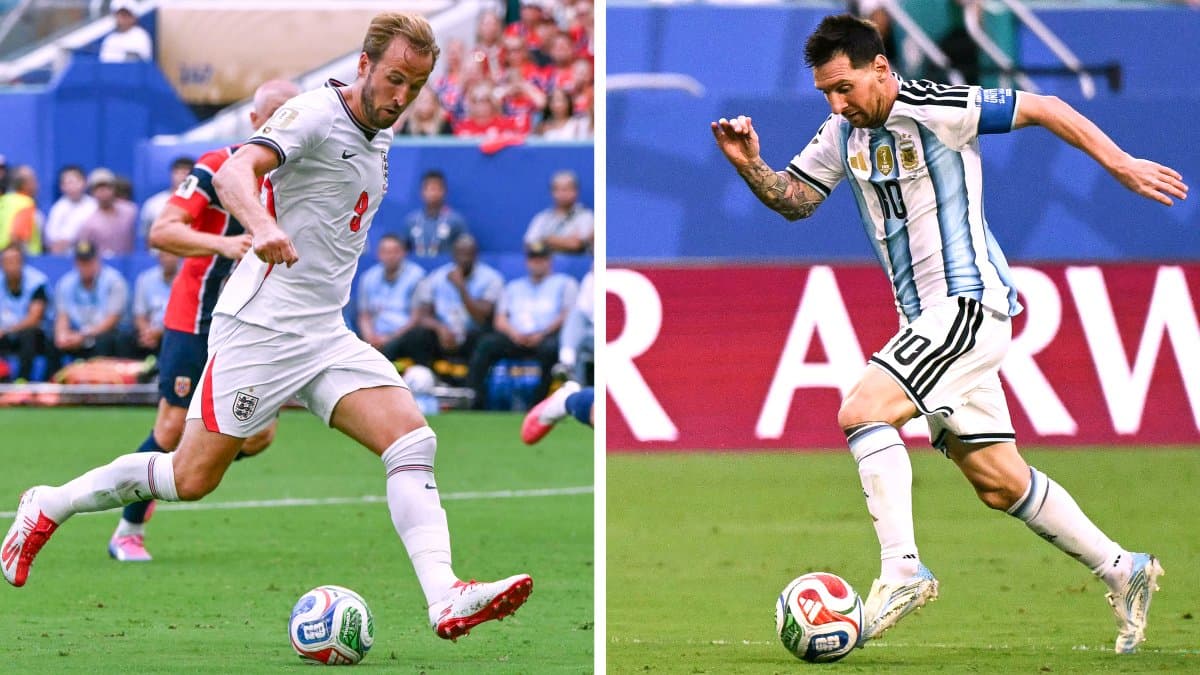

Fate has decreed that two teams with a historic rivalry will once again face off in the world's premier soccer tournament. England and Argentina will play in one of the two semifinals of the 2026 World Cup at Atlanta Stadium. A matchup that promises to be as thrilling as it is tense and in which many of the world's best soccer players will go head-to-head to lead their country to the grand final, which will be played on July 19 at NYNJ Stadium — officially known as MetLife Stadium.
This sports rivalry began six decades ago, in what is remembered as one of the biggest "robberies" in soccer history, and has continued over the years with various chapters.
The start of the rivalry
Argentina and England have had disputes in many areas throughout history, including sports. In the realm of sports, that rivalry was forged at the 1966 World Cup — they had already faced each other at the 1962 World Cup in Chile, with England emerging victorious — held on British soil. In the quarterfinals, the two teams faced off at the legendary Wembley Stadium on July 23, before the watchful eyes of more than 90,000 spectators who had come to witness a match that would go on to become one of the most talked-about and famous episodes in soccer history.
In the 35th minute of the first half, German referee Rudolf Kreitlein showed a red card to the Argentine captain, Antonio Ubaldo Rattín, as he was asking for an interpreter to communicate with the referee, since he spoke neither German nor English. The referee interpreted the vigorous physical gestures made by the Argentine player as threats and decided to send him off.
After more than ten minutes of refusing to leave the field, Rattín committed two acts that angered the English delegation and fans: he sat on the red carpet reserved exclusively for Queen Elizabeth II and contemptuously crumpled the corner flag, which bore the British colors. These two acts sparked the beginning of a rivalry between the Three Lions and the Albiceleste.
That match ended in victory for the English team, which would go on to win its only World Cup to date.
The 'Hand of God' and the 'Goal of the Century'
Two decades later, at the 1986 World Cup in Mexico, Argentina and England met again in the world's premier tournament. And, once again, in the quarterfinals. Fortune favored different sides this time: on this occasion, it was the Albiceleste that triumphed and the Three Lions who were eliminated.
The match had one clear star: Diego Armando Maradona. With tension in the air, "Pelusa"— as he was colloquially known — was the scorer of both goals that secured the victory for the Argentines. Two goals that were captured on film and etched into the memory of every fan.
The first of these was dubbed the Hand of God. In the 51st minute of the match, Maradona, fully aware of the foul he was committing, jumped alongside English goalkeeper Peter Shilton and, instead of heading the ball, pushed it with his left hand. The referee did not see the foul and allowed the goal to stand, despite the furious protests from the English players.
Four minutes later came the Goal of the Century. Maradona received the ball in midfield and began advancing toward the opponent's goal, shaking off every defender who tried to stop him. Upon reaching the penalty area, he left Shilton in his wake and sent the ball into the back of the net.
That missed foul and that stroke of genius, both performed by a single player, allowed Argentina to get its revenge two decades later and stoke the tension and football rivalry with England. The Albiceleste would go on to be crowned champions.
The last two World Cup matches
In the round of 16 at the 1998 World Cup in France, Argentina eliminated England in a penalty shootout.Four years later, in the group stage of the 2002 World Cup in Korea and Japan, it was England that prevailed.
This is how both teams reached the semifinals
Argentina and England have reached the semifinals after living up to their status as favorites. In the group stage, the Albiceleste achieved a perfect record of wins (against Algeria, Austria, and Jordan), while the Three Lions secured two wins (against Croatia and Panama) and one draw (against Ghana). Both advanced to the next round as the top teams in their respective groups.
Once in the knockout stage, however, the story changed. The Albiceleste needed extra time in both the round of 16 (against Cape Verde) and the quarterfinals (against Switzerland) to advance, while against Egypt in the Round of 16, they needed a dramatic comeback to eliminate them. For its part, England did not need extra time to stay alive, but they had to endure tough matches against the Democratic Republic of the Congo in the Round of 32, against Mexico in the Round of 16, and against Norway in the quarterfinals.
Individually, within the Argentine team, Lionel Messi is standing out—as one would expect. The Argentine star, at 39 years old, is having a great run at the 2026 World Cup, having scored eight goals and provided two assists. On the other side, Harry Kane and Jude Bellingham are emerging as England's leaders.
🛠 Do you think there is an error in this article?
Recommendations




LATEST