ANALYSIS
Global uproar over Balogun’s red card | Belgium considers legal action, and the soccer world warns: 'The U.S. won’t be viewed the same way. There will be suspicion in every match'
Players, coaches, journalists, and even politicians are speaking out against FIFA’s decision, accusing the organization’s president of bowing to the wishes of his friend Donald Trump.
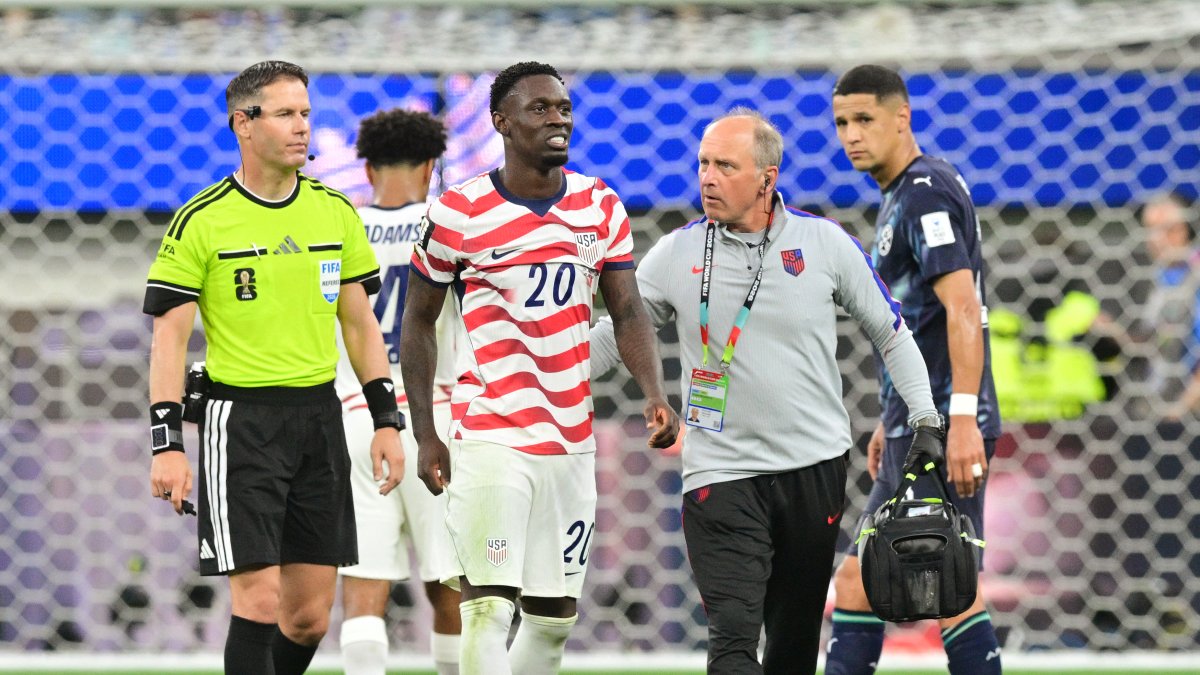
Balogun during a World Cup match

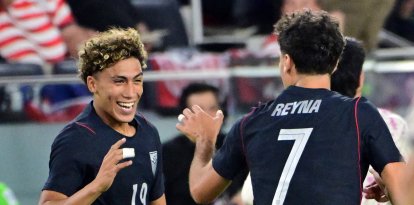
"Balogun-gate"—as the retraction of the red card issued to the USMNT forward has been dubbed in Belgium—is causing a storm in the soccer world, and the Belgian Federation announced that it is considering whether to take legal action after feeling directly harmed by FIFA’s surprising decision at Donald Trump’s request.
Meanwhile, players, coaches, commentators and even politicians are lashing out at "Gianni Infantino’s high-handed move" and warn: "The U.S. won’t be viewed the same way in this World Cup. There will be suspicion in every match."

Politics
FIFA lifts Balogun's suspension, Trump celebrates ‘reversing a great injustice’
Joaquín Núñez
Outrage in Belgium: “I didn’t know that at the World Cup and at FIFA, July 5 is actually April Fools’ Day”
One of the first to speak out was the coach of the "Red Devils," Rudi Garcia, who described the matter as an April Fools’ joke: “I didn’t know that at the World Cup and at FIFA, July 5 is actually April 1. It’s April Fools’ Day. We’re not defending the national team or the federation; we’re defending soccer and its integrity.”
In the Flemish press, journalist Frédéric Larsimont wrote, in a scathing article in Le Soir titled "Balogun, Trump and FIFA: The Scent of a Strange Match," that FIFA has just put “its impartiality up for sale" with a favor to the host country: "Since its inception, FIFA has claimed to sell impartiality. By lifting the suspension of the top scorer for the U.S. national team on the eve of the round-of-16 match against Belgium, this not-so-venerable institution has just put its impartiality up for sale."
His compatriot Vicente Langendries also didn’t mince words on the French-language public broadcaster RTBF: "I've heard that FIFA rhymes with mafia. I wouldn't go that far. But the truth is that FIFA no longer rhymes with almost anything. The collusion (if not something else) between the president of this global organization (which has just lost all credibility with true football fans) and the occupant of the White House… has reached the height of absurdity, even shame. Let's make Belgium great again!"
UEFA slams decision: FIFA “has crossed a red line”
"Soccer, like all other sports, is based on rules that form the foundation of fair, honest, and transparent competition. Sometimes the rules are open to interpretation. But that is not the case here," the European body insisted in a strongly worded statement.
"The automatic one-match suspension following a red card is not a discretionary option and does not require a decision by an authorized committee to be enforced," the European organization emphasized.
In the eyes of UEFA, the suspension in the round of 16 is "a principle enshrined in the regulations and cannot be subject to exceptions—especially not in the middle of a tournament, during a process where many players face the same situation and serve their suspensions regularly."
"When the certainty of the rules is no longer guaranteed by those responsible for upholding them, the integrity of the game is jeopardized, and the credibility of a tournament is undermined. Similarly, such a decision sets a precedent for the ongoing tournament; from now on, similar situations must be handled equally, which is detrimental to competition," added the European institution.
“A bit of a 'pal's act'”
However, the scandal extended far beyond the affected national team itself. Former players and regular commentators in the British press—such as Roy Keane and Gary Neville—lashed out at the decision. "It seems unfair because it is unfair. ... It seems like a bit of a 'pal's act,' shall we say, going on," said the Irishman, while the former Three Lions right back complained that “I would be absolutely raging if I was Belgium or any other team in the tournament that had a player sent off that thinks they were a bit hard done by. ... Are we surprised? Not with this lot."
On the BBC, former England and Manchester United star Wayne Rooney launched a scathing attack on Infantino, asserting that he "should be ashamed": “But to suspend it [the suspension] for a year? I think it's an absolute disgrace. ... Infantino should be ashamed of this because I think the sportsmanship of this game is in question here.”
“These two people, who don’t have a clue about soccer, shouldn’t have anything to do with this.”
Another authoritative voice joining the criticism was that of coach Jürgen Klopp. The German expressed surprise at the alleged interference by a political leader in a World Cup: "If that really happened, then that’s crazy. Let's just say: this is our game, not theirs. These two people, who both have no idea about football, should have nothing to do with that. That was a red card. There's no two ways about it. We're sorry for Balogun because he didn't mean to do it. But that’s what the rules say."
Well-known British journalist Piers Morgan settled the matter with his usual bluntness: “This will be the biggest story, and potential scandal, of the World Cup.”
Pochettino’s joy: “We celebrate that decision”
In the American camp, the sentiment was the opposite. Along with the joy of having their star striker back, there was a sense that justice had been served regarding a red card that should never have been issued, as noted by coach Mauricio Pochettino.
"We celebrate that decision. ... We were punished enough against Bosnia-Herzegovina to play with 10 men, 30 minutes, in a decision that was completely unfair. But it’s not only because I am the head coach of the U.S. men’s national team, I need to defend my side. It’s only because I think 100 or 99.9%, that we all agree it was an unfair red card."
Garrincha: A precedent at the 1962 World Cup
The skilled winger, the team's star player following Pelé’s injury, was driven to the brink by the constant kicks from Eladio Rojas and ended up attacking his opponent from behind. Referee Arturo Yamasaki sent off the Brazilian winger after being alerted by the Uruguayan linesman.
His participation in the final became a matter of national importance, and Brazil’s president at the time, Joao Goulart, even sent a telegram to his FIFA counterpart, Stanley Rous, to request clemency for an "exemplary player."
The linesman did not appear before the disciplinary committee to confirm his account, and Garrincha was able to play in the final, in which Brazil defeated Czechoslovakia 3–1.
LATEST