FIFA reverses decision, will include Spanish in translations of all World Cup press conferences
The decision comes after several incidents that drew criticism from journalists and fans. The most notable incident occurred before Brazil’s debut against Morocco, when a Spanish journalist asked Vinícius Jr. a question in English to comply with FIFA regulations, which until now had only allowed English and the languages of the two participating teams.
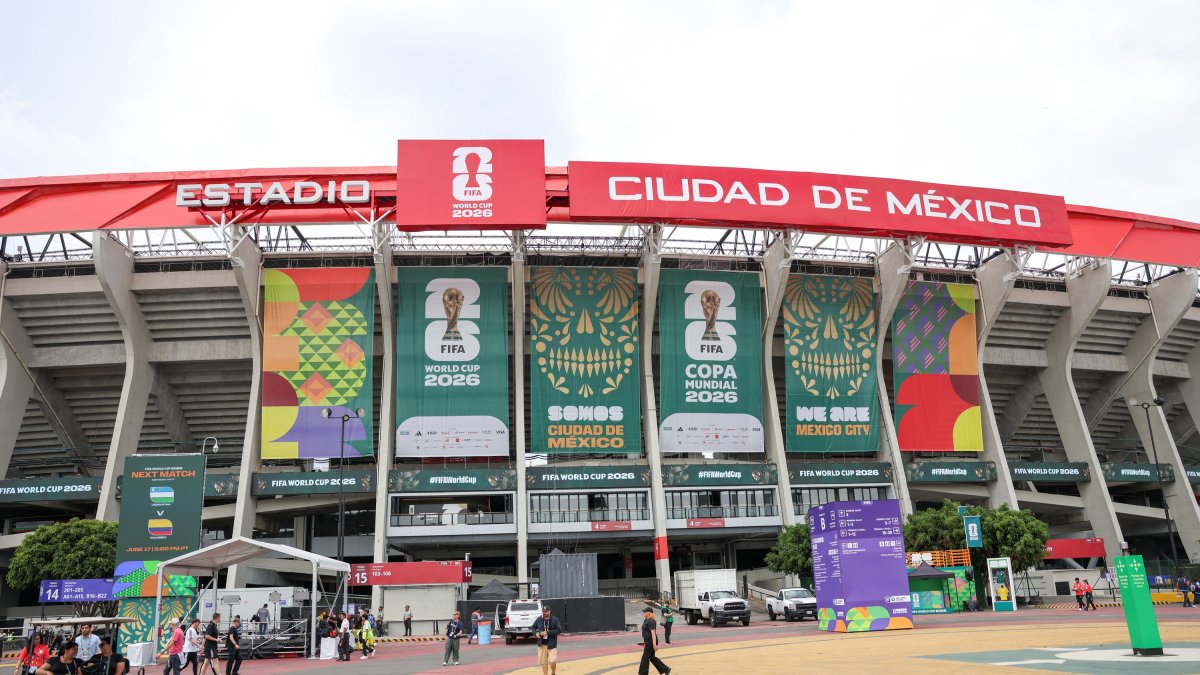
Estadio Azteca in Mexico, the venue where the 2026 World Cup kicked off

FIFA will now allow simultaneous translation into Spanish at press conferences during the 2026 World Cup, following the controversy sparked by the exclusion of one of the official languages of Mexico, the tournament’s co-host alongside the United States and Canada.
A source close to the organization told AFP on Sunday that the translators available at the conferences are requested directly by each team according to their needs, but specified that Spanish will be incorporated into the interpretation system going forward.
AFP also confirmed that the FIFA website now offers the option of simultaneous translation into Spanish for press conferences.
The decision comes after several incidents that drew criticism from journalists and fans. The most notable incident occurred before Brazil’s debut against Morocco, when a Spanish journalist asked Vinícius Jr. a question in English to comply with FIFA regulations, which until now had only allowed for English and the languages of the two participating teams.

The Brazilian forward, who has played in Spain since 2018, interrupted the exchange and encouraged the journalist to continue in Spanish.
"Yes, you can," he said with a laugh.
However, a FIFA official cut off the exchange and reminded them that the language was not available in the interpretation system. Finally, Vinícius had to put on headphones to listen to the translation.
Similar situations occurred with other soccer players accustomed to speaking Spanish. Moroccan player Achraf Hakimi, born in Madrid, tried to help a Mexican journalist who was interrupted while asking a question in Spanish.
Dutch player Frenkie de Jong, of Barcelona, also downplayed the language used by a journalist before the match against Japan. The restriction sparked widespread criticism on social media, where users questioned why one of the most widely spoken languages on the continent was excluded from a World Cup partially hosted in Mexico.
The controversy in Mexico
The ban also stood in stark contrast to the strong presence of Mexican culture in the World Cup stadiums. On Sunday, for example, iconic songs such as "Volver, Volver" and "Cielito Lindo"played during halftime in Houston, while Spanish remained absent from press conferences.
With the change announced by the organization, FIFA seeks to resolve one of the first non-sporting controversies of the 2026 World Cup.
LATEST