Teens, social media and AI chatbots in 2025: Generation Z's digital habits, per Pew Research
The study shows how digital routines are more intense and technologically more complex than ever, combining traditional social networks, fast-consuming video platforms and conversational A.I. tools.


The digital habits of American teens are undergoing an accelerated transformation. Video platforms continue to set the pace of their daily lives, but now artificial intelligence chatbots are consolidating as a new tool for interaction, learning and entertainment. These conclusions emerge from the most recent report from the Pew Research Center, based on a survey of 1,458 teenagers between the ages of 13 and 17.
The study found that digital routines are more intense and technologically more complex than ever, combining traditional social networks, fast-consuming video platforms and conversational A.I. tools.

YouTube and TikTok, the dominant duo
For years now, YouTube has topped young people's digital preferences, but the 2025 edition of the study confirms this: nine out of 10 teenagers report having used the platform at least once, and around three-quarters use it daily. In terms of consistency, it ranks as the most frequented digital space.
TikTok, meanwhile, continues to solidify its cultural influence. Some 61% of teens use it daily, and nearly 21% say they are on it "almost constantly," up from 2022. The short-form video format remains one of the preferred forms of expression and consumption.
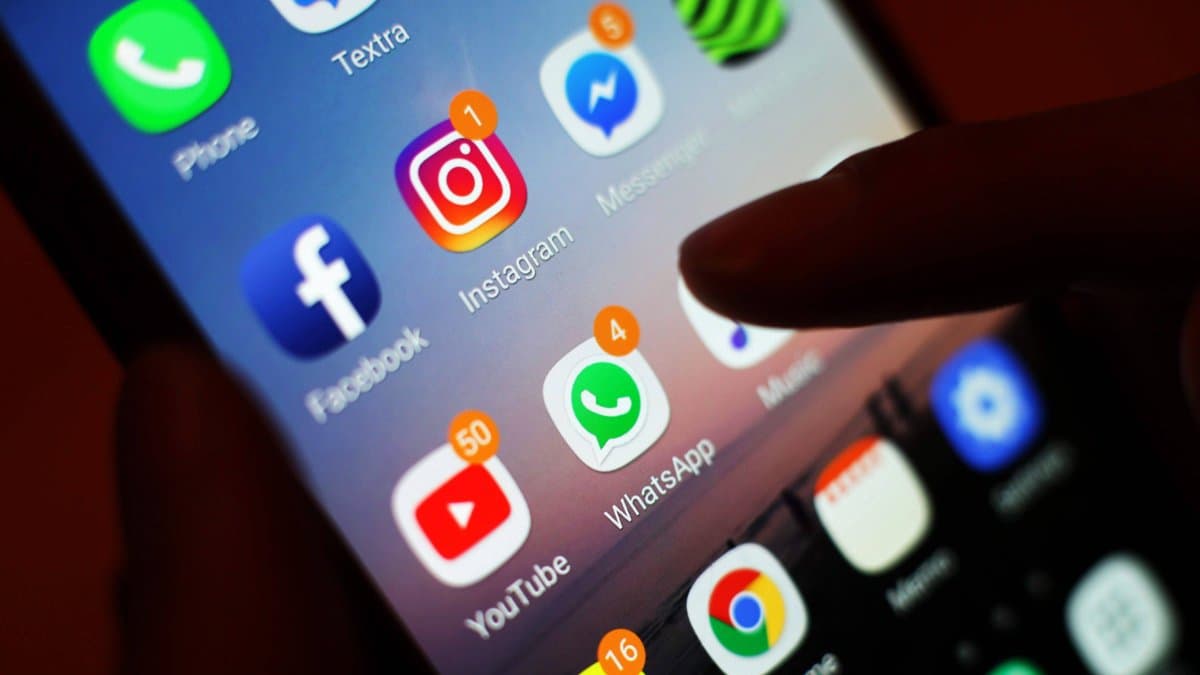
Instagram remains stable at 55% daily usage, while Snapchat retains its relevance among youth social circles, with 46% daily usage. In contrast, Facebook, once a dominant platform, has barely 20% daily usage, confirming a sustained trend of generational disinterest.
Generational shifts and demographic gaps in platform usage
The study shows that social media usage is not homogeneous: it varies significantly by gender, age, race/ethnicity and household income.
By gender, girls tend to lean towards the social aspect, boys more drawn to "tech."
Teen girls show greater affinity for Instagram and Snapchat, two platforms focused on visual socialization and instant sharing. Boys, on the other hand, stand out in the use of YouTube and Reddit, spaces more associated with the consumption of informative content, specialized entertainment and topical communities.

Tech & Science
Instagram will have a new filter to protect minors from harmful content
Alejandro Baños
Race and ethnicity: higher usage among black and Hispanic teenagers.
Black and Hispanic teens report much more frequent use of Instagram, TikTok and YouTube, both in number of users and frequency. For example, 35% of black teens report being on YouTube almost constantly, compared to just 8% of white teens.
This difference reflects cultural, economic and social patterns that influence digital consumption, as well as the importance of these platforms in identity and community building.
Age: those aged 15 to 17 are more active users.
Older teens use more platforms than younger ones, with the exception of YouTube, which maintains homogeneous adoption. For example, three-quarters of 15- to 17-year-olds use Instagram, compared with 44% of 13- and 14-year-olds.
Income: TikTok and Facebook stand out in lower-income households.
Low-income households show a greater presence on Facebook and TikTok, a trend observed in previous years. Meanwhile, platforms such as WhatsApp are growing especially among Hispanic teens and middle-income households.

WhatsApp grows and Facebook recedes: an evolving ecosystem.
One of the most notable changes in the report is the rise of WhatsApp, from 17% in 2022 to 24% usage in 2025. This growth could be explained by the expansion of migrant communities, greater family use and the need for fast messaging tools that enable transnational connections.
On the other hand, Facebook continues its decline: from 71% usage in 2014-2015 to 31% today, a very low but stable figure compared to the last two years. The site has become a space more associated with adults, making it less attractive to younger generations.

Society
Eight minors have died from 'subway surfing' in New York: The latest dangerous viral trend
Carlos Dominguez
A.I. chatbots break into teenage life
According to the Pew Research Center:
64% of teens have used an A.I. chatbot.36% do not use them.Three in 10 use them daily.
This increase responds to their growing presence in school assignments, quick questions, one-on-one tutoring and, to a lesser extent, in recreational activities such as games, fictional conversations or story creation.
ChatGPT clearly dominates.
Among the most used chatbots:
ChatGPT tops the list, used by 59% of teens.Far behind come Gemini (23%) and Meta AI (20%).Character.ai, Copilot and Claude have a minority but stable role.
ChatGPT's dominance suggests a strong identification of conversational A.I. with this particular model, reinforced by its use in schools, homework and self-directed learning.
Gaps in the use of chatbots.
Black and Hispanic teens show significantly higher adoption.15- to 17-year-olds use them more frequently and with greater variety than 13- to 14-year-olds.Higher-income households use ChatGPT more, while low- and middle-income households turn more frequently to Character.ai, possibly because of its focus on entertainment and personalization.

Politics
Virginia passes law to limit daily time children under 16 can spend on social media
Joaquín Núñez
Always-on connectivity: An always-online generation
The survey reveals that 97% of teens go online daily, an almost universal figure. But more telling is that four in 10 claim to be online "almost constantly," more than twice as many as a decade ago.
The groups most affected by this hyperconnectivity are:
- Black (55%) and Hispanic (52%) teens, more than twice as likely as white teens.
- Teens aged 15 to 17, who tend to manage more school responsibilities and social lives online.
- Teens from lower-income households, who see the digital environment as an accessible avenue for entertainment and interaction.
This level of connectivity raises questions about digital well-being, exposure to advertising, security risks, and offline/online life balance.
A digital ecosystem in transition
The digital landscape of teens in 2025, according to the Pew Research Center, reveals a deeply connected generation, combining near-constant consumption of video platforms such as YouTube and TikTok with the accelerated incorporation of artificial intelligence chatbots into their daily lives.
Although differences persist by gender, age, race and socioeconomic level, the common denominator is an increasingly intense online presence: four out of 10 young people are connected almost constantly, and two-thirds have interacted with chatbots, with ChatGPT as the dominant tool.
This expanding technological environment shapes new ways of learning, relating and building identity. The stability of some platforms, the decline of others and the rise of A.I. suggest that teens' digital lives will continue to evolve toward more personalized, interactive and ubiquitous models, with impacts that are still in the understanding phase for families, educational institutions and society in general.
🛠 Do you think there is an error in this article?
Recommendations








LATEST