Frank Gehry, the renowned architect who turned buildings into sculptures, has passed away
His legacy includes the Guggenheim Bilbao, the Walt Disney Concert Hall, and projects that changed the cultural landscape of several cities.
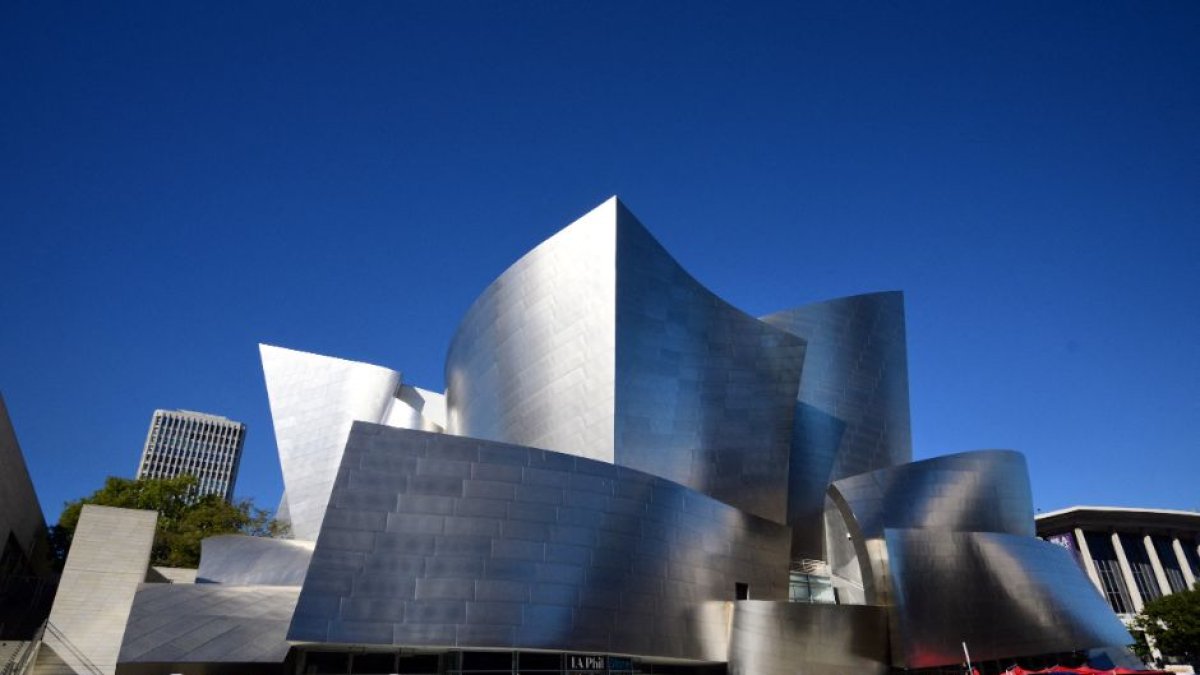
The iconic Walt Disney Concert Hall, designed by architect Frank Gehry.

Frank Gehry, one of the most recognized figures in contemporary architecture, died Friday at his home in Santa Monica, California, at age 96, after a short but intense respiratory illness, the chief of staff of his studio, Gehry Partners, confirmed.
From Toronto to Los Angeles: roots and background
Born in Toronto in February 1929 as Ephraim-Frank-Owen Goldberg, Gehry moved as a teenager to Los Angeles for his father's health and made his professional life there. He studied at L.A. City College, continued at the University of Southern California (USC), and completed part of his training at Harvard.
A style that turned buildings into sculptures
Gehry developed an approach in which the architectural work is conceived as a sculptural piece, pioneering the combination of technology and metal—especially titanium—to achieve unconventional geometries. He received recognitions such as the Pritzker Prize in 1989, the Presidential Medal of Freedom in 2016.
His international consecration came with the opening of the Guggenheim Museum Bilbao in 1997. That building, with its large titanium structure over the Nervión estuary, changed the physiognomy of the Spanish city and fueled what is known as the "Guggenheim effect," reconverting Bilbao from an industrial enclave to a cultural, tourist, and gastronomic pole of attraction.

Landmark projects at home and around the world
In the United States, Gehry signed highly visible works: the Museum of Pop Culture in Seattle (financed by Paul Allen), the Walt Disney Concert Hall in Los Angeles, and other auditoriums such as the Jay Pritzker Pavilion in Chicago. Internationally, he worked on the Pierre Boulez Hall in Berlin and the Louis Vuitton Foundation in Paris, which opened in 2014. His projects with future openings include the Guggenheim Abu Dhabi, scheduled for 2026 after decades of commissioning and delays.
Personal life and recognition.
With his death, the United States loses a creator who turned titanium into a language of his own and took American architecture to new levels of global projection. His legacy remains in buildings that continue to attract millions of visitors and that redefined the way cities can reinvent themselves through design.
LATEST