Trump effect in Mexico: Migrant 'caravans' disappeared and Mexican mayors say their communities are safer
As soon as Trump came to power many things changed around the relationship with Mexico, having positive consequences in Mexican communities that for years experienced the challenges implied by the passage of massive migration to the U.S. The mayors of Chihuahua and Hermosillo talk about the Trump effect.
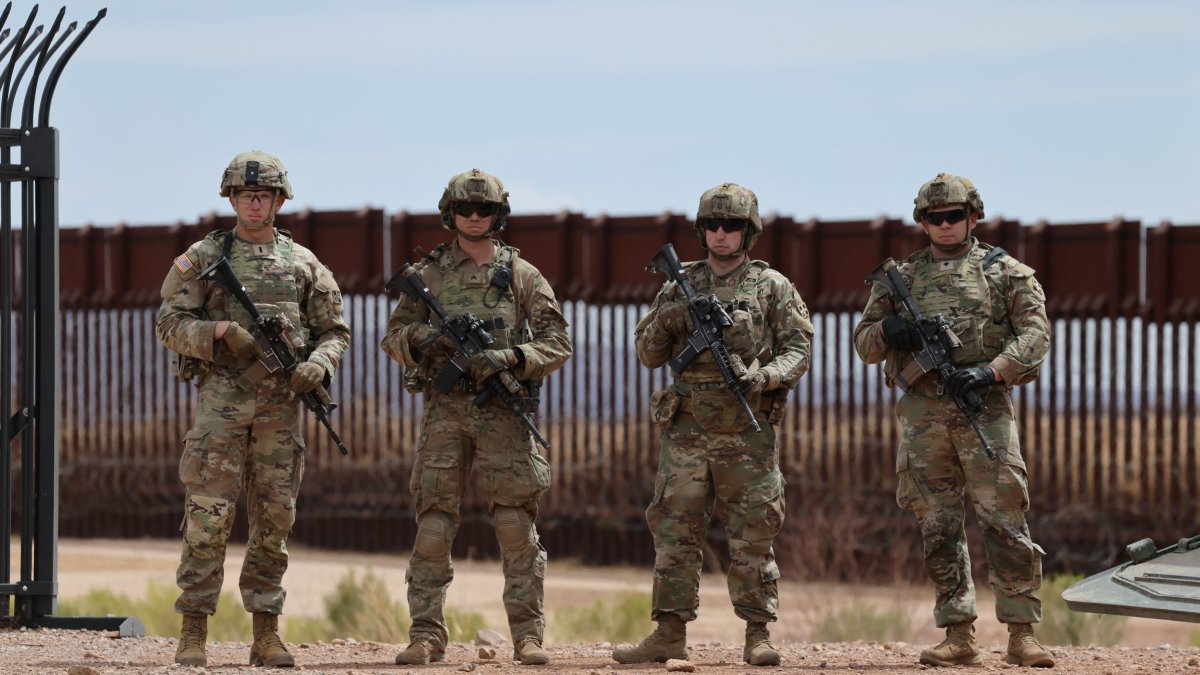
Soldiers at the border
"On the border of the state of Chihuahua, in Ciudad Juarez, we came to be in humanitarian crisis, we came to have more than 50,000 migrants, a stadium!... Today that crisis is extinct for the moment," says Marco Antonio Bonilla, mayor of Chihuahua, capital city, who is visiting Washington, D.C. along with other Mexican mayors, trying to strengthen relations with the United States.
During the Biden Administration there were dozens of "caravans," groups of thousands of migrants from Latin America moving toward the southern border of the United States in an attempt to enter the country. In June 2022, for example, from the Mexican city of Tapachula began a caravan that gathered around 15,000 migrants. As soon as President Donald Trump came to power, these caravans disappeared.
Voz spoke with the mayors of the Mexican cities of Chihuahua and Hermosillo, Sonora, to learn how this Republican administration has changed the landscape at the local level and what opportunities are opening up for Mexico now that President Trump is willing to collaborate strongly in the fight against drug trafficking, a scourge that has long plagued Mexicans.
When we asked the mayor of Chihuahua the reason why the caravans and the disaster at the border ended, this is what he told us:
"The first act is President Trump's demand, and the threat at the same time. If you don't do it, well, they raise your tariffs. The second act is the Mexican government's compliance, because if it had not been done, it would have strong economic implications for Mexico and also for the United States."
The mayor of Chihuahua explicitly recognized that the Administration's policies have benefited Mexican states that during the entire Biden Administration had to live through the almost constant passage of thousands of migrants, with what that implies in economic and security matters.
"Without a doubt, especially to Ciudad Juarez, which is the passage to the border with Paso Texas, at the end of the day this determination of President Trump and this operation of the Mexican government, helped to ease the issue of this humanitarian crisis in Ciudad Juarez."
Bonilla further explained the gravity of the situation experienced by communities in Mexico prior to the arrival of President Trump:
"We reached a point, particularly on the border of the state of Chihuahua, in Ciudad Juarez, to be in a stage of crisis, of humanitarian crisis, we came to have more than 50,000 migrants, that's a full soccer stadium of migrants living on the streets. With tents, with very cold weather, Central American and South American brothers and sisters, Venezuelans, Colombians, Nicaraguans, Hondurans, Guatemalans, Salvadorans, who are not used to these cold weather conditions at all, sleeping practically in the open with children, with babies. We reached a moment of humanitarian crisis, which today I believe is now extinct for the moment."
During their trip to Washington, mayors Marco Antonio Bonilla, mayor of Chihuahua, and Antonio Astiazarán, mayor of Hermosillo, Sonora, have had meetings with the State Department, the Department of Homeland Security, and conservative think tanks such as the Heritage Foundation, to strengthen relations with the United States and seek ways of cooperation even at the local level.
Antonio Astiazarán, mayor of Hermosillo, Sonora, assured that the security situation in some states has been affected by the reduction of the budget that the Mexican Federal Government used to allocate for cities. The mayor believes that it is not effective to organize a centralized security policy from the Federal Government and that local authorities are the ones who know the communities best and how to respond to threats.
That is why Astiazarán emphasized the help that the United States can offer Mexican cities by collaborating directly with local authorities in terms of training, coordination and intelligence collaboration.
"I see an important area of opportunity to generate that synergy with U.S. agencies that allow us, as happened before, that elements of the Hermosillo police can come here to the United States to receive training, certification, that we can achieve initiatives such as at the time was the Merida Plan to strengthen the equipment of municipal police in Mexico, and we believe that this is also part of the solution."
The effect of President Trump's policies has been evident in the United States, a border that for years seemed impossible to recover, took only weeks to become safe again. But this Administration's policies have also had very important effects for entire communities in countries like Mexico, where mass migration was a major challenge for local authorities.
Mexico now has what is almost a once in a lifetime opportunity to take advantage of President Trump's willingness to end the scourge of drug trafficking. The question is how willing the Mexican government is to put up a real fight against the cartels. For now, some mayors, such as Hermosillo and Chihuahua appear to be trying to move forward on local collaborations, while being grateful for the positive effect the Trump Administration has brought to their communities on immigration.
LATEST