






Jane Goodall, primatology pioneer whose research transformed the understanding of chimpanzees, dies at 91
The announcement was made by the Jane Goodall Institute, the organization she founded in 1977 and which continues her work in preserving primate habitats. Goodall was in California, participating in a lecture tour of the United States, when the death occurred.
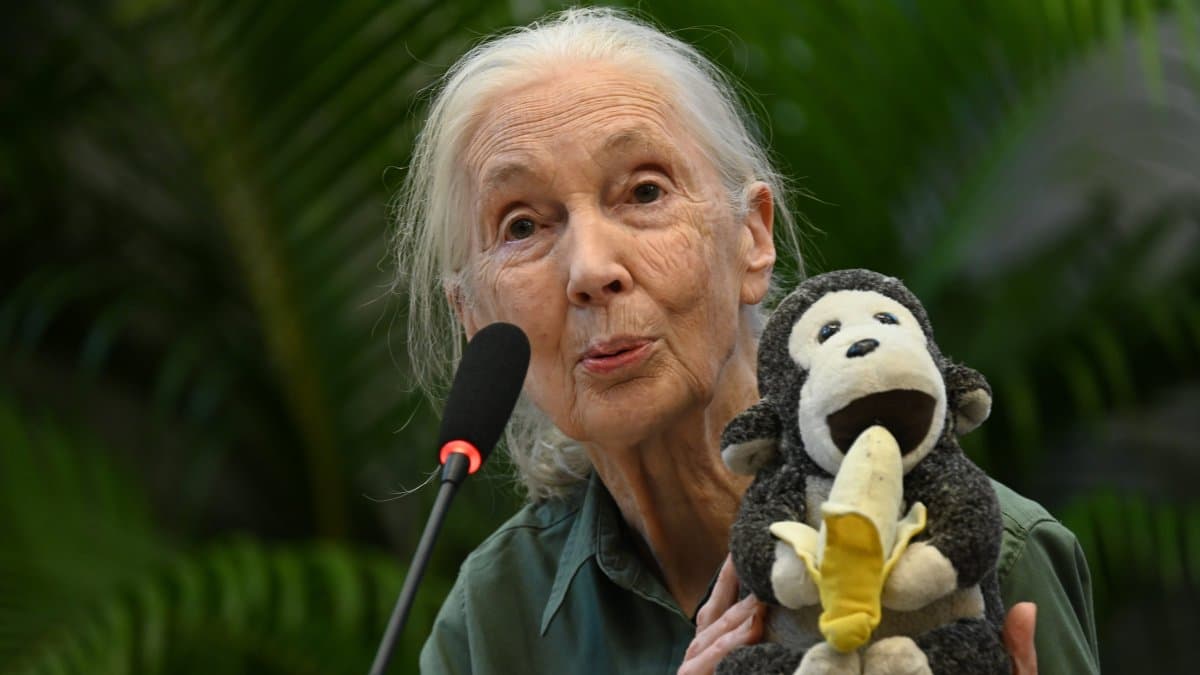

The world of science and conservation loses one of its most iconic figures. Jane Goodall, the British primatologist whose research transformed the understanding of chimpanzees, died at 91 of natural causes.
The announcement was made by the Jane Goodall Institute, the organization she founded in 1977 and which continues her work in preserving primate habitats. Goodall was in California, participating in a lecture tour of the United States, when the death occurred.
Una publicación compartida por Dr. Jane Goodall (@janegoodallinst)
“Dr. Goodall’s discoveries as an ethologist revolutionized science, and she was a tireless advocate for the protection and restoration of our natural world,” the institute said in a statement released on social media.
A life dedicated to chimpanzees
Goodall's love for animals sprouted from her childhood in England. At age 10, fascinated by books like Doctor Dolittle and Tarzan, she vowed to travel to Africa to live among the wildlife, a dream that shaped her destiny. At just 26, in July 1960, she arrived at Gombe National Park in Tanzania, equipped with just a notebook, binoculars and an unwavering passion for chimpanzees. The terrain was hostile: rugged, densely forested and riddled with threats such as buffalo and leopards. Yet Goodall described it as "what I always dreamed of," according to report ABC News.
Their observations showed that chimps were not docile vegetarians, but hunters that made tools (such as using twigs to catch termites) and exhibited complex human-like behaviors: emotional communication, individual personalities, hugging, kissing and even organized warfare. "How like us" she reflected in an interview with ABC News in 2020, noting their affectionate gestures and capacity for violence or altruism. These findings, considered one of the scientific achievements of the 20th century by her institute, redefined ethology and the evolutionary kinship between humans and primates.
Her work not only won scientific recognition—including her designation as UN Messenger of Peace—but also paved the way for more women in STEM careers. According to data cited by the Jane Goodall Institute, based on censuses from 1970 to 2011, female participation in these fields rose from 7% to 26% in six decades.
A global voice
Goodall extended her influence beyond academia. She founded the Jane Goodall Institute in 1977 to combat habitat destruction and illegal primate trafficking, an effort that maintains the chimpanzee study at Gombe as the longest-running in the world.
In 2022, collaborated with Apple to promote device recycling and reduce mining, stating, it "is possible to make money without destroying the planet."
Her cultural impact was sealed in 2022 with a special edition Barbie doll inspired by her, complete with a khaki shirt, binoculars and a notebook, made from recycled plastic to commemorate her 62 years in Gombe.
Goodall's reflections on the COVID-19 pandemic and zoonotic origin
"We have disrespected the natural world. We've disrespected animals, and we've been cutting down forests. Animals have been driven into closer contact with people. Animals have been hunted, killed and eaten. They've been trafficked," she said. She further identified bats as possible reservoirs of the virus, but emphasized the human role: "So, animals of different species have been crowded together in the wild animal meat markets in Asia, bush meat markets in Africa, and this creates a fantastic environment for a virus or bacteria, virus in this case, to jump from an animal to a person."
🛠 Do you think there is an error in this article?
Recommendations



LATEST