ANALYSIS
From swing state to Republican stronghold: How Ron DeSantis turned Florida into the GOP's electoral model
His success did not lie in creating a permanent Republican majority by decree, but rather in building a lasting coalition made up of conservative newcomers, Hispanics who are increasingly receptive to the Republican message, parents concerned about education, and voters who associate Florida with order, freedom, and prosperity.
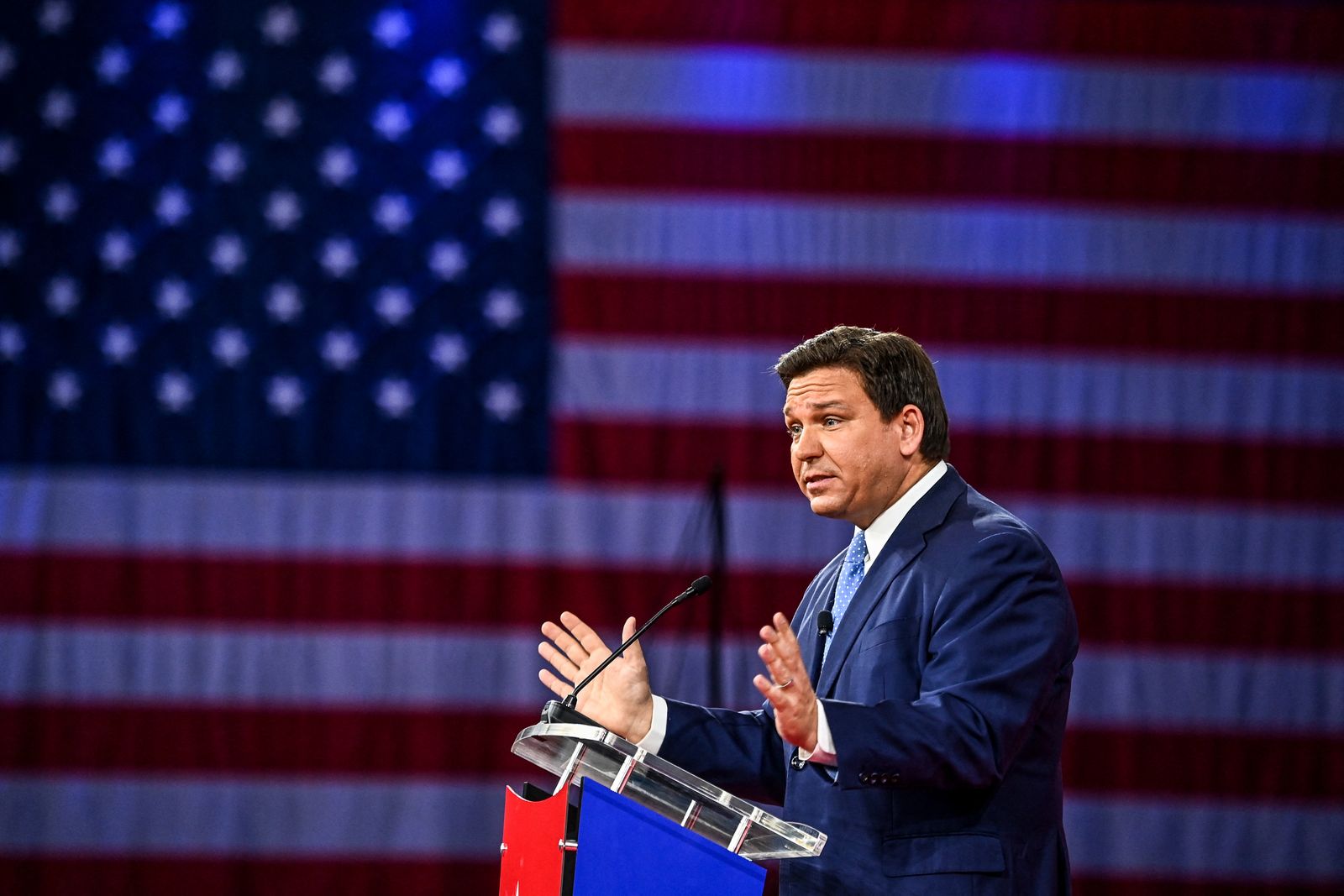
Ron De Santis

For decades, Florida was the quintessential swing state. It was a state where every percentage point could decide a presidential election. But the results of the 2026 midterms confirmed a trend that had been building for years.
Under the leadership of Ron DeSantis, Florida became the country's most consistent Republican stronghold and, amid a bad night nationwide for the GOP, its main hope. This is, argues columnist Karol Markowicz in The New York Post, emphasizing that the Sun State remained a stronghold for the Republican Party while the party suffered setbacks across much of the country.
While Democrats won the House and the Senate and made gains in states that historically seemed out of reach—including Texas—Florida maintained a solid Republican stronghold. Byron Donalds won the governorship, Ashley Moody retained her Senate seat, and Republicans held on to key state offices.
Politics
JD Vance's calculated break with Trump: He blames war with Iran for election defeat, seeks support of disillusioned Republicans
Emmanuel Alejandro Rondón
A transformation that was no accident
Florida's shift is the result of a deliberate political strategy that consists of governing with a clear conservative agenda and, at the same time, turning newcomers into active participants in that cause.
According to the research academic, "Welcome to the Free State of Florida: In-Migration and Rising Republicanism in the Sunshine State," the influx of new residents to Florida became notably more Republican after DeSantis's election in 2018. By 2024, interstate migrants were nearly twice as likely to register as Republicans as they were in 2012, and that year the Republican Party surpassed the Democratic Party by more than one million registered voters
The official data from the Florida Division of Elections reflects this reversal: in 2020, Democrats held a lead of about 97,000 ; in 2024, Republicans had more than 1.1 million additional registered voters. By September 2026, the difference stood at around 1.5 million.

DeSantis understood the power of belonging
One of DeSantis's least discussed but perhaps most effective moves was his message to those moving to Florida to escape high taxes, restrictive public health policies during the COVID-19 pandemic, insecurity, or a political culture perceived as hostile. He didn't just welcome them as new residents: he invited them to become part of a political project.
The governor popularized the phrase "Free State of Florida," and the state Republican Party took that idea right to the mailboxes of new residents, urging them to register as Republicans and to "do their part" to protect the state. It was a direct way of saying that Florida was not a passive refuge, but a choice based on principles.
That strategy paid off. According to data from L2 cited by USA Today, between January 2020 and August 2024, 666,525 people who were registered in another state moved to Florida and registered to vote; of those, 331,646 registered as Republicans, compared to 156,922 Democrats.
Governing by contrast
- Stop WOKE Act: The fight against wokeness is one of DeSantis's key causes, as he made clear in his 2022 inaugural address with his famous line, "Florida is where wokeness is going to die." The governor spearheaded the law known as the Stop WOKE Act (Individual Freedom Act), which sought to limit the teaching of concepts associated with critical race theory and the idea of collective guilt based on race or gender in public schools and certain workplaces. Although parts of the law pertaining to higher education have been blocked by the courts on the grounds of the First Amendment. The state also banned the use of public funds for Diversity, Equity, and Inclusion (DEI) programs at universities and adopted curriculum standards that emphasize the "dangers of communism."
- Education and parental rights: He later signed into law the Parental Rights in Education Act, which limited instruction on sexual orientation and gender identity in the early grades and promoted curriculum transparency and parental involvement.
- Public Order: He passed the Combating Public Disorder Act, which toughened penalties for crimes committed during violent riots and strengthened protections for law enforcement.
- Open schools: He opposed prolonged closures during the pandemic and reopened schools before many Democratic states did.
- Fast and verifiable elections: Florida reports daily statistics by county, requires identification at the polls, and ensures that results are known quickly.
The result was a recognizable political brand: Florida as a state where parental authority, respect for the police, economic freedom, and common-sense education policies were not campaign slogans, but government policies.
Low taxes and tax relief as a magnet
One of the pillars of DeSantis's strategy has been fiscal policy. Florida has no state income tax, and since 2019, it has implemented nearly $10 billion in tax relief, including the elimination of the commercial rental tax, permanent tax holidays, and exemptions for families and businesses.
In the 2026 midterms, voters approved by a 62% an amendment that substantially expands the property tax exemption for primary residences. DeSantis defended it as a way to return money to taxpayers after local revenue from this tax nearly doubled. The combination of no income tax and targeted tax cuts has been a clear draw for many newcomers.
The numbers support this argument
The shift was evident at the polls. In 2016, Donald Trump won Florida by a mere 1.2 points. In 2024, he won by 13.1 points—the largest Republican presidential margin in the state since 1988.
DeSantis, for his part, won reelection in 2022 with a 19.4-point margin—the largest in a Florida gubernatorial election since 1982. That same year, he became the first Republican in decades to win Miami-Dade County, a territory that had long been a Democratic stronghold.
Politics
2026 midterms: Republican leaders analyze defeat, warn about future of Trump's agenda
Diane Hernández
The warning for Republicans
The 2026 results also show that Florida is not immune to political shifts. The victory of Byron Donalds was closer than expected, and Democrats showed strong turnout in several counties. In Miami-Dade, for example, the county once again swung toward the Democratic gubernatorial candidate, David Jolly, although Republicans maintained a decisive lead statewide.
That does not invalidate DeSantis's legacy. It puts it to the test. His success was not in creating a permanent Republican majority by decree, but in building a lasting coalition made up of conservative newcomers and Hispanics who are increasingly receptive to the Republican message, parents concerned about education, and voters who associate Florida with order, freedom, and prosperity.

The lesson for the GOP
In his analysis, he emphasized that Florida was the only state among the nation's ten most populous states capable of retaining Republican control of its state government. He also noted that the loss of Texas as a Republican stronghold could have far-reaching consequences for the GOP's national viability.
For DeSantis, the defeat reflected not so much support for the Democratic agenda as it did a rebuke aimed at the Republican political establishment in Washington. "It was, above all, a rejection of the Republicans in Washington," he said.
"We have built a track record of achievements. We have earned the trust of many of our voters, who know that, even in the worst political situation imaginable, we were able to hold our ground and prevent the worst from happening here," he added.
Florida is no longer the state that both parties could win by a handful of votes. Today, it is the model the GOP will want to replicate: a state where conservative identity is not limited to winning elections, but becomes the political culture. And if Byron Donalds continues that strategy, "Free Florida" could remain, for many years to come, the Republicans' strongest asset on the national stage.
🛠 Do you think there is an error in this article?
Recommendations





LATEST