2026 midterms: Republican leaders analyze defeat, warn about future of Trump's agenda
While John Thune and Mike Johnson defended the Trump administration's achievements and promised to continue opposing the Democratic agenda, Vice President J.D. Vance cited the war with Iran and economic discontent as key factors in the defeat.
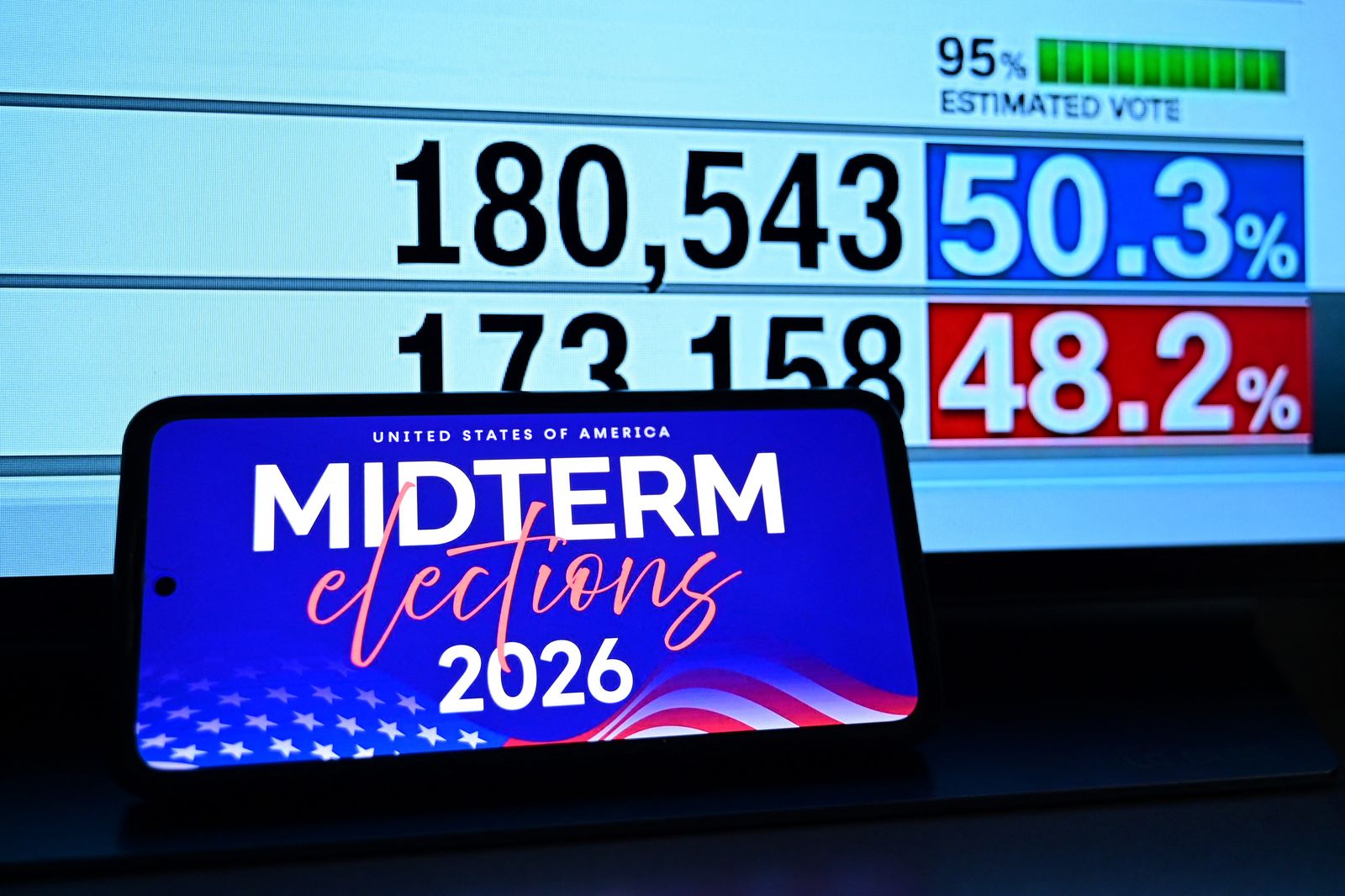
Midterm election logo displayed on a phone

The midterm elections held on Tuesday, Nov. 3, created a new political landscape for President Donald Trump. The Democrats took control of the House of Representatives and the Senate, ending two years of Republican majorities in Congress.
According to results published by The Associated Press and Reuters, the Democrats' gains were marked by victories in traditionally Republican states and by discontent among part of the electorate with the cost of living and the war with Iran.
Against this backdrop, three of the Republican Party's leading figures—outgoing Senate Majority Leader John Thune, Vice President J.D. Vance and House Speaker Mike Johnson— offered their respective assessments of the results and the challenges facing their party.

John Thune defends Republicans' achievements, vows to block Democrats' agenda
Sen. John Thune, who leads the outgoing Republican majority in the Senate, defended his party's legislative work over the past two years and assured that Republicans will continue to work with Trump to defend the policies he has promoted since his return to the White House.
In a post on X, Thune highlighted progress on border security, tax cuts and the confirmation of conservative judges. He also argued that Republicans managed to prevent what he described as the largest tax increase in the country's history.
Looking ahead to 2027, he warned that his party will not stand idly by in the face of attempts by the Democratic Party's most left-wing faction to reverse those measures.
The senator insisted that Trump's continued presence in the White House will be essential to countering Democratic initiatives and preserving his administration's progress.
J.D. Vance attributes defeat to war with Iran and discontent among Trump voters
Vice President J.D. Vance offered a more critical analysis of the results and asserted that the Republicans' main problem was not a lack of voter turnout, but rather a shift in preferences among a segment of the electorate that had supported Trump in 2024.
In a lengthy post on X, Vance explained that his campaign's internal data showed relatively strong Republican turnout, even in states where polls had predicted wide Democratic victories.
However, he acknowledged that many of those voters ended up supporting candidates from the opposing party.
The vice president identified four concerns that, according to data from a pollster he consulted, led former Republican voters to switch their votes: ending the war, combating inflation and the high cost of living, returning to the "America First" approach, and changing Washington's relationship with Israel.
Vance was particularly forceful in pointing to the war as the main reason for the electoral defeat and argued that Trump himself had acknowledged its political impact.
He also rejected the idea that immigration reform based on amnesty is the solution to regaining lost support and proposed considering changes in the enforcement of immigration laws, such as increasing oversight of companies that hire undocumented workers.
Despite his assessment, the vice president called on Republicans to channel this discontent into political mobilization and to support candidates who represent their priorities.
Mike Johnson acknowledges setback, promises to retake House in 2028
Outgoing House Speaker Mike Johnson thanked voters in Louisiana's 4th District for reelecting him, though he acknowledged that the national result fell far short of Republican expectations.
Johnson noted that historically, the president's party tends to lose seats during midterm elections and explained that maintaining the majority required overcoming an electoral trend that has persisted for decades.
The senator defended the results of the past two years of Republican governance, particularly in the areas of border security, tax cuts and public safety.
He also noted that during the campaign he participated in 490 events across 36 states, where, he said, he found significant support from the conservative base.
Despite the loss of the majority, Johnson cautioned that Republicans will continue to defend their agenda in the face of what he considers the rise of radical positions within the Democratic Party.
In addition, he set a goal to regain control of the House of Representatives in 2028, when the United States will also hold its next presidential election.
Election Day thus marks the beginning of a new phase for the Republican Party, which will have to navigate the final two years of Trump's second term with both chambers of Congress under Democratic control.
While Thune and Johnson are committed to defending the Republican legislative legacy and reorganizing the opposition in Congress, Vance's statements foreshadow an internal debate over foreign policy, the economy and the priorities needed to win back voters who supported the president in 2024.
🛠 Do you think there is an error in this article?
Recommendations


LATEST