In January, Trump was a hero to Venezuelans; yesterday, the Republicans lost in Doral. What happened?
There are two reasons for this. And they can be corrected in the coming months. The Republican Party could enter the 2028 presidential race with two achievements that no one will ever take away from President Trump — achievements as significant as the fall of the Berlin Wall was for Ronald Reagan.
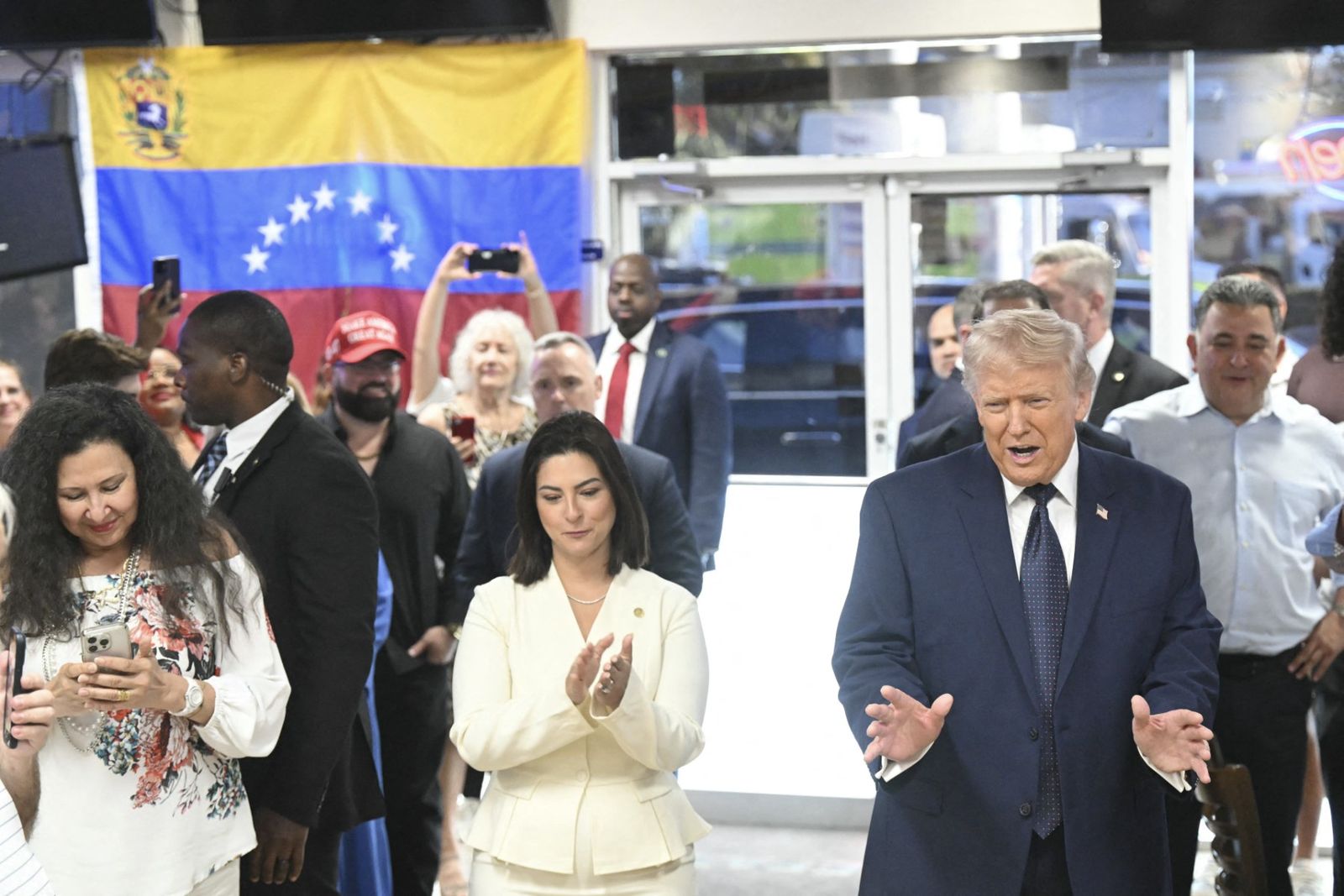
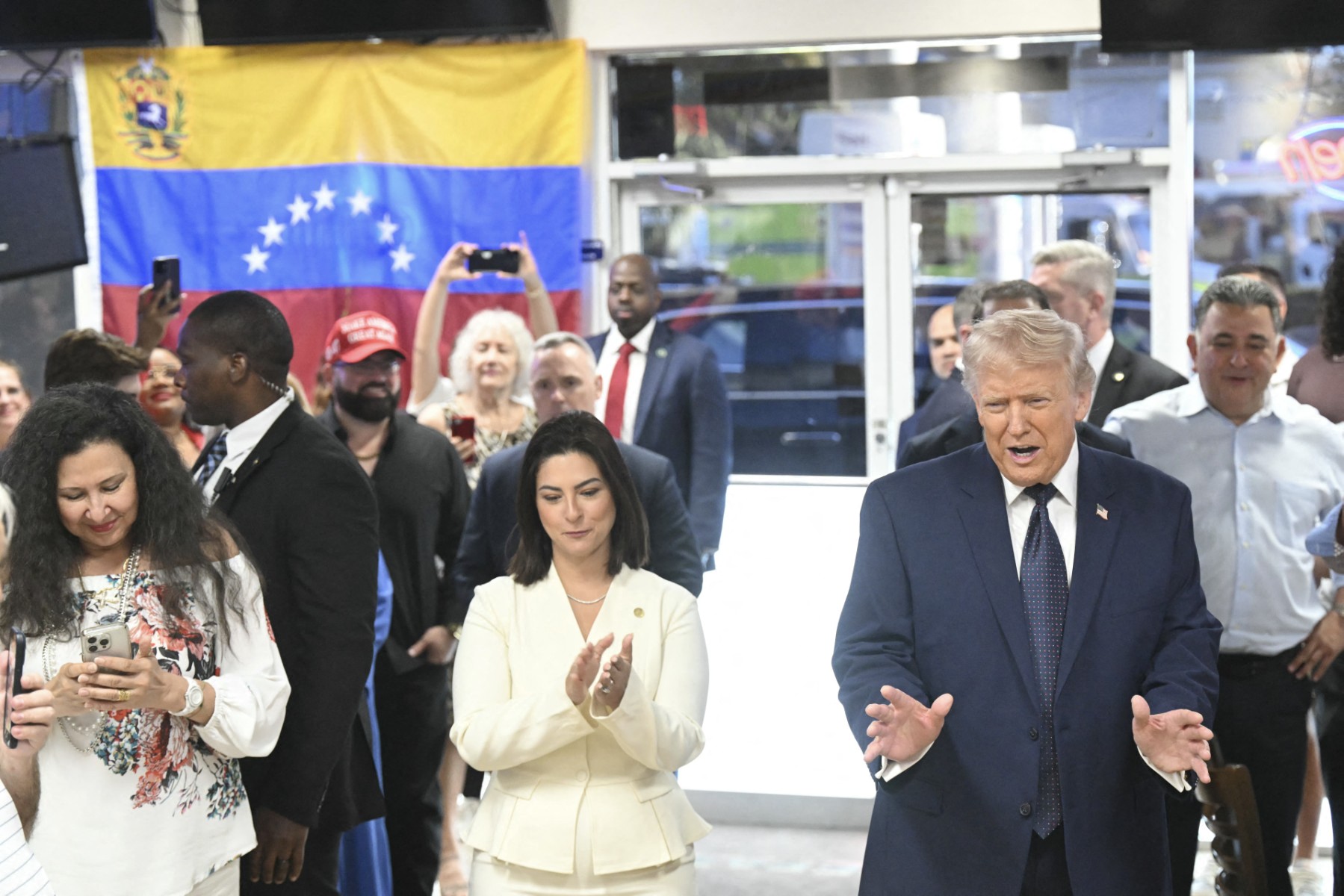
Donald Trump at El Arepazo, a Venezuelan social club in Miami, in March of this year.
Published
After Maduro's removal on Jan. 3 of this year, Donald Trump was seen as an idol by Venezuelans, Cubans and a large part of the Hispanic communities in the United States. Trump had achieved the miracle that so many Latin Americans had been dreaming of for more than two decades.
Early that morning on Jan. 3, hundreds of Venezuelans and Cubans took to the streets of Doral, Little Havana, or Hialeah. U.S. flags and banners supporting Trump were waved by energetic Venezuelans, joyful over the blessing the president had bestowed upon them.
According to a poll by the firm Meganálisis, in January almost all Venezuelans, both inside and outside the country, were grateful to President Trump. The survey, which interviewed more than 1,000 Venezuelans, found that 90% credited the president with the capture of Nicolás Maduro.
However, in Doral — the city where just a few months ago thousands cheered Trump for having captured Maduro — last night the Republican Party suffered a defeat in the midterm elections. Today, President Trump's popularity among Venezuelans is at rock bottom, and the majority — 83% in the same Meganálisis poll, distrusts his intentions. If someone had told me this a few months ago, I would never have believed it. Maduro's capture transformed Trump into a sort of demigod in the eyes of Venezuelans and, within a matter of months, in the city popularly known as Doralzuela — home to the largest Venezuelan community outside the country — in the Senate race, the socialist Democrat Angie Nixon defeated the Republican Ashley Moody.
In the end, Moody won, fortunately, but it is still disturbing that in what should be one of the most Republican municipalities in the country, a Democrat has prevailed who, moreover, was unable to call the Cuban regime a dictatorship and describes Maduro's removal as a "kidnapping."
Nevertheless, Doral was once a Republican stronghold. And it did contribute to President Trump's victory. In 2024, in the city, President Trump won by a massive margin of 23 points: 61% for the Republicans and only 38% for Kamala Harris. And, in two years, the Republicans' progress was squandered.
There are two main reasons to explain what happened in Doral and within the Venezuelan community. The first is a three-letter acronym: ICE. Doral was one of the cities hardest hit by President Trump's strict immigration policy, which began detaining undocumented immigrants or people with irregular status indiscriminately, often without clear criteria. Doral is full of Venezuelans who entered the United States legally and are currently going through immigration proceedings that involve neither residency status nor illegality. Many of them, incidentally, have temporary authorization to remain, and although this measure may be debatable at present, it is unfair to insist that these Venezuelans were living illegally and knew it. And many of these people have been detained and even deported in recent months.
Several people I spoke with who live in Doral — even though they are U.S. citizens — told me that what the city experienced was a general state of terror — which, incidentally, went beyond illegal immigrants. Entire families avoided going out on the streets for weeks just to spare themselves any encounter with an immigration agent who might give them a hard time. Many people told me they had acquaintances who, even though they had legal status, were detained for several hours.
All of this created an atmosphere of panic that disillusioned thousands of Venezuelans with President Trump. Many felt let down. They were a pro-Trump community that stood by President Trump, celebrated him, and defended him — and yet they were not exempt from the extremely harsh immigration policy, which in many cases was insensitive and unfair. And this is neither about amnesty nor exceptions. Many people experienced panic — even as citizens — because they had loved ones who were detained or deported despite being in the midst of immigration proceedings that would have granted them legal status in the United States.
(I say this because I would think that the pro-Trump Venezuelan communities in Doral, of course, support a strict immigration policy that corrects the course into which Joe Biden has led the United States with his irresponsible open-border policy and incentives for illegal immigration.)
The second reason has a first and last name: Delcy Rodríguez. She was Maduro's vice president and bears as much responsibility as the Brooklyn inmate for the crimes committed by Chavismo. She became Venezuela's de facto leader by President Trump's will. Although the decision is understandable — and today most Venezuelans understand that this was how the U.S. chose to move forward with an orderly, rather than abrupt, transition — the way Rodríguez and Trump interact and how comfortable they appear to be with one another is causing a great deal of frustration.
Rodríguez is deeply hated by Venezuelans. All polls since January show overwhelming disapproval, at best more than 70% — though polling firms like Meganálisis report figures exceeding 90%. Venezuelans view Rodríguez as an extension of Maduro and hold her responsible for the crimes committed by Chavismo, such as torture, the imprisonment of dissidents and political assassinations. However, since January, President Trump has adopted an extremely friendly tone when referring to Rodríguez, offering praise and compliments: "She's fantastic!" "We get along great!" "She's doing a great job!"
This friendly treatment goes beyond the pragmatism with which the U.S. is reasonably handling the Venezuelan situation. Personally, I don't care about the words — which, in the end, are just window dressing — but for many Venezuelans, every compliment paid to Rodríguez is a punch in the gut.
One might think that both of these factors combined to disillusion a community that now feels let down by a president in whom it had placed its hopes, aspirations and political sympathies. Trump found strong allies for his agenda within the Venezuelan community in Florida and other cities, where not only have thousands of Venezuelans settled, but among them are formidable conservative leaders, such as Daniel DiMartino and Franklin Camargo, who have stood by President Trump and who work day in and day out to make the United States a great, prosperous country, in keeping with the will of its Founding Fathers, and where freedom reigns — the very freedom that the socialists seek to crush, socialists who, unfortunately, have gained more ground in a Congress that is far too big for them.
Things can still get back on track. We Venezuelans are, for the most part, conservatives. We believe in individual freedom, clear moral principles, the benefits of the free market and love for our country. All of these are virtues inherent to the republican ideal. I believe that if things are recalibrated and, furthermore, the president moves forward by achieving two key foreign policy goals — which are fundamental to U.S. national security — the outlook will be very different.
The Republican Party may enter the 2028 presidential race with two trophies that no one will ever take away from President Trump: a free Cuba and a free Venezuela. But truly free. That would be a legacy comparable only to Ronald Reagan's victory over Soviet communism and the fall of the Berlin Wall. Both are small potatoes. President Trump has already done the boldest thing — and done it flawlessly — with the Jan. 3 operation. The rest just need a little more initiative.
🛠 Do you think there is an error in this article?
Recommendations


LATEST