MIDTERMS 2026: Young people and Hispanics are the key players in the 'blue tsunami'
NBC News' exit polls show a shift in the electorate compared to 2024, with Democrats making strong gains among Hispanics and young people. Economic discontent and disapproval of Donald Trump are among the main factors behind this change.
A look at the U.S. election

The U.S. midterm elections revealed a significant shift in the voting behavior of several voter groups that were decisive in Donald Trump's return to the White House in 2024. NBC News' exit polls show that Hispanic voters, young people and independents once again leaned toward the Democratic Party, marked by dissatisfaction with the economy and the Republican president's management of the country.
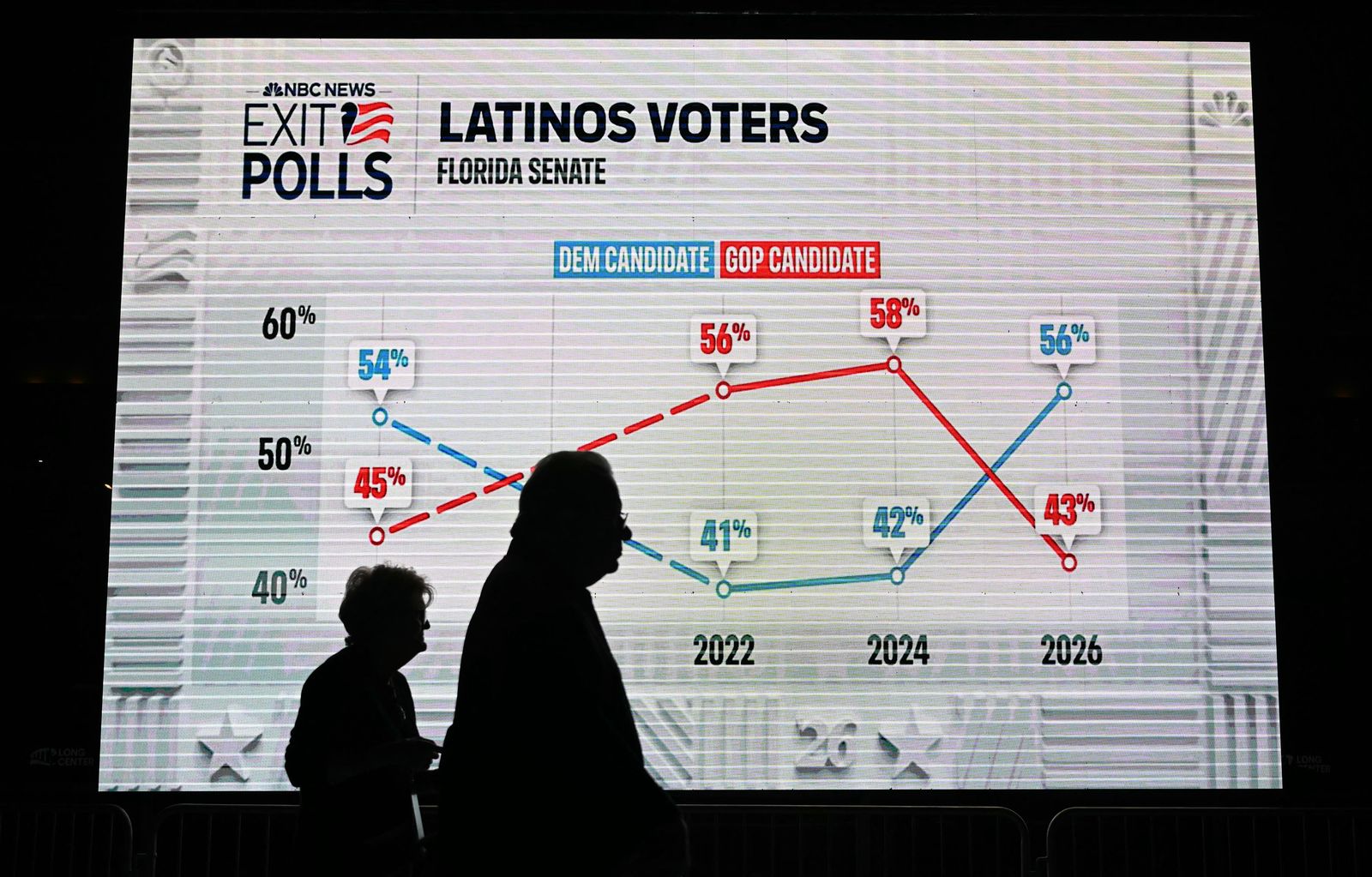
One of the most notable shifts occurred among Hispanic voters. According to NBC data, 62% supported Democratic candidates for the House of Representatives, compared to 35% who voted for Republicans. In the 2024 presidential election, Kamala Harris won 51% of the Latino vote, compared to 46% for Trump. The difference reflects a recovery in the Democratic lead after the Republican had managed to narrow the gap between the two parties considerably.
Shift among young voters
The shift was also particularly pronounced among younger voters. Seventy-two percent of voters aged 18 to 29 supported the Democrats, compared with 25% who backed the Republicans. In 2024, Harris won 54% of that group and Trump 43%. Among men, Democrats also made gains: both parties received 49% of the vote, whereas in the presidential election, the Republicans held a 12-point lead.
Economy: The main factor behind the result
The economy appears to be one of the main factors behind the result. Seventy-five percent of those surveyed believe the country's economic situation is bad or not very good, while only 25% rate it as good or excellent. Furthermore, 65% believe that Trump's policies have worsened economic conditions, and 44% say their family's financial situation is worse than it was two years ago.
Concerns about the cost of living also played a decisive role: 89% of voters said it was a crucial or important factor in deciding how they voted. The economy was cited as the country's main problem by 39% of respondents, followed by the state of democracy at 32%, immigration at 14% and healthcare at 8%.
Rejection of Trump and shift from 2024
The war with Iran also played a role in voters' decisions. Sixty-three percent considered the United States' decision to take military action against Iran to be wrong. Seventy-four percent responded that the conflict was a crucial or important factor in how they voted.
The figures stand in contrast to the 2024 presidential election. At that time, Trump managed to capitalize on economic discontent during the Joe Biden administration and expand his support among sectors that had traditionally favored the Democrats. Two years later, exit polls paint a different picture: economic discontent and disapproval of the president were accompanied by a shift of Hispanic and young voters toward the Democrats.
🛠 Do you think there is an error in this article?
Recommendations


LATEST