ANALYSIS
Newsom officially recognizes two Muslim holidays in California, reinforces state's religious double standard
The California chapter of the Council on American-Islamic Relations (CAIR-CA) celebrated the final legislative approval of AB 2017, the California Eid State Holiday Act, in late August and urged Governor Gavin Newsom to sign it into law.
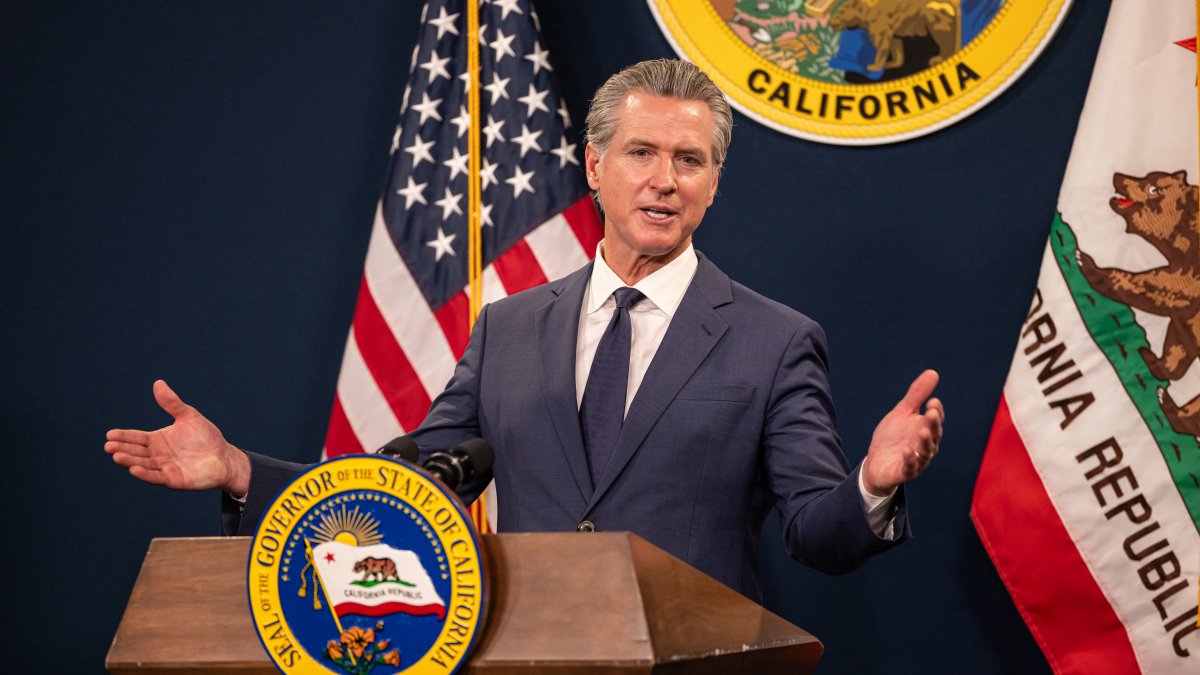
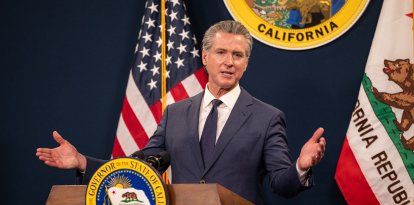
California Governor Gavin Newsom.

California Governor Gavin Newsom has designated Eid al-Fitr and Eid al-Adha as state holidays through the AB 2017, the California Eid State Holiday Act. The measure allows public schools and community colleges to close on those days and enables state employees to observe them using existing holiday or vacation credits, without requiring courts to close or creating additional mandatory days off.
The law makes California the second state, after Washington, to recognize both Muslim holidays at the state level.
The California chapter of the Council on American-Islamic Relations (CAIR-CA) celebrated the final legislative passage of AB 2017 in late August and urged Governor Gavin Newsom to sign it.

Other religious laws signed by Newsom: Calendar and absences
According to Fox News before signing AB 2017, Newsom had several proposals on his desk that protect other religious observances, including Jewish holidays such as Rosh Hashanah and Yom Kippur.
AB 395, which reached the governor days before the Eid bill, adds holidays such as Rosh Hashanah, Yom Kippur, and the first and last two days of Passover to the state code, as well as Eid, Diwali, and others, and requires state agencies, public schools, and public universities to make "reasonable, good-faith efforts" to avoid scheduling meetings, conferences, graduations, or the first day of classes on those dates.

For its part, AB 1763 guarantees elementary and secondary school students excused absences for religious holidays or ceremonies without the need for a prior written request, thereby simplifying the process compared to the previous regulations.
Newsom signed these laws before the deadline, and his office emphasized that the order in which they were signed reflects the constitutional process for receiving and processing the bills, not a "count" among religions.
Politics
Funding under scrutiny in California? Links revealed between Gavin Newsom's major donors and China's intelligence network
Andrés Ignacio Henríquez
Criticism and support from Jewish organizations
Criticism of Newsom's decision is not limited to the order of the signatures. In May, the California Family Council opposed AB 2017 because the draft specifically named two Islamic holidays and authorized school activities and a curriculum guide to "recognize and celebrate" their significance, treatment that, according to the group, no state law grants to Christmas, Easter, or Good Friday. "The asymmetry is written into the law," the group argued.
That wording was softened in mid-August: the final text refers to activities to "explore the history" of Eid, not to celebrate its significance, although it retains the possibility of a curriculum guide from the State Board of Education.

Politics
California proposes 'emergency shut-off switch' for advanced artificial intelligence models
Diane Hernández
In the same vein, Pastor Jack Hibbs denounced in April a selective application of the separation of church and state, as Sacramento shifted from individual accommodation to official recognition of two religious observances. Prior to the signing, the "Vote No on AB 2017" campaign also objected to the wording of the bill, which presents Eid as a "civil calendar determination," and cited the Senate Appropriations analysis from mid-August, according to which two paid days off for school classified staff could cost approximately $137.6 million if school districts adopt them.
Now that the bill has been signed into law, Rabbi Michael Barclay told CBN News on Wednesday that California "does not honor any other religion" and that the measure amounts, in practice, to bowing to Sharia law for political gain.
The following day, in statements to Cleveland Jewish News, Elizabeth Barcohana, head of Jewish engagement for the California Republican Party, said: "The fact that Newsom chose to sign the law regarding Eid before the law protecting other religious practices speaks volumes about the direction he is taking as he looks toward his 2028 presidential bid."

What exactly does the Eid law allow?
It authorizes K-12 school districts and community colleges to close on those dates if so agreed upon in local collective bargaining agreements. It does not require schools to excuse student absences: that amendment to Education Code Section 48205 was withdrawn on June 16. Absences excused for religious observance, without prior written request, remain under AB 1763, not under the Eid law.
For public employees, the law allows the use of personal holiday credits, vacation time, compensatory time, or annual leave to observe Eid, but it does not grant two new automatic paid days off for the entire state workforce.
In addition, the text authorizes schools and educational institutions to incorporate, using existing resources, activities on the history of both holidays and leaves open the possibility for the State Board of Education to develop model curriculum guidelines regarding Eid.
LATEST