ANALYSIS
Trump doesn't rule out 'annihilating' Iran, as oil prices rise 2% and Brent crude breaks $100 again
The president stated that it is "possible" to resume airstrikes after the midterms and maintained that, with the Ayatollahs' regime, "I don't think you could ever have peace."
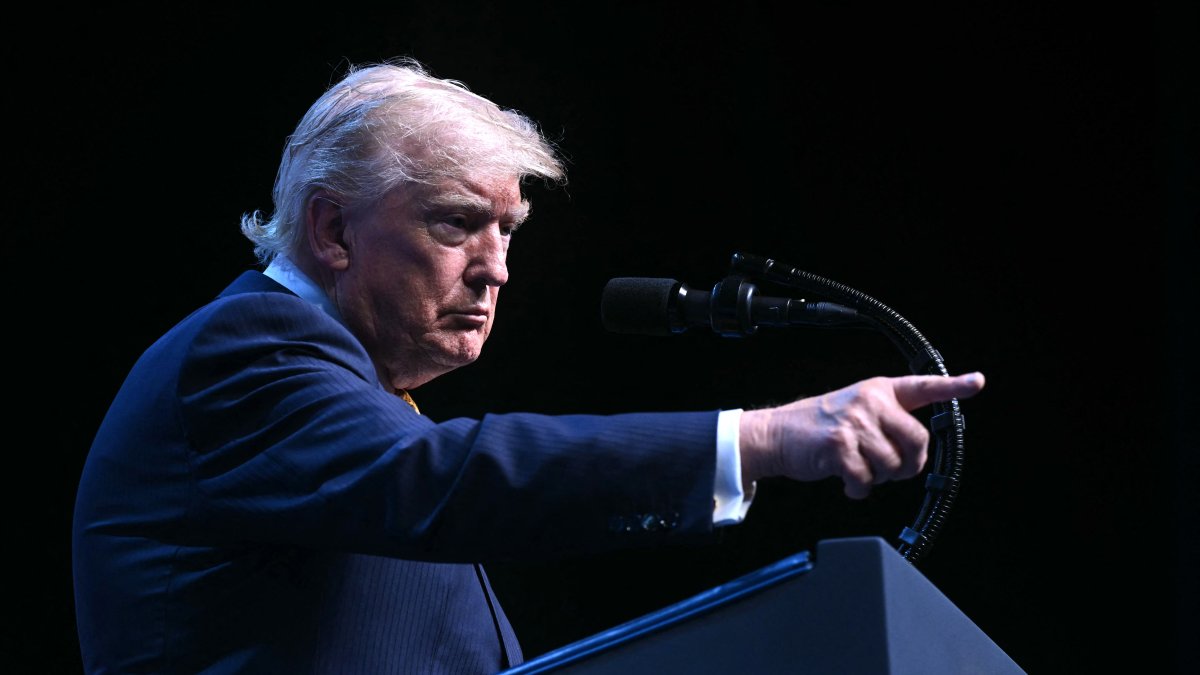
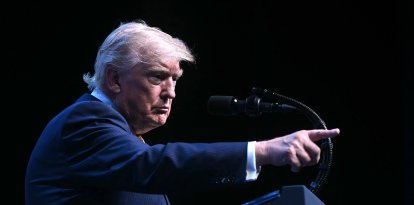
President Donald Trump

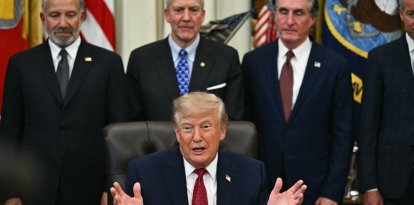
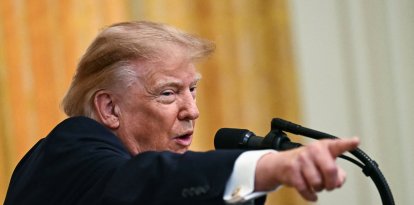
President Donald Trump intensified his threats against the Iranian regime on Thursday in an interview with Time magazine. He insisted on the possibility of "annihilating" the country and stated that it is "possible" for the United States to resume attacks after the midterms, without specifying a timeline or scope.
When asked how he can call himself a "president of peace" while threatening to destroy Iran, the Republican argued that annihilating the country would bring about global peace.
"Because by annihilating Iran, we've created peace in the world. With Iran, I don't think you could ever have peace," Trump said.
In that same interview with Time, the president accused the regime of killing between 72,000 and 75,000 people in recent months, mostly protesters, and described the crackdown as a "bloodbath." Trump was referring to the wave of anti-government protests that erupted in late December 2025, when security forces fired on civilians amid an internet blackout.
Trump promises a quick victory
Speaking to the press at the White House on Wednesday, Trump stated: "We're going to have that war won very quickly, one way or the other," adding that "you will see things happening very soon," though he offered no specific details about upcoming military or diplomatic moves.
The president emphasized the human cost to the United States. "We lost 18," he said, referring to the U.S. military personnel who died. He insisted, however, that Iran is "virtually destroyed," with an economy in ruins, inflation exceeding 300%, and its naval, air and air defense forces "gone."

Economy
Commercial crude oil inventories rise by 900,000 barrels, exceeding expectations
Carlos Dominguez
Trump claims control of the Strait of Hormuz
Regarding the Strait of Hormuz, the epicenter of the confrontation, Trump asserted that the U.S. exercises "virtually total control" and made a forceful statement: "In the last three days, more oil has come out of the Hormuz Strait than at any time in the history of the Hormuz Strait."
However, tensions in the Persian Gulf remain high. The British UKMTO reported on Wednesday that an oil tanker was struck by an unknown projectile in the Strait of Hormuz on Tuesday, while on Monday another vessel had been struck by a "suspicious unknown projectile," causing a fire on board that was extinguished without any casualties or environmental damage.
On Thursday, in the markets, the resurgence of tension pushed Brent crude above $100 per barrel and brought WTI close to $93, reflecting uncertainty about the flow of crude oil along the region's main export route.

New rewards and sanctions against the IRGC
In parallel with the military operations, the Trump Administration has intensified its campaign of economic pressure, described by the president himself as an "economic D-Day." On Tuesday, the State Department (DoS) announced new sanctions against entities and individuals linked to Iranian arms procurement networks, in support of "Operation Economic Outcast."
State Department spokesperson Tommy Pigott noted that Iran has continued to attempt to acquire weapons and related material "in violation of the restored UN measures," and that today's sanctions target those activities as well as entities in third countries that support Iran's defense and proliferation industries.
In addition, Washington offered rewards of up to $15 million for information leading to the dismantling of the financial mechanisms of the Islamic Revolutionary Guard Corps (IRGC) and its affiliates.
Doha maintains contacts, and Tehran on alert over Netanyahu's tour
Israeli Prime Minister Benjamin Netanyahu's visit to the United Arab Emirates was condemned by the Iranian regime as "very dangerous," with warnings of "very dangerous consequences" for regional peace and security, according to statements from the Iranian Ministry of Foreign Affairs reported by state media.
LATEST