ANALYSIS
Inside the GOP's case against Nellie Pou: A progressive Democrat in a Trump-won district
Republicans are trying to convince voters that Pou represents the progressive wing of the Democratic Party too strongly, which does not align with the values of New Jersey's 9th congressional district.
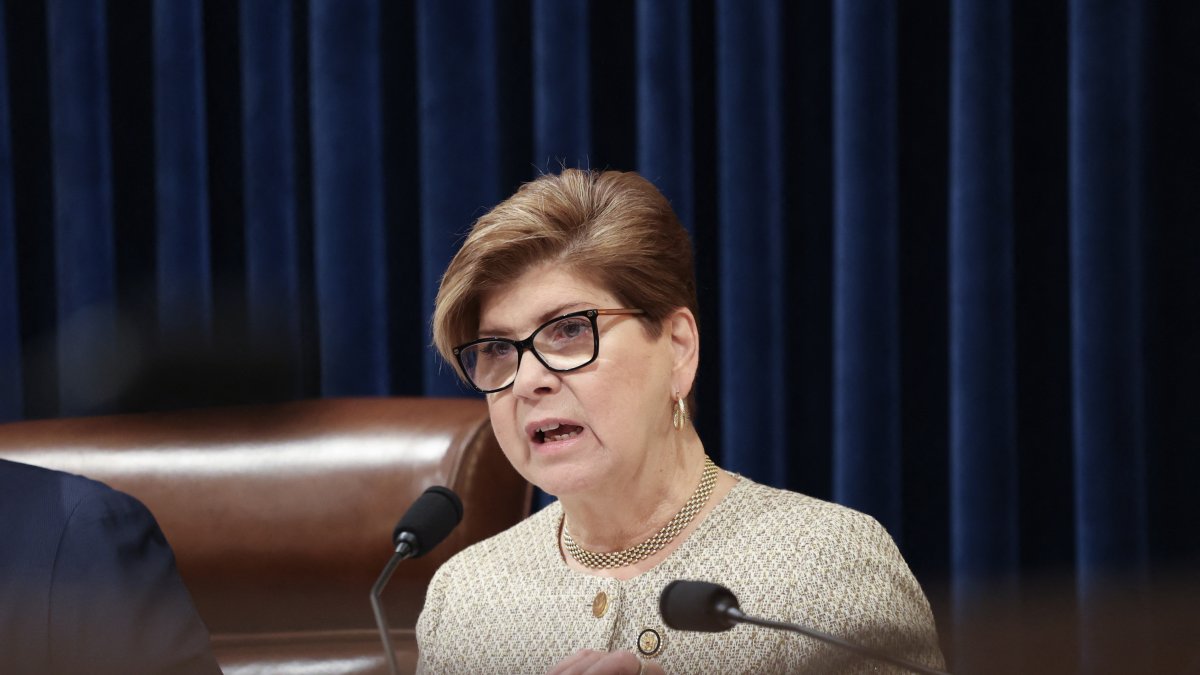
Nellie Pou, Democratic Congresswoman from New Jersey/ Alex Wroblewski

With its sights set on maintaining control of the House of Representatives in November, the Republican Party is targeting a specific group of Democrats: those representing districts where Donald Trump won in 2024. Among them is Nellie Pou, who represents the 9th congressional district of New Jersey.
Pou, a former state representative and senator, was elected to Congress in 2024 after defeating Republican Billy Prempeh by five percentage points. On the same ballot, Trump won with 49% of the vote, ahead of Democrat Kamala Harris at 48%. Four years earlier, Joe Biden had won the district by nearly 20 percentage points.
The shift toward the Republicans occurred in a district with a significant Hispanic population, which accounts for about 41% of its residents. NJ-09 includes cities such as Paterson, Passaic, and Clifton, where Hispanic and immigrant communities play a significant role.

Politics
Marine, pastor, and former mayor: Republicans’ pick for key California House race
Joaquín Núñez

Politics
Gabe Evans, the only Hispanic congressman from Colorado, faces the new progressive wave
Joaquín Núñez
Republicans are seeking to consolidate their gains among the Hispanic community and defeat Pou. To that end, they nominated Rosie Pino, a lawyer of Ecuadorian descent and a former member of the Clifton County Council.
Her candidacy also reflects the Republican strategy of competing with Democrats for the Hispanic vote, especially in communities that have shown greater openness toward the Republican Party in recent years.
The strategy against Pou: Highlighting her progressive agenda in Congress
Their main argument against Pou is that her voting record is incompatible with New Jersey's 9th congressional district.
Pou joined the Congressional Progressive Caucus upon entering the House in 2025. The group brings together nearly a hundred lawmakers who identify as progressives and has made issues such as access to healthcare, reproductive rights, immigration, and economic justice central to its agenda.
Other prominent members include Ilhan Omar, Alexandria Ocasio-Cortez, Ayanna Pressley, and Rashida Tlaib, who are part of the legislative group known as "The Squad."
Republicans are seeking to turn Pou's legislative record into an electoral weakness. Since her arrival on Capitol Hill, her voting record has aligned with that of the most prominent members of "The Squad." Pou votes in line with the leading members of the progressive group at least 89% of the time. For example, she has 90% alignment with Ocasio-Cortez and 90% alignment with Tlaib.


Pou is also a member of the Congressional Equality Caucus, a group of lawmakers that promotes policies related to LGBTQI+ rights. The caucus has taken firm stances in the debate over gender identity policies, including the defense of trans youth's access to medical treatments funded by Medicaid and CHIP, the public health insurance program for children from low-income families. At the same time, the group has opposed measures that would penalize parents and doctors for providing this type of care.
"Since arriving in Washington, radical Democrat Nellie Pou has turned her back on her constituents," Maureen O'Toole, spokesperson for the National Republican Congressional Committee (NRCC), said.
"Instead of fighting for their interests, Pou has unquestioningly endorsed the radical agenda of the socialist left, which prioritizes taxpayer-funded sex changes for children, open borders, and cuts to police funding. New Jersey deserves better than Nellie Pou, and voters will show her the door in November," she added.
Republicans also criticize Pou for voting against the Protection of Women and Girls in Sports Act, a Republican initiative that sought to prohibit transgender athletes from participating in women's sports competitions at educational institutions that receive federal funding. The legislation passed the House but has not yet moved forward in the Senate.
What's at stake?
For Democrats, the strategy is to demonstrate that the 2024 presidential election result was an anomaly and that Pou maintains a strong enough connection with local voters to secure reelection.
The congresswoman is confident she can repeat her 2024 victory, even though the national trend favored Republicans. On that occasion, she received more votes than the Democratic ticket-topper, Kamala Harris.
On the other hand, Republicans are seeking to convince voters that Pou is too closely aligned with the progressive wing of the Democratic Party, which is out of step with the values of New Jersey's 9th congressional district.
LATEST