The Department of State warns of a possible escalation in the Middle East following an attack on Saudi Arabia claimed by the Houthis
Washington urged travelers to reconsider trips to the region following a Houthi missile and drone attack on Riyadh. Trump returned to the White House earlier than planned, although the administration did not publicly explain the reason.

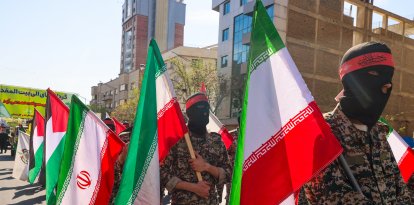
Houthi terrorists in Yemen

The Department of State (DoS) warned on Saturday that the conflict between Saudi Arabia and the Iran-backed Houthis could "escalate rapidly." The DoS urged U.S. citizens outside the Middle East to "seriously reconsider travel to and through the region" and advised those already there to exercise extreme caution.
The alert was issued after the Houthis claimed responsibility for an offensive involving ballistic missiles, cruise missiles and drones against targets in Saudi Arabia. President Donald Trump also cut short his stay at Camp David and returned to the White House, although the administration did not publicly explain the reason.
Riyadh under aerial threat
The Riyadh-led military coalition reported that its defenses intercepted and destroyed a ballistic missile targeting Riyadh. The Houthis, however, claimed to have attacked "sensitive sites" in the capital and a facility belonging to the state-owned oil company Aramco in Yanbu.
AFP journalists observed explosions and a fire near King Khalid International Airport. A fuel depot bearing the Aramco logo was engulfed in flames, though firefighters later brought the blaze under control. The airport experienced delays and cancellations, but air traffic began to return to normal during the day.
The spokesperson for the Saudi coalition, Turki al Malki, accused the Houthi militia of attacking civilian targets and attempting to strike several towns, including Bisha, Taif, Farasan and Yanbu. Saudi authorities stated that air defenses thwarted those attacks.
The offensive represents an escalation because Houthi attacks had previously targeted mainly oil facilities and military positions in southern Saudi Arabia and along the Red Sea coast. The attempt to reach Riyadh demonstrates that the Iran-backed militia is seeking to expand the scope of its operations.

World
Battle for the Red Sea: US officials hold secret meeting with Houthis as conflict threatens maritime routes
Luis Francisco Orozco
The Houthis, allies of the Iranian regime
The Houthi advance along the Red Sea coast is also causing concern in international markets. The group controls areas near the Bab al-Mandab Strait, a strategic route connecting the Indian Ocean to the Suez Canal and facilitating trade between Asia and Europe.
For the U.S. and its allies, the priority is to prevent Iran and its affiliated militias from turning the region into a corridor for attacks on airports, oil facilities and trade routes. Washington's warning reflects the concern that the Yemeni conflict could cease to be a localized war and become another front in the regional crisis.
LATEST