'China is the Enemy': Tech expert questions slowdown in AI development, accuses Anthropic, OpenAI of stirring up fear to weaken competition
The expert also criticized U.S. lawmakers for falling behind technological advances and questioned the European regulatory model.

Ismael El-Qudsi on Voz News.
In an interview on Voz News on Monday, technology expert Ismael El-Qudsi questioned the recent stance taken by the leaders of OpenAI and Anthropic in favor of curbing the development of artificial intelligence (AI) and warned that a potential agreement between the two companies could end up primarily benefiting China. During the interview with the host and executive director of the news program, Karina Yapor, El-Qudsi noted that it is striking that the CEOs of two companies that are "rivals, well, fierce rivals" agree on calling for limits on the development of new AI models.
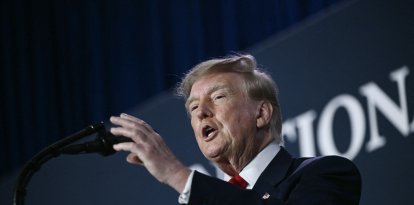
"The reality is that what surprises us all is that the CEO of OpenAI and the CEO of Anthropic have come to an agreement," said El-Qudsi, who argued that such a slowdown would also benefit both companies because they are already at the top of the industry. "Any other AI currently under development is starting from a much lower level, and these two are at the top," he explained. However, he noted that "the one who would really benefit would be China" and supported President Donald Trump's refusal to accept such a strategy. "We all know that such an agreement is impossible," he said, noting that one year in technology — and especially in AI — represents an enormous period of progress.
El-Qudsi also questioned whether tech companies are truly interested in regulation that would limit their own developments. "The enemy isn't OpenAI, the enemy isn't Anthropic — the enemy is really China," he maintained. In his view, companies like Microsoft have joined the regulatory debate "for show," while large corporations have a financial interest in preventing new competitors from emerging.

Technology
Altman and Musk back Amodei: OpenAI and xAI CEOs call for a slowdown in AI development
Luis Francisco Orozco
"What they want is for new companies not to emerge," stated El-Qudsi, who noted that Anthropic is preparing to go public and that OpenAI could do the same. As he explained, "bad news, bad press and noise surrounding AI" would harm these companies' interests.
The expert also criticized U.S. lawmakers for lagging behind technological advances and questioned the European regulatory model. "Excessive regulation stifles innovation," he asserted, noting that the United States has historically been a pioneer in this field.
Regarding the growing politicization of the debate, El-Qudsi argued that the discussion should be understood primarily as a geopolitical issue. He compared the situation to "the prisoner's dilemma" and noted that, although the ideal scenario would be for the United States and China to agree on common rules, neither can afford to unilaterally halt its development.
Finally, he dismissed the notion that AI poses as immediate an existential threat as some warn. "I don't think it's as big a risk as they'd have us believe," said the technology expert.
You can watch the full interview by clicking on the video below.
LATEST