ANALYSIS
The 'Texas caliphate': From Dallas to Houston, radical Islam is building its largest stronghold in the US with hundreds of mosques, networks linked to Hamas, and powerful sources of income
Faced with the proliferation of Islamist organizations within its borders, Texas has taken a firm stance. In November 2025, Governor Greg Abbott designated the Muslim Brotherhood and the Council on American-Islamic Relations (CAIR) as foreign terrorist organizations and transnational criminal organizations.
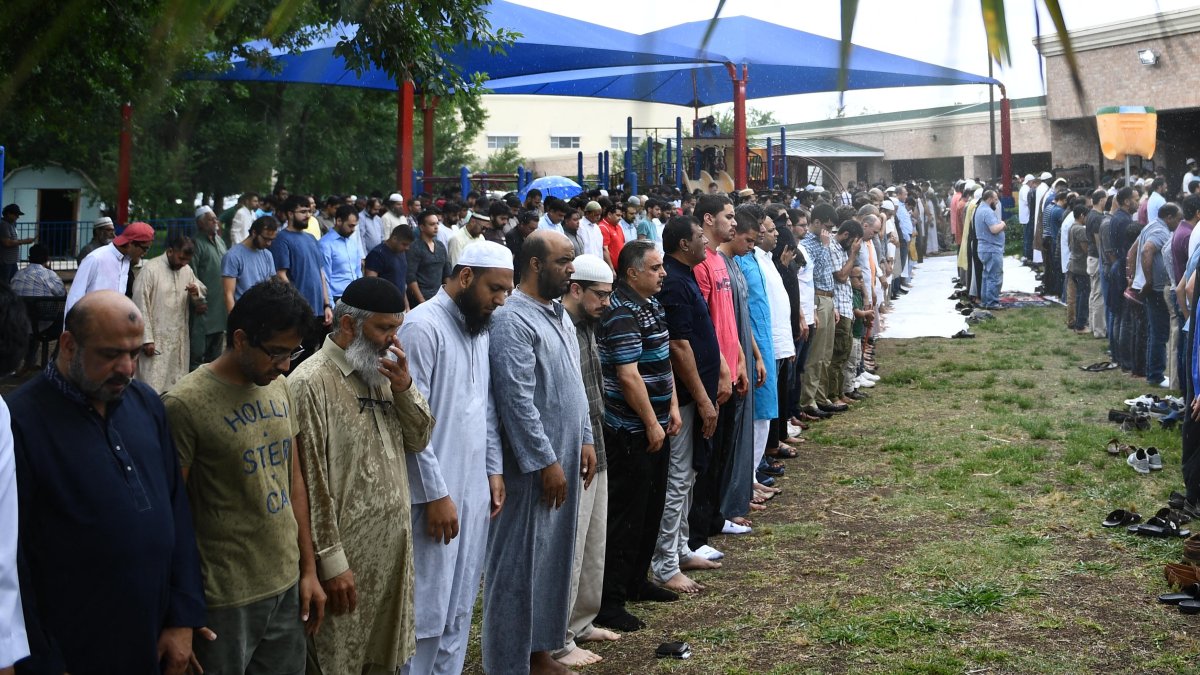
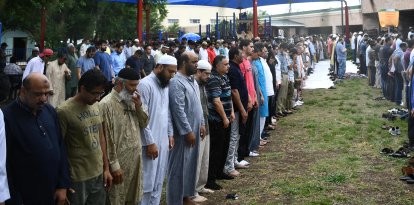
Worshippers pray at a mosque in Stafford, Texas

Texas has become one of the epicenters of Islam in the United States. With hundreds of mosques and around 650 nonprofit Islamic organizations, the Lone Star State reflects both the dynamism of a growing community and growing concerns about Islamist networks which, according to reports and state authorities, seek to influence society and institutions with their theocratic agenda.
A report from the Middle East Forum (MEF) indicates that, of the Islamic organizations operating in Texas, 213 file tax returns. These groups report annual revenues of approximately $412 million, assets of $315 million, salaries of $50 million, and overseas expenditures of $200 million. According to the study, Islamists control nearly two-thirds of the reported assets and more than 80% of the revenue.
These figures represent a significant underreporting, as many Islamic organizations in Texas — including those controlled by Islamists — take advantage of tax exemptions, numerous assets belong to entities in other states and a growing Islamic financial services industry handles hundreds of millions of dollars outside the nonprofit system.
The MEF also notes that, of approximately $16 million in state grants to Islamic organizations, more than $14.4 million "ended up in the pockets of organizations under the influence or controlled by Islamist networks."
Major networks under scrutiny
The report asserts that a broad network operating in Texas encompasses multiple factions (Qutbists, Salafists, Deobandis, Khomeinists, Jamaat-e-Islami, Barelvis, and Turkish), and that some of these institutions maintain ideological, financial, or historical ties to Hamas, the Muslim Brotherhood, or the Iranian regime.
The MEF’s executive director, Gregg Roman, stated that "Texas is a blueprint for the rest of the country" and proposed creating a Commission on Islamism to "investigate the networks we have identified, refer groups for criminal prosecution or regulatory scrutiny, strip public subsidy from radical groups, and empower moderate Muslims to fight the Islamists who have imposed their grip over Muslim communities."
The Hamas connection in Texas
The landmark case of the Holy Land Foundation (HLF), a charity based on the outskirts of Dallas that, according to the U.S. government, served as a funding channel for Hamas, resulted in the conviction of its leaders in 2008 for providing material support to the terrorist group.
The case involved a network of individuals and organizations, several of which were based in North Texas. However, following internal and external policy changes and foreign policy changes promoted by the Obama Administration, the investigations and cases against that network were shelved. According to the MEF, a new generation of this network is now operating in the Lone Star State with relative impunity.
A notable example is Baitulmaal, a charitable organization based in Irving, whose director, Mazen Mokhtar, has been identified as an alleged former fundraiser for the Taliban and other jihadist groups. In Gaza, the organization collaborates with entities linked to Hamas, according to the MEF.
Other examples cited include the Muslim American Society, the Muslim Legal Fund of America (MLFA), and the Council on American-Islamic Relations (CAIR), founded by Hamas sympathizers. Institutions such as the Islamic Association of North Texas (IANT) and schools such as Brighter Horizons Academy have documented ties to this network.
Islam vs. Islamism: A fundamental distinction
This distinction is key: while religious freedom protects the practice of Islam, Islamism represents a political challenge to democratic and constitutional principles.
Modern Salafism in Texas: Think tanks, mosques, and schools
In the Salafist sphere, the MEF report claims that Texas has become a major hub of Salafism in the U.S. The Dallas-Fort Worth (DFW) region is home to two of the most influential imams on the international stage: Omar Suleiman of the Valley Ranch Islamic Center (VRIC) and Yasir Qadhi of the East Plano Islamic Center (EPIC).
Suleiman also heads the Yaqeen Institute, a major Islamist think tank based in Texas. He has publicly expressed his support for controversial figures such as the convicted Al Qaeda terrorist Aafia Siddiqui and the Islamist preacher Zakir Naik, considered by his critics to be one of the leading promoters of radical Islam in the English-speaking world. Furthermore, Suleiman has called for a third Intifada.
For his part, Yasir Qadhi, leader of EPIC, has openly expressed hatred toward Jews and promoted ideas of Holocaust denial. According to the MEF, in January 2026, another EPIC imam, Mohamed Baajour, was banned from entering the United Kingdom for his explicit support of Hamas.
The Clear Lake Islamic Center (CLIC), a Salafist-oriented mosque located southeast of Houston, is led by Imam Waleed Basyouni, an instructor with the Al Maghrib organization. Basyouni has made public calls for "victory over the disbelieving people" and publicly mourned the death of Ismail Haniyeh, the leader of Hamas.
The Middle East Forum notes that these institutions maintain a close relationship with the education system: the chair of the Valley Ranch Islamic Center, Ehap Sabri, "is also president of the publicly-funded Manara Academy charter school system in DFW", while EPIC operates the Qalam Collegiate Academy in Richardson.
The Deobandi network: The Qalam Institute and its Islamic schools
With regard to the Deobandis and the missionary branch of the movement, Tablighi Jamaat, the Qalam Institute headquartered in Carrollton in the DFW metropolitan area, is one of the most important Deobandi educational institutions in the country. It operates several subsidiary organizations in the region, including the Qalam Education Fund, Qalam Academy, Qalam Seminary, and Roots DFW.
The Deobandi movement has a network of Islamic schools in various parts of Texas, among which is the Madrasah Islamiah in Houston, which raised $1.5 million for the construction of Darul Quran, the area’s first Islamic boarding school. According to the MEF report, events at the school "have included speakers such as Tariq Masood, a prominent Pakistani Deobandi cleric known for his calls for jihad and for the killing of blasphemers."
Numerous mosques in Texas are led by Deobandi imams. One of the most important is the Islamic Center of Irving (ICI), whose current imam, Kashif Ahmed, is linked to Darul Qasim, a Deobandi Islamic school whose leadership has publicly defended the death penalty for homosexuals.
Finally, the report mentions other active networks: the Khomeinists, with centers such as the Islamic Education Center in Houston, where imams are appointed by the office of the Supreme Leader of the Iranian regime; the networks of Jamaat-e-Islami, with strong Pakistani and Kashmiri activity in Houston; the Barelvis, such as the Dawat-e-Islami group with a history of radicalization; and the Turks, with mosques operated by the government of Diyanet Recep Tayyip Erdogan.
Texas’s crackdown on the Muslim Brotherhood and CAIR
CAIR has called these measures discriminatory and has filed federal lawsuits, defending its role as a civil rights organization that combats Islamophobia and defends the constitutional freedoms of American Muslims.
For his part, Attorney General Ken Paxton has pursued legal actions against these entities and their affiliates. In February 2026, he filed a direct lawsuit against the Muslim Brotherhood, CAIR, and local chapters.
Additionally, in June 2026, the Texas Public Policy Foundation launched the Agenda to Defeat Islamist Radicalization, which includes a state sanctions list, increased oversight of public funds and measures to protect education and constitutional sovereignty against parallel Sharia courts.
LATEST