Rick Scott, the first GOP voice of dissent regarding Trump's ballroom: 'We're $39 trillion in debt'
His main argument is the need for strict fiscal discipline in the face of the nation's ballooning deficit.

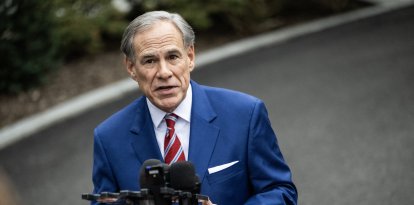
Senator Rick Scott.

In what represents the first show of internal dissent within the Republican bloc over the ambitious White House infrastructure project, Sen. Rick Scott (R-FL) has taken a firm stand against using $400 million of taxpayer money to build President Donald Trump's ballroom.
His main argument lies in the need to exercise strict fiscal discipline in the face of the nation's ballooning deficit.
In an interview given to NBC News Monday night, the Florida lawmaker argued that a project of this magnitude must be paid for entirely by the private sector. "I don't know why you would do it," with tax money, "if it's already all funded," Scott said, questioning the logic of adding expenses to the federal budget.

Just The News
Hate Incorporated: The left's intolerance machine threatens to change security forever
John Solomon
For the senator, the country's economic situation does not allow for concessions in public spending. "We have $39 trillion in debt," he bluntly reminded, adding that "maybe we should stop spending money."
National security vs. budgetary responsibility
While Scott agrees that the work is necessary to protect the top brass of the government, he insists that the funds are already available outside the state apparatus. In a statement obtained by The Hill, the senator urged the opposition to allow the project to move forward without saddling citizens with the bill.
"We need the ballroom and Democrats need to get over their Trump Derangement Syndrome and stop holding it back. We don't need tax dollars for it because the project is already paid for with private funds," Scott said.
Originally, President Donald Trump's plan called for funding the new structure through donations. However, the urgency generated by the recent attempted attack at the Washington Hilton hotel has led other party members to propose a permanent, public funding avenue.
Underground infrastructure: Lindsey Graham's plan
On the other side of the internal debate, Sen. Lindsey Graham (R-SC) is spearheading a legislative initiative to authorize the $400 million.
Accompanied by Senators Katie Britt (R-AL) and Eric Schmitt (R-MO), Graham maintains that the project is much more than an event hall. The design includes an underground military facility and a strategic annex for the Secret Service, vital in cases of national emergency.
To mitigate the fiscal impact, proponents suggest offsetting costs with customs tariffs and national park user fees. Graham drew a distinction between what constitutes defense infrastructure and what constitutes interior decoration.

"Underneath there will be a lot of military stuff. There will be a Secret Service annex and we'll pay for it by offsetting it with customs fees," Graham explained during a press conference. "Private donations can be used, but I think they should be used to buy [fine] china and things like that," he said.
The Republican proposal seeks to ensure that the president and his Cabinet have an armored space within the White House grounds. According to Graham, the vulnerability shown in outside events is unacceptable.
"I'm convinced that, had there been a presidential ballroom adjacent to the White House, the guy would never have gotten in," the lawmaker stated, referring to last weekend's attack and stressing that national command security must take precedence over logistical disputes.


Politics
Fetterman demands Democrats fund Trump ballroom in wake of assassination attempt at Hilton
Andrés Ignacio Henríquez
LATEST