Naturalizations have fallen by as much as 50% after Trump tightened immigration policy
Citizenship applications also registered steep drops. In October 2025, 169,159 people initiated the naturalization process. A month later, in November, the number dropped to 41,478 applications, a reduction of more than 75%.
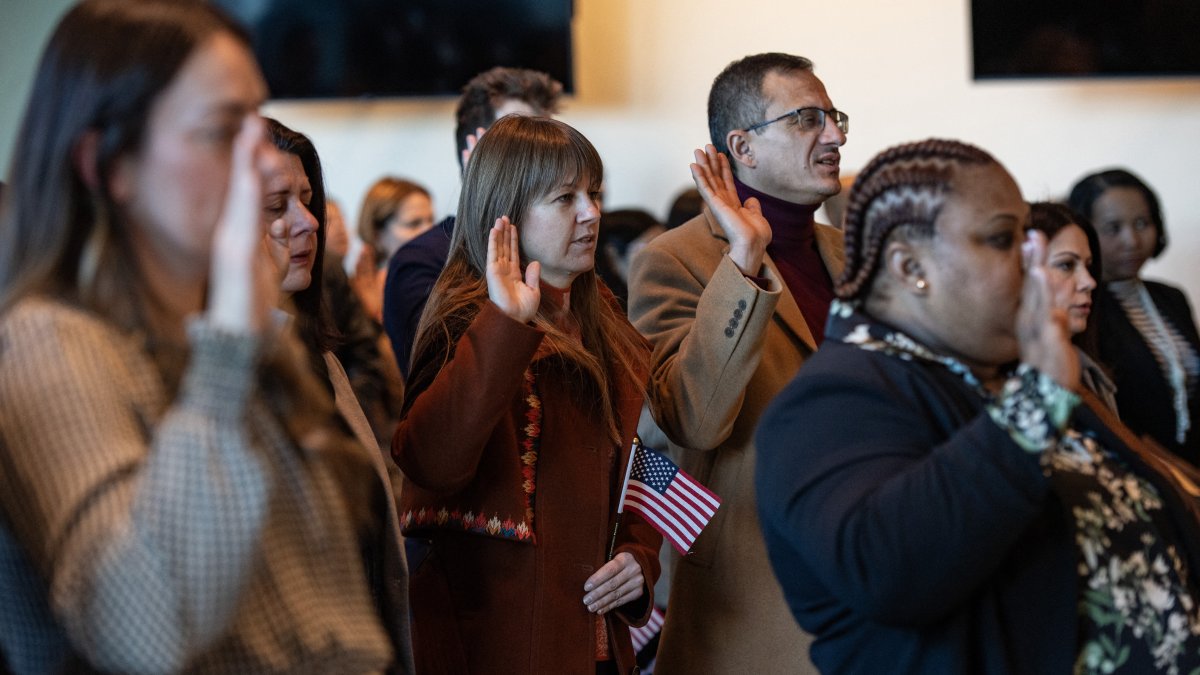
U.S. immigrant naturalization ceremony.

The immigration policies of President Donald Trump have led to a sharp decline in access to U.S. citizenship. Recent data from the Citizenship and Immigration Services, analyzed by NPR, show a near 50% drop in naturalization applications and approvals between late 2025 and early 2026.
The decline follows a series of reforms that tightened requirements, increased controls and slowed down processes within the immigration system.
Drop in approvals: From historic highs to lows
The number of approved naturalizations showed strong volatility during 2025. At its peak, USCIS approved 88,488 applications in a single month, the highest level since monthly records have been kept (2022).
However, in January 2026 the figure fell to 32,862 approvals, the lowest level recorded to date.
In operational terms, the total volume of resolved cases (approvals and rejections combined) also fell significantly: from 78,379 in September 2025 to 37,832 in January 2026, evidence of a general slowdown in the system.
Plummeting applications: 75% drops in one month
Citizenship applications also registered steep drops. In October 2025, 169,159 people began the naturalization process. A month later, in November, the number dropped to 41,478 applications, a reduction of more than 75%.
December saw 42,569 applications, while January 2026 saw a slight uptick to 46,385, although the level remains well below the previous year's average.

Society
US recorded negative net migration in 2025 for the first time in 50 years
Emmanuel Alejandro Rondón
Key changes in the naturalization process
The decline coincides with the implementation of new measures by the U.S. Department of Homeland Security and USCIS aimed at tightening controls over applicants.
Among the main changes are:
- Reintroduction of the civic education test of 2020, more extensive and demanding than previous versions.
- Higher English language proficiency requirements.
- Review of social media to detect conduct deemed contrary to U.S. interests.
- Restablishment of neighborhood inquiries, which had been practically defunct since 1991.
- Stricter evaluations of "good moral character" and attachment to the Constitution.
In addition, USCIS has increased scrutiny on applicants from countries considered high-risk and has suspended or slowed processing for citizens of dozens of countries.
The data reflects two-phase behavior. In early 2025, there was a significant increase in applications, driven by fears of new restrictions. Between February and April of that year, more than 270,000 people applied for citizenship.
However, as the new policies went into effect, the number of applicants dropped steadily.
Politics
Supreme Court agrees to review Trump's order seeking to limit birthright citizenship
Sabrina Martin
Impact on the immigration system
USCIS, for its part, has defended the reforms as part of a strategy to strengthen security, system integrity and prioritize national interests.
Beyond the monthly fluctuations, the data points to a structural change in the U.S. immigration system. The simultaneous drop in applications, approvals and processing volume indicates a transition to a more restrictive model.
In practical terms, this translates into fewer new citizens, longer processes and greater demands for those seeking to complete the last step of legal immigration to the United States.
LATEST