ANALYSIS
Point by point: Here's what's included in the Senate deal that would end the longest government shutdown in history
A group of eight Democrats joined Republicans in pushing a continuing resolution (CR) that has four key pillars.
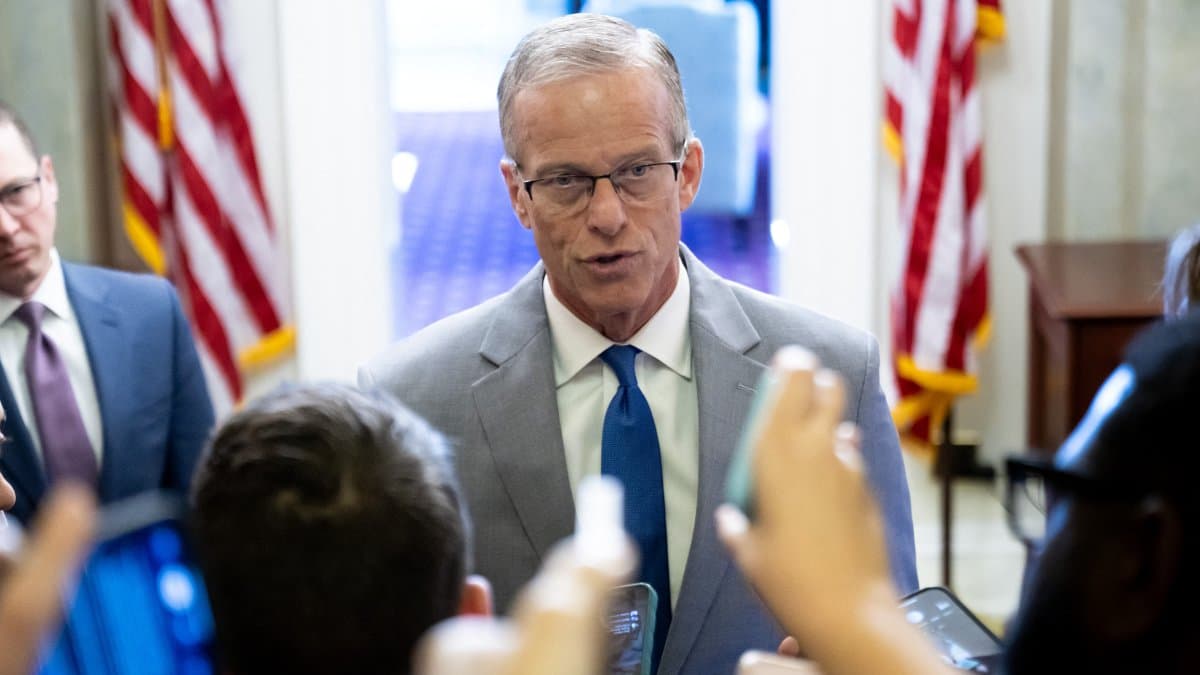

After three weeks of stalemate and cross accusations, a group of Democrats agreed to a proposal to end the government shutdown. The proposal by John Thune (R-SD), the Republican majority leader in the Senate, was no different than what he had previously put forward. However, with the election process already over and Democrats winning Virginia, New Jersey and other races, eight blue senators decided to join Republicans.
Due to the Senate filibuster rule, reopening the government requires a minimum of 60 votes. Currently, the Republican majority of 53 senators alone is not enough to do so. Therefore, the Republicans in the Senate needed at least seven Democrats on board, and so far, they could only get two.
In this context, and after refusing to vote in favor in recent weeks, a group of eight Democrats reached an agreement to end the shutdown. Discounting Republican Rand Paul (R-KY), who voted against, the remaining Republicans and the aforementioned Democrats total 60.
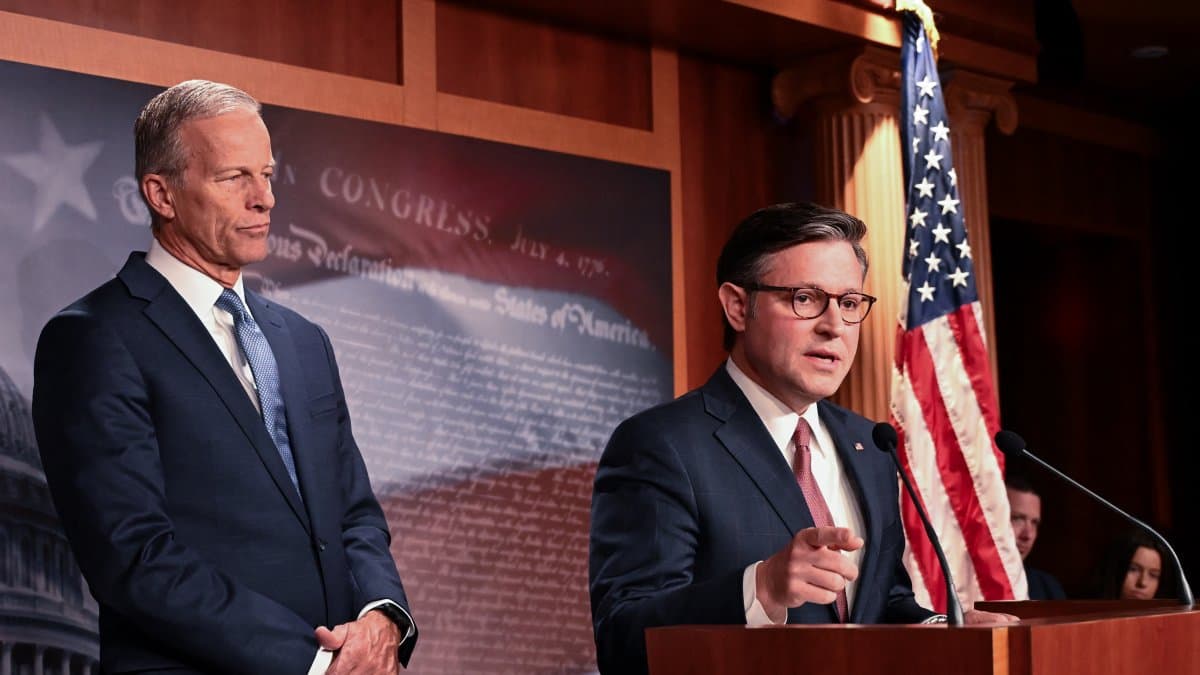
Senators who crossed the aisle are as follows: John Fetterman (D-PA), Maggie Hassan (D-NH), Tim Kaine (D-VA), Dick Durbin (D-IL), Catherine Cortez Masto (D-NV), Angus King (I-ME), Jacky Rosen (D-NV) and Jeanne Shaheen (D-NH).
No votes from Georgia senators, Raphael Warnock and Jon Ossoff, but especially the latter, who will seek re-election in 2026, drew attention. Other striking "no" votes came from Chris Coons of Delaware and Pat Murray of Washington, particularly since Murray was an active part of the deal.
As explained by Senator Ted Cruz (R-TX) on his podcast, "Verdict," after Sunday's vote, the government is "in the process of reopening," given that there will still be a few days to wait until the final vote.
The pillars of the agreement to end the government shutdown
As for the content of the agreement, it has four main pillars:
- Funding extended until January 2026: The main point of the agreement is a CR that extends government funding until January 30. An important point is that it is after Christmas and New Year's, one of the Republican demands. This gives Congress time to debate and pass spending bills for the entire year.
- A promise of a vote on Affordable Care Act subsidies (Obamacare): This was the Democrats' key request, though not everyone was satisfied. As part of the deal, Republicans committed to a vote on Obamacare subsidies that are set to expire at the end of the year. Many progressive Democrats showed dissatisfaction with this point, since it does not automatically extend the subsidies. Instead, Republicans only committed to bringing them up for a vote, with the high likelihood that the bill would not garner the necessary votes to move forward. "There's no way to defend this. And you are right to be angry about it. I'm angry about it," Senator Chris Murphy of Connecticut expressed on the matter.
- Three appropriations bills (minibus): Each year, Congress must pass twelve budget appropriations bills, one for each major area of the federal government, e.g., defense, education, transportation or agriculture. These bills authorize and allocate money to federal agencies to operate during the new fiscal year, which begins on October 1. If these laws are not passed on time, the government will run out of legal funds to spend, and part of the public administration will have to shut down, as is currently the case. In this context, and instead of approving these twelve packages one by one, the legislators choose to combine several of them in a single bill. This "mega-package" is called the "omnibus." Instead, this agreement includes approval of a "minibus," which includes only two or three of these earmarks. This "minibus" provides funding for military construction and the Department of Veterans Affairs, the Department of Agriculture and the FDA (including funding for the SNAP program) and legislative branch operations.
- Reverts layoffs made during the government shutdown: The agreement between Republicans and Democrats reverses layoffs implemented by the Trump administration since the start of the shutdown and freezes any cuts until January 30. "Any reduction in force proposed, noticed, initiated, executed, implemented, or otherwise taken by an Executive Agency between October 1, 2025, and the date of enactment, shall have no force or effect," the resolution states.
🛠 Do you think there is an error in this article?
Recommendations




LATEST