ANALYSIS
Bill Gates calls for less investment in climate change: 'It will not be the end of civilazation'
After two decades as a green benchmark, the philanthropist proposes a shift in priorities: from temperature control to human well-being.
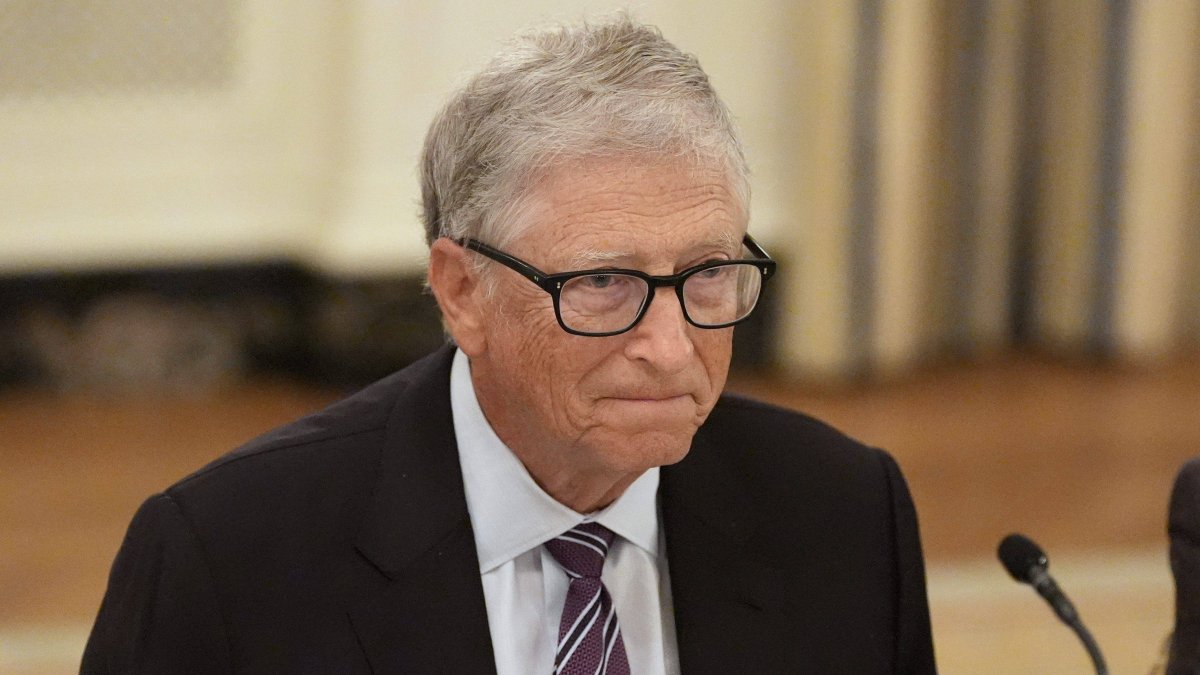
Bill Gates at the White House

Bill Gates, philanthropist and author of How to Avoid a Climate Disaster, who has spent billions on environmental causes, warned in an article Tuesday against the "doomsday outlook" of climate change and called for redirecting aid toward poverty and health.
"There’s a doomsday view of climate change that goes like this," Gates opens his text:
"In a few decades, cataclysmic climate change will decimate civilization. The evidence is all around us—just look at all the heat waves and storms caused by rising global temperatures. Nothing matters more than limiting the rise in temperature."
He continues: "Fortunately for all of us, this view is wrong." The Microsoft founder adds that although "climate change will have serious consequences," "it will not lead to humanity’s demise."
Gates then calls for redirecting environmentalist efforts towards "improving lives." "Our chief goal should be to prevent suffering, particularly for those in the toughest conditions who live in the world’s poorest countries," he adds, elaborating:
"Although climate change will hurt poor people more than anyone else, for the vast majority of them it will not be the only or even the biggest threat to their lives and welfare. The biggest problems are poverty and disease, just as they always have been. Understanding this will let us focus our limited resources on interventions that will have the greatest impact for the most vulnerable people."
Gates also anticipates criticism from the environmentalist camp, insisting that climate change "needs to be solved," but on par with "other problems like malaria and malnutrition." He also notes that it offsets its "carbon footprint" with "legitimate carbon credits."
The key question, according to the 70-year-old billionaire, is how to make limited aid spending generate the greatest possible benefit for the most vulnerable. Investing it in climate change, he argues, is not the answer.

Politics
Gates Foundation severs ties with a firm that manages 'dark money' funds linked to Democrats
Carlos Dominguez

Gates' three new truths
Gates' shift in stance comes a day after UN Secretary-General Antonio Guterres warned of "devastating consequences" if the goal of limiting global warming to 1.5°C continued to be missed.
"We don't want to see the Amazon as a Sabana," Guterres said in an interview ahead of the COP30 climate summit next month. "But that is a real risk if we don't change course, and if we don't take a dramatic decrease of emissions as soon as possible."
Bill Gates appealed directly to those attending the summit, which will bring together governments and NGOs in Belém, Brazil. He outlined a series of new priorities, all reflecting the shift in focus from "global temperature" to "human welfare": "Our success relies on putting energy, health, and agriculture at the center of our strategies."
The philanthropist outlines three "truths" that, he says, will help guide that shift:
- "Climate change is a serious problem, but it will not be the end of civilazation."
- "Temperature is not the best way to measure our progress on climate."
- "Health and prosperity are the best defense against climate change."
In that sense, Gates emphasizes the importance of economic growth, both celebrating increased energy spending—even if it is environmentally unfriendly—because it drives development that can provide solutions to the planet’s problems, and ensuring that growth is linked to improvements in health, thus "reduce climate deaths."
He also acknowledges instances where efforts to reduce emissions have harmed the welfare of the poorest:
"A few years ago, the government of one low-income country set out to cut emissions by banning synthetic fertilizers. Farmers’ yields plummeted, there was much less food available, and prices skyrocketed. The country was hit by a crisis because the government valued reducing emissions above other important things."
Bill Gates' journey with climate change
While the primary mission of his NGO, the Gates Foundation, is to fight poverty and poor health, it also devotes resources to climate initiatives. In 2015, he founded Breakthrough Energy, a network of organizations dedicated to investing in climate change solutions.
He has also faced criticism from environmental activists, who compared his speeches to his lifestyle. A 2019 report from Lund University estimated that one trip on his private plane emitted the average annual emissions of 105 people.
In March, perhaps in anticipation of this week's letter, Breakthrough Energy reportedly laid off dozens of employees. According to The New York Times, the first to report the cuts, "the change shows how Mr. Gates is retooling his empire for the Trump era." The newspaper had listed the Microsoft founder among the climate philanthropists who had abandoned the issue in the wake of Trump's victory.
LATEST