ANALYSIS.
Second week of government shutdown kicks off with no agreement in sight
The distance between the two parties, especially on Medicaid expansion to illegal immigrants, raises fears that its duration could approach or even surpass the longest shutdowns in the country's history.
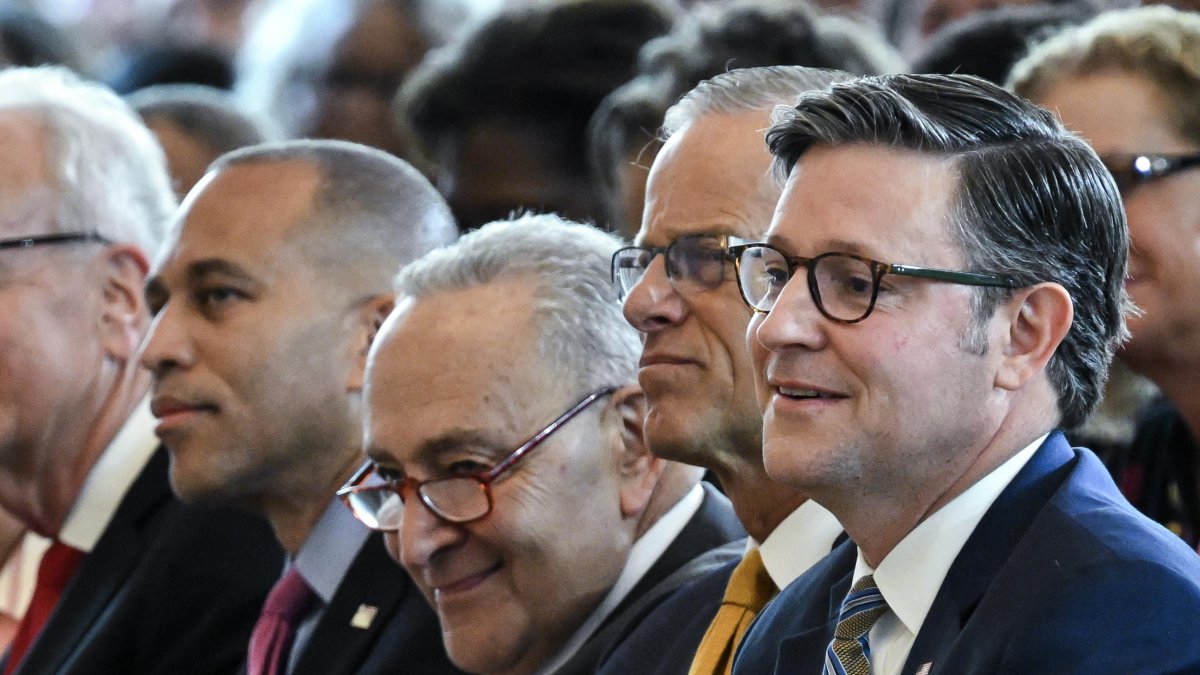
Congressional leaders on Capitol Hill.

The budget paralysis in the United States enters its second week Monday and threatens to drag on even longer given the stark differences between Democrats and Republicans. Not even Donald Trump's announcement that federal employee layoffs have begun seems to have been able to bring the positions between the two major parties closer together.
Until now, the leaders of both parties had avoided closures with negotiations on the fringes. Such alliances have proven costly on many occasions, as happened during the last legislature with Kevin McCarthy, who ended up being ousted as speaker of the House at the hands of the hard wing of his own party, or current Speaker Mike Johnson.
Schumer nearly lost his seat for preventing a shutdown
So far this term, Democrat Chuck Schumer suffered widespread rebuke from more radical Democrats who went so far as to call for his resignation because he made it easier for the Senate to green-light a continuing resolution. In fact, it is one of the keys to the current resistance from Democrats, since they feel that him caving in on the last occasion did not benefit them in any way.
Amid the partisan battle, Trump announced Sunday night that definitive layoffs of public workers began, instead of the temporary furloughs that usually apply during a shutdown. In recent days, he also froze infrastructure projects and threatened to eliminate federal agencies.
"The Democrats are causing the loss of a lot of jobs"
"It's taking place right now, and it's all because of the Democrats," Trump said in reference to the layoffs before reporters at the White House. "The Democrats are causing the loss of a lot of jobs," he added.
Among those most affected by the shutdown are federal employees, who will not be able to collect their paychecks until Congress approves a budget. The situation represents a significant loss of income for more than 2 million workers.
Medicaid for illegal immigrants key to the dispute
"It's possible this shutdown drags on for weeks, not just days," estimated Andrew Koneschusky, a former advisor to Minority Leader Chuck Schumer. "Right now, both sides are dug in and there's very little talk of compromise. Things can always change ... but for the moment neither seems willing to budge," this crisis communications specialist told AFP.
Republicans are proposing an extension of the current budget until the end of November, while the Democrats insist on extending health insurance programs for undocumented immigrants, a line conservatives have been unwilling to cross, with the fight against immigration as one of their top priorities.
Scott Bessent, Donald Trump's Treasury secretary, warned Thursday that, if this situation dragged on, he feared an impact on GDP and growth.
Will the deal come for the markets?
The financial factor should therefore not be overlooked. Speaking to AFP, analyst Michael Ashley Schulman pointed out that the way out of the crisis could come from the economic situation that would be triggered in the event of a prolonged government shutdown.
"If Wall Street starts to get nervous and bond yields skyrocket, even the most fervent ideologues will suddenly be committed to assuming consensus solutions," he predicted.
The longest government shutdown was 35 days, in Trump's first term in office
However, Republicans are hoping to persuade enough Democratic senators to reach the 60-vote threshold needed to overcome the impasse. As of Friday, their bill had only garnered 54 votes, including three from the opposition.
LATEST