The Department of Agriculture announced an agreement with Mexico on the water dispute
Mexico commits to supply 250 million cubic meters of water starting next week and catch up on the backlog accumulated over the past few years.

Donald Trump and Claudia Sheinbaum

The U.S. Department of Agriculture announced Friday night that it had reached an agreement with Mexico, which has reneged on its obligations under a treaty to share water and prompted a threat by President Donald Trump to impose tariffs.
"The United States and Mexico reached an agreement today to meet current obligations on water resources for U.S. farmers and ranchers and for Mexico to cover the water deficit to Texas under the 1944 Treaty," that portfolio said in a statement. It specified that this agreement applied to the "current cycle and the water deficit of the previous cycle."
Trump accused Mexico on Monday of not respecting the water sharing treaty between the two countries, which obliges the United States to send 1.85 billion cubic meters from the Colorado River and Mexico to provide 432 million cubic meters from the Rio Grande.
A deficit of more than 1 billion cubic meters of water in the last 5 years
Mexico is behind on its obligations. According to Washington, its neighbor accumulates a deficit of more than 1 billion cubic meters of water in the last five years. "This violation severely hurts our beautiful crops and our livestock in Texas," Trump tweeted Monday.
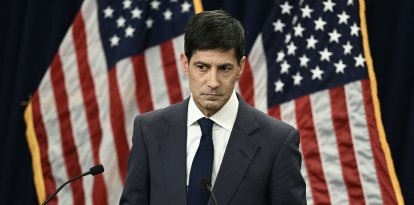
The Department of Agriculture explained Friday that Mexico had agreed to supply 250 million cubic meters of water starting next week and catch up with the backlog. Agriculture Secretary Brooke Rollins, quoted in the statement, said Mexico delivered more water in one year than in the previous four years combined.
Threat of additional tariffs
Trump has said that if Mexico continues to default on its commitments, he reserves the right to impose tariffs of 5% on imported Mexican products.
According to Roberto Velasco, Mexico’s deputy foreign minister for North America, a severe drought in 2022 and 2023 prevented the country from meeting its obligations.
LATEST