Trump revokes the security clearances of 37 officials, accusing them of leaking 'classified information'
Among those affected by the decision are several former Biden administration officials, including Maher Bitar, Emily Horne and Brett Holmgren.

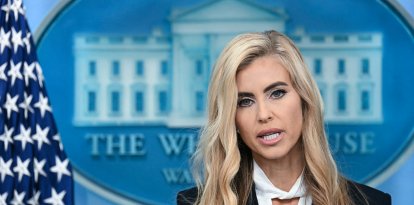
Gabbard at the White House/Andrew Caballero-Reynolds.

The Trump administration revoked the security clearances of 37 intelligence officials. Tulsi Gabbard, director of National Intelligence, explained that these are current and former officials who "have abused the public trust by politicizing and manipulating intelligence, leaking classified intelligence without authorization, and/or committing intentional egregious violations of tradecraft standards."
Among those affected by the decision are several former Biden administration officials. One of them is Maher Bitar, who joined the National Security Council (NSC) after working for then-House Intelligence Committee chairman and current senator, Adam Schiff (D-CA).
"Being entrusted with a security clearance is a privilege, not a right. Those in the Intelligence Community who betray their oath to the Constitution and put their own interests ahead of the interests of the American people have broken the sacred trust they promised to uphold. In doing so, they undermine our national security, the safety and security of the American people and the foundational principles of our democratic republic," Gabbard explained on her X account.
">Being entrusted with a security clearance is a privilege, not a right. Those in the Intelligence Community who betray their oath to the Constitution and put their own interests ahead of the interests of the American people have broken the sacred trust they promised to uphold. In… pic.twitter.com/23DUNuVAi0
— DNI Tulsi Gabbard (@DNIGabbard) August 19, 2025
"Our Intelligence Community must be committed to upholding the values and principles enshrined in the US Constitution and maintain a laser-like focus on our mission of ensuring the safety, security and freedom of the American people," she added.
Other names involved are: Emily Horne, spokesperson for the U.S. National Security Council during the Biden administration, and Brett Holmgren, who officiated as undersecretary of state for intelligence and research.
What is a security clearance?
A single law does not regulate security clearances; instead, a combination of laws, executive orders and regulations, signed by Harry Truman, Dwight Eisenhower, Bill Clinton and Barack Obama, among others, governs this process.
Currently, there are three main levels of access to classified information: Confidential, Secret and Top Secret. For example, while information in the first category may be an internal communication between the Department of State and some embassy, the highest level may include transcripts of intercepted calls to foreign leaders.
LATEST