ANALYSIS
Jim Jordan criticizes British government over free speech regulations: 'We are concerned about the impact on the American citizens'
In a string of publications, the Republican revealed alleged emails from U.K. officials to social networks, including some from the United States.

Jim Jordan, chairman of the House Judiciary Committee

House Judiciary Committee Chairman Jim Jordan unveiled emails that allegedly prove instances of U.K. censorship, and even pressure on U.S. companies.
The Republican representative was leading a tour of the United Kingdom to address the censorship issue, during which he told the local press, "We are concerned about free expression here but we are primarily concerned about the impact your laws can have on the American citizens."
"Censorship" during the Southport protests
In a series of posts on X, the congressman shared screenshots of alleged emails from British officials to social media employees. His most recent posts show that the Starmer administration allegedly tried to silence voices critical of his administration and speeches on immigration during mass protests last year.
Although the representative does not clarify which companies received messages, one appears to be directed at TikTok. The sender was the Department of Science, Innovation and Technology (DSIT), as the sending address ("@dsit.gov.uk") reveals and the Republican representative confirms in writing.
"I am sure you will not be surprised at the significant volumes of anti-immigrant content directed at Muslim and Jewish communities as well as concerning narratives about the police and a 'two-tier' system," one of the mailings reads.
Jordan explained the "two-tier system" as a "justice system that treated government critics more harshly than violent criminals."
After sharing three examples of messages repudiated by regulators, they ask for a response "as soon as you are able to," after asking what types of content are being monitored by the platform and what action was taken.
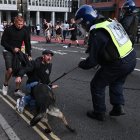
The communications were made during mass protests in August last year, which started after the murder of three girls in the town of Southport. The regulators allude to the episode, thanking the platform for its "ongoing help in relation to Southport" and its "proactive efforts to support local law enforcement" - phrases that could imply previous collaborations.
Examples of "concerning content"
In another post, regulators share with a tech one content from a user protesting that he had been denied a request for public information about hotels that housed illegal immigrants. "Please could this be assessed by the Trust and Safety team?" they ask, "there is a definite sense of urgency from here."
Jordan also claims that the U.K. authorities sent the tech companies examples "of 'concerning content' that they should censor." One would be the following tweet, which accompanies a video with the words "it looks like Islamabad but it's Manchester."
For the lawmaker, these emails allegedly show that London had tried to "censor public debate about immigration and asylum policy during this period of heightened public debate [over the Southport protests]" and that it "wanted to silence discussions about Europe’s mass migration policies."
The link to the United States
"The U.K. government also wanted to silence discussions about Europe’s mass migration policies," Jordan said. The representative referred to the words of London Metropolitan Police Commissioner Mark Rowley, who at the time told Sky News:
"We will throw the full force of the law... and whether you’re in this country committing crimes on the streets or committing crimes from further afield online we will come after you."
Asked specifically about Elon Musk, who tweeted about the demonstrations, Rowley assured that "being a keyboard warrior does not make you safe from the law." "We’ll come after those individuals just as we’ll physically confront the thugs."
In a previous installment of what he dubbed "The U.K. Censorship Files," Jordan claimed that Starmer regulators also targeted U.S. companies. On that occasion he took aim at Ofcom, an independent communications regulator in the U.K.
One of its alleged victims was the Rumble platform. Emails revealed by the Oversight Committee show an exchange between the social network and Ofcom in which the former assures that the U.K. is not one of its markets: neither has a high number of users there nor seeks it as a "target market."
The regulator responds that although it has not yet concluded on whether U.K. law covers Rumble, the company's opinion does not matter. It is not up to it to decide. "We will be monitoring Rumble's position carefully," it warns, and "strongly" encourages it to abide by British law.
The Administration's response
"One of the reasons free speech is so important is that it enables citizens to have accurate information and honest conversations about policy failures of the ruling class – immigration is a prime example of this," an administration spokesman assured following the latest revelations, in remarks reported by The Telegraph.
"We are monitoring free speech developments in the U.K. closely and with great concern," he continued. He also assured that the White House had already "taken decisive action against foreign nationals who engage in censorship of Americans."
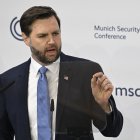
The Administration has criticized European speech regulations numerous times. One of the examples that generated the most commotion in Europe were the words of JD Vance in Munich, in which he assured that freedom of speech was under attack on the continent:
The British government has denied to the Telegraph that any censorship had taken place, claiming instead that it had limited itself to monitoring trends and pointing out to platforms cases of violation of their own internal rules.
The Online Safety Act
"It allows the British government to dictate how social media companies must censor so-called 'disinformation,' 'misinformation,' and hate speech," he asserted.
The representative met during his British tour with Peter Kyle, U.K. technology secretary. One of the main proponents of the Online Safety Act, whose department is allegedly been behind the emails published by Jordan.
Specifically, according to the The Telegraph newspaper, it was the National Security and Online Information Team (NSOIT), a team that also monitored anti-quarantine campaigns during the pandemic.

LATEST