Trump Administration pushes to eliminate in-state tuition for undocumented immigrant students
The DOJ has filed legal action against states such as Texas, Kentucky and Minnesota, arguing that these policies give an unfair benefit to undocumented immigrants, to the detriment of U.S. citizens and legal residents.

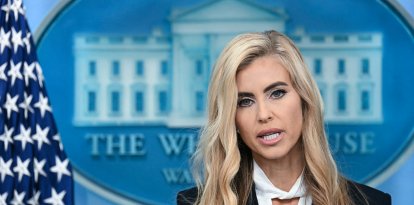
Attorney General Pam Bondi at the White House/ Jim Watson (File)

Since returning to the White House, the Trump Administration has stepped up its efforts to reverse state laws that allow undocumented immigrant students to access in-state in-state in-state tuition, a benefit that is often significantly cheaper than out-of-state rates.
According to a article published by Politico, the Department of Justice (DOJ) has brought legal action against states such as Texas, Kentucky, and Minnesota, arguing that these policies give an unfair benefit to undocumented immigrants, to the detriment of U.S. citizens and legal residents.
The DOJ contends that in-state tuition laws for undocumented students violate federal law by granting benefits to people without legal status that are not available to U.S. citizens, especially those residing in neighboring states.
"Under federal law, schools cannot provide benefits to illegal aliens that they do not provide to U.S. citizens,” said Attorney General Pam Bondi in an official DOJ release.
“The Justice Department will relentlessly fight to vindicate federal law and ensure that U.S. citizens are not treated like second-class citizens anywhere in the country.”

Texas: a turnaround after 24 years
Texas, which in 2001 became the first state to allow undocumented students to pay in-state tuition under the Dream Act, repealed the policy this year after direct pressure from the Trump administration.
The Texas law, originally signed by then Republican Governor Rick Perry, had allowed thousands of undocumented young people access to affordable higher education for 24 years. However, as Politico points out, President Trump convinced the state to dismantle this policy within hours, following a lawsuit filed by the Department of Justice and a joint motion with Texas Attorney General Ken Paxton, who agreed that the policy was unconstitutional.
For his part, the governor of Texas, Republican Greg Abbott in a posting on X in early June, noted, "“In-state tuition for illegal immigrants in Texas has ended”.
In-state tuition for illegal immigrants in Texas has ended.
— Greg Abbott (@GregAbbott_TX) June 4, 2025
Texas is permanently enjoined from providing in-state tuition for illegal immigrants. pic.twitter.com/auADfaUD6g
Change nationwide
In Florida, a 2014 in-state tuition law was repealed in February also this year, which the media outlet notes could cost the state's educational institutions about $15 million in tuition revenue.
In Kentucky, Republican Attorney General Russell Coleman aligned himself with Trump's stance, urging the state board of postsecondary education to withdraw its regulation to avoid litigation he considers a “losing fight”.
Minnesota also faces similar pressures, with a recent bill seeking to exclude undocumented students from programs such as North Star Promise, which offers free tuition to low-income residents.
At national level, approximately 408,000 undocumented students represent less than 2% of the college population, according to disclosed data. Of these, some 119,000 are protected by the Deferred Action for Childhood Arrivals (DACA) program, which for years enjoyed bipartisan support.
For his part, Rep. Randy Fine Randy Fine of Florida, for example, argued that granting in-state tuition to undocumented immigrants is "immoral" and constitutes an incentive for illegal immigration. “A Georgian who wants to go to Florida State is paying more to go to a Florida institution than a foreigner. It’s just not right to do”, Fine said.
The reactions
The elimination of these policies has generated anxiety among undocumented students. Along those lines, Manuel Gonzalez, vice president of the Austin Community College Board of Trustees, told Politico that many students face not only financial concerns, but also an “increasingly more hostile political climate”.
Lawsuits against the Trump administration's decision
LATEST