The Trump Administration is making good on its promise to release files on the assassination of Martin Luther King Jr.
For her part, Dr. Alveda King, niece of Martin Luther King Jr., expressed gratitude for the release, "I am grateful to President Trump and DNI Gabbard for delivering on their pledge of transparency in the release of these documents".
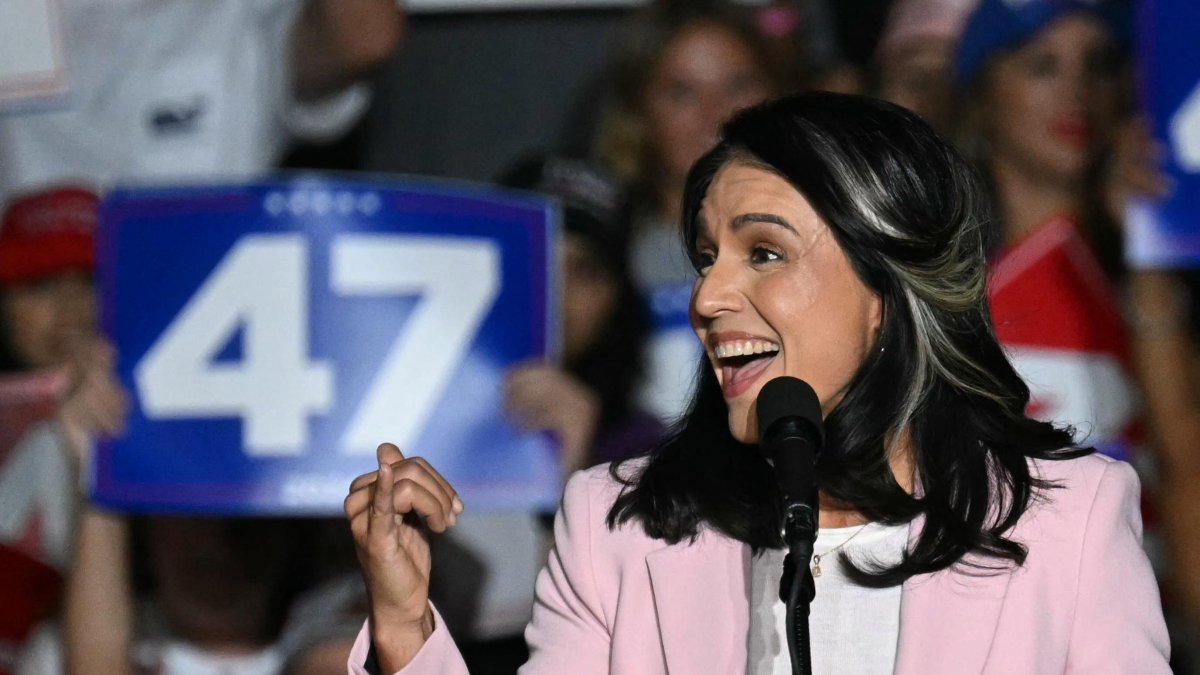
Director of National Intelligence, Tulsi Gabbard (File) Patrick T. Fallon

This Monday, the Director of National Intelligence (DNI), Tulsi Gabbard, announced the historic release of more than 230,000 pages of documents related to the assassination of Dr. Martin Luther King Jr., fulfilling a key campaign promise of President Donald Trump.
The archives, which have remained largely undigitized and in storage for decades, are now available to the public on the website of the National Archives.
The announcement, made through an official statement and a posting on Gabbard's X account, marks a milestone in the Trump Administration's commitment to promoting transparency and restoring public trust in government institutions. "Today, after nearly 60 years of questions surrounding the assassination of Dr. Martin Luther King, Jr., we are releasing 230,000 MLK assassination files, available now at archives.gov/mlk,” Gabbard stated.
Today, after nearly 60 years of questions surrounding the assassination of Dr. Martin Luther King, Jr., we are releasing 230,000 MLK assassination files, available now at https://t.co/71P3p5jBgK. The documents include details about the FBI’s investigation into the assassination… pic.twitter.com/l96t9tgYmn
— DNI Tulsi Gabbard (@DNIGabbard) July 21, 2025
The documents include details about the FBI investigation, analysis of possible leads, internal memos detailing the progress of the case and testimony from a former cellmate of James Earl Ray, who claimed to have discussed an alleged assassination plot with the man convicted of the crime.
The release is part of a broader effort spurred by an Executive Order signed by President Trump shortly after taking office for his second term in January.
The executive order mandated the declassification and release of records related to the assassinations of prominent figures in American history, including former President John F. Kennedy (JFK), Senator Robert F. Kennedy, and Dr. Martin Luther King Jr. During his 2024 campaign, Trump repeatedly promised to declassify these files, stating in June of that year that he would do so "early" in his administration, a promise he is now keeping.
Politics
Thanks to Trump, the FBI uncovers thousands of undisclosed records related to the JFK assassination
Agustina Blanco
Gabbard, under the president's directive, tasked his Director's Initiatives Group (DIG) with leading the effort to digitize, declassify and prepare the files for release.
This process, conducted in coordination with the Department of Justice (DOJ), the FBI, the CIA and the National Archives, has allowed the documents to now be accessible online with minimal redactions, primarily to protect personal information such as Social Security numbers.
For her part, Dr. Alveda King, niece of Martin Luther King Jr., expressed gratitude for the release, "I am grateful to President Trump and DNI Gabbard for delivering on their pledge of transparency in the release of these documents on the assassination of Martin Luther King, Jr. My uncle lived boldly in pursuit of truth and justice, and his enduring legacy of faith continues to inspire Americans to this day.”
Criticism over release of the archives
However, the Republican administration's decision has generated criticism from another part of the King family. According to Associated Press, the living children of Dr. King, Martin Luther King III and Bernice King, were notified in advance about the publication and sent teams to review the records before public release.
Despite this, they expressed concerns about the emotional impact and historical context of the documents and noted their father's case as a "captivating public curiosity for decades," but emphasized that his death is a deeply personal matter.
The Kings urged that the records be analyzed with "empathy, restraint and respect" for their ongoing suffering, stressing the need to consider the full historical context of the documents.
The assassination of Dr. King Jr.
James Earl Ray, convicted of the crime, initially confessed, but later recanted his statement, fueling conspiracy theories that persist to this day.
The newly released documents offer the public an unprecedented opportunity to examine the federal government's investigation, although some experts caution that they may not contain definitive revelations.
LATEST