Senate approves DOGE cuts: $9 billion in reductions including foreign aid and public broadcasting
The upper chamber, by a 51-48 vote, hands Trump another victory in his fight to reduce the size of the government in line with the parameters left by Elon Musk with his team during their collaboration with the Administration.

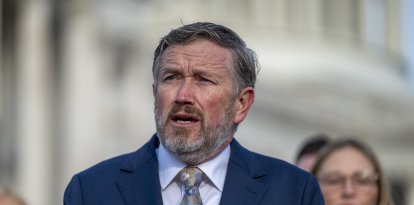
John Thune during a press conference.

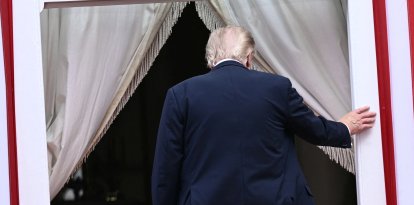
Donald Trump won a new victory in the Senate for reducing government spending. This time he didn't even need the vice president's tie-breaking vote, as he won the backing of 51 lawmakers in the upper chamber to approve a package with cuts of about $9 billion, including to USAID and Public Broadcasting.
The session lasted 12 hours, during which each of the amendments presented by the senators was voted on. Finally, after 2 a.m. on Thursday, lawmakers gave the green light to the final proposal.
Finally, the former leader of the party in the upper house, Mitch McConnell, voted yes to the final package. Senators Lisa Murkowsky and Susan Collins, however, did not budge on their position. The Democrats, meanwhile, could not count on Tina Smith, who had to be hospitalized after feeling ill during the marathon session, in the deciding vote.
Some $8 billion less for foreign aid, another $1 billion for PBS and NPR
The bill features a cut of nearly $8 billion from a range of international programs, including development assistance, the economic support fund, USAID's global health programs, and international refugee and disaster victim assistance programs.
It also includes cuts of more than $1 billion from the Corporation for Public Broadcasting, against which Trump has charged hard, accusing NPR and PBS of "being worse than CNN and MSDNC combined." In fact, he warned Republican senators that if they voted against the measure, they would lose his support and endorsement in future elections.

Bush's PEPFAR plan saved by conservative mutiny
However, Senate Republican leaders were forced to remove $400 million in cuts to funding for the PEPFAR program—created by President George W. Bush to fight AIDS—after facing strong opposition from a large number of conservative lawmakers who threatened to block final approval of the bill.
Despite the fact that the package involves only a cut of one-tenth of 1% of the federal budget, Republicans highlighted what was achieved. In Trump's first term, it was precisely the Senate that knocked down a proposal by the tycoon to save $15 billion.
"A small but important step toward fiscal sanity"
"It's a small but important step toward fiscal sanity that we should all agree is long overdue," Senate Majority Leader John Thune stressed before the final vote, which came with three Republicans voting against it in two previous procedural votes.
"I hope the administration keeps sending us rescissions packages, it's the only way I see to reduce spending," said Republican Sen. John Kennedy. The veteran lawmaker especially charged the Corporation for Public Broadcasting: "Let's cut it like a dead stump," he said, pointing to National Public Radio CEO Katherine Maher's Katherine Maher's 2020 social media post that "America is addicted to white supremacy."
Also showing his satisfaction was South Carolina's influential Republican senator, Lindsey Graham, who told AFP that this legislation is in sync with Trump's promises to cut spending: "I've always supported foreign aid... soft power is necessary. But when you start spending money on a pile of garbage and progressive programs disconnected from the objective of the aid, it's hard for a person like me to accept it."
The House must pass the text by Friday or the government must spend the money
The bill must be passed before Friday by the House of Representatives, otherwise the government will have to spend the money, as planned, since it was earmarked and approved.
So-called rescission packages are a very rare tool. In fact, they had not been used in decades.
Schumer warns: don't count on Democrats to avoid government shutdowns
"This bill will hurt America's farmers and researchers and businesses, make the world an easier place, unfortunately, for terrorist recruitment, and reward Communist China and [Russian President] Vladimir Putin," Schumer said of the cuts to global aid programs.
The veteran Democratic senator also noted that Republicans are rushing ahead with no idea how these unhinged cuts will be implemented," precisely another of the points that generated the most controversy among conservatives themselves when it came to giving the green light to the proposal.
Schumer also recalled his words to his Republican colleagues last month, in which he warned them that it is "absurd" to expect Democrats to "act as usual and engage in a bipartisan appropriations process to fund the government while at the same time (Republicans) conspire to pass a purely partisan rescissions bill."
LATEST