The diplomatic corps in Cuba is not immune to the crisis either
A deterioration in diplomatic conditions would also have consequences for technical and economic cooperation. Numerous countries and organizations maintain programs for food security, climate resilience, and humanitarian assistance that depend on a minimum level of institutional predictability.
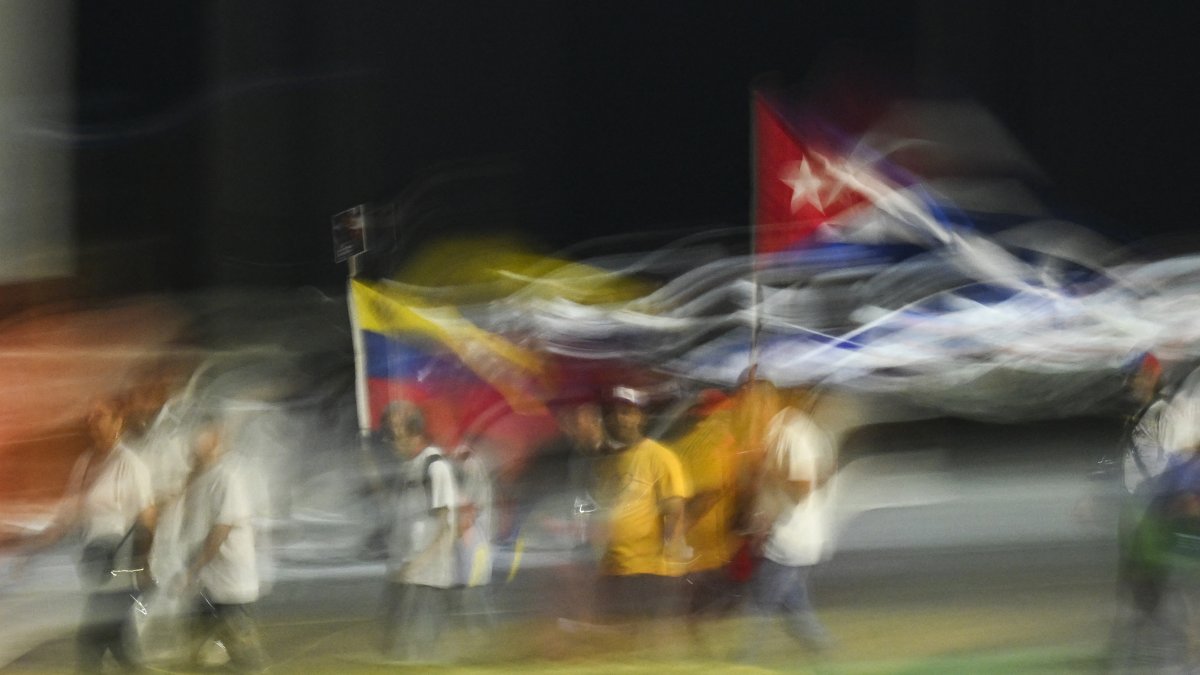
Flags from Latin America during a march in Havana (File photo)
Traditionally, analysis of the Cuban crisis has focused on the relationship between the government and its citizens. However, there is a less-explored angle: the impact of this deterioration on the diplomatic corps accredited in the country. Diplomacy requires a minimum level of stability to protect national interests and carry out its functions. When the host country cannot guarantee the continuity of basic services, foreign missions cease to deal exclusively with foreign policy and must also become crisis management structures.
The current situation in Cuba cannot be explained solely as a temporary foreign exchange deficit or a stagnation in gross domestic product. It is a systemic and multidimensional phenomenon that encompasses at least three dimensions: the polycrisis under conditions of scarcity, the tension between state security and human security, and the progressive disintegration of a national infrastructure composed of closely interdependent nodes.
In contexts of extreme scarcity, it is not possible to analyze the energy crisis in isolation from the lack of fuel, water, or medical supplies. Insufficient electricity generation not only reduces urban lighting: it paralyzes pumping stations, disrupts food refrigeration, and affects production and telecommunications. The lack of water, in turn, increases health risks and puts pressure on a healthcare system that is already lacking supplies.
This interconnection produces a kind of state entropy: a process of increasing disorder in which the resources necessary to maintain social and administrative functioning are dissipated and the government's capacity to respond becomes increasingly limited. A partial solution, such as importing food, can be rendered ineffective by another failure, such as a lack of fuel to transport it or electricity to preserve it.
From a systems theory perspective, a nation's economy and infrastructure function as a network of interconnected components: energy, transportation, agricultural production, health care, water, and sanitation. In a resilient system, the failure of one node can be offset by others or through the influx of external resources. In the current Cuban model, centralization and scarcity have created a situation of tight coupling: the failure of one component triggers a chain reaction affecting the others.
Fuel shortages and the obsolescence of thermal power plants limit electricity generation. Power outages reduce production, interrupt water pumping, and disrupt communications. The shutdown of industry reduces the revenue needed to import fuel, while the lack of water undermines the health of the workforce and affects irrigation and cooling systems. The system has thus lost much of its capacity for self-regulation.
This is one of the reasons why the crisis is perceived as omnipresent. It is not merely a matter of a single product or service missing: the breakdown of the energy infrastructure has disabled a large part of the subsystems that sustain daily life.
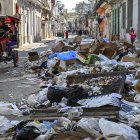
From state security to human insecurity
Another essential distinction is that between state security and human security, a concept promoted by the United Nations Development Program since 1994.
Traditional state security focuses on the protection of borders, territorial integrity, the stability of the regime, and the maintenance of public order. Under this logic, the state prioritizes the preservation of its institutions and power structures, presenting political stability as a necessary condition for collective security.
Human security, on the other hand, places the individual at the center. It is defined by the ability to live free from fear and extreme deprivation: violence, hunger, disease, and the lack of basic services. A state can maintain control over its institutions and, at the same time, be profoundly insecure for a population that lacks drinking water, electricity, food, or medicine.
In Cuba, there is a critical divergence between these two concepts. The state retains mechanisms of political and institutional control, but has failed systematically to guarantee the pillars of human security. When access to water, electricity, and fuel becomes a daily lottery, dignity, the predictability of life, and the very foundations of social peace erode.
This insecurity does not affect only the Cuban population. It also compromises the security and operational capabilities of international actors present in the territory. An environment incapable of guaranteeing basic living conditions becomes, by definition, a space of high volatility and operational risk.
The state's inability to provide essential services is not merely a human rights crisis. It is also a destabilizing factor that forces foreign missions to devote an increasing portion of their resources to mitigating material risks.
Politics
Rubio makes his strongest prediction yet about Cuba: "It will have a very different future"
Diane Hernández
Obligations of the host state
Diplomatic activity does not take place in a technical or social vacuum. The 1961 Vienna Convention on Diplomatic Relations establishes that the premises of a mission are inviolable and imposes on the receiving state a special obligation to take appropriate measures to protect its facilities.
This protection should not be understood solely as a response to attacks or intrusions. The functioning of a mission also depends on minimum conditions regarding infrastructure, communications, mobility, and access to basic services.
A lack of drinking water, for example, affects hygiene, health, and the daily operations of diplomatic missions and their residences. The water supply system that serves embassies and a large portion of their staff is the same one that serves the rest of the population. Interruptions in water pumping force them to rely on bottled water or other alternatives. Power outages, moreover, can prevent electrical filtration and water purification systems from functioning.
Not all members of the diplomatic corps live in residences with backup systems. Some are exposed to the same energy, sanitation, and logistical breakdowns that affect the Cuban population. However, the nature and intensity of the crisis are not the same for everyone.
The fundamental difference lies in resource autonomy. For the majority of the population, the crisis directly affects their ability to feed themselves, get around, and sustain their lives. For diplomatic personnel, it usually presents itself initially as a logistical challenge that can be mitigated through institutional resources.
To a certain extent, diplomatic missions operate as islands of imported resources. Their access to foreign currency and international markets allows them to acquire generators, water purification systems, food, medicine, vehicles, and backup equipment. This capacity reduces their direct exposure to certain failures of the host state.
But that protection creates a disconnect. The diplomat physically resides in Cuba, although their material reality remains tied to an international environment with greater capacity to respond. While citizens experience scarcity as a limitation on their freedom and dignity, the mission may experience it as a difficulty in fulfilling its agenda. This difference creates the danger of a diplomatic bubble.
The diplomatic bubble
When an observer lives in a protected environment, their interpretation of the surrounding reality can become distorted. The ability to maintain food, electricity, water, and transportation through self-generated solutions can lead to underestimating the severity of the crisis.
If an embassy manages to maintain its basic conditions, there is a risk of interpreting the situation in Cuba as a temporary management problem rather than as a structural deterioration of human security.
Diplomatic work requires an understanding of a society's needs, fears, and tensions. However, the bubble acts as a filter that smooths out the rough edges of reality. When diplomatic staff do not directly experience precarious conditions, their ability to interpret discontent, instability, and social transformations may be diminished.
Despite these differences, there is one point of convergence: uncertainty. The deterioration of infrastructure has created a climate of unpredictability that affects, to varying degrees, all residents of the territory.
Not knowing whether there will be water for personal hygiene, electricity to refrigerate food, or fuel for transportation creates a state of constant alert. The diplomatic corps also depends on a deteriorated national logistics network. Fuel shortages, the collapse of transportation, and communication failures affect both the distribution of goods to the population and the delivery of supplies to diplomatic missions.
This shared vulnerability has a common root: a state system that can no longer guarantee predictability in daily life.
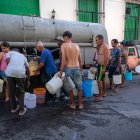
From energy transition to operational survival
In June, it was reported that Juan Canessa, Uruguay's ambassador to Cuba, requested an additional budget from his country's Ministry of Foreign Affairs to install solar panels at his residence due to the fuel shortage and the electricity crisis.
The request noted that power outages were hindering the normal operation of the embassy and the official residence, since their generators ran on diesel and the mission was unable to procure the necessary quantities.
The request drew on the experience of other diplomatic missions accredited in Cuba that had begun installing photovoltaic systems. The transition was driven not only by environmental policy but also by the need to ensure a minimum level of self-sufficiency in the face of the energy crisis.
The Uruguayan embassy analyzed several quotes and determined that the investment could be financed through savings from the fuel budget, which in 2025 amounted to nearly $10,000. The Ministry authorized the funds for the diplomatic mission but not for the ambassador's residence.
Uruguayan Foreign Minister Mario Lubetkin acknowledged that both the embassy and the residence had generators, purchased in 2024 and 2005, respectively. However, their operation was severely limited by the lack of fuel. As he explained, the sale of diesel at gas stations had been suspended since February 2026. After two bulk purchases made in March, the mission had not received authorization for further deliveries.
This situation is not unique to Uruguay. Other diplomatic missions and residences, especially those belonging to countries with fewer resources, have faced fuel rationing and power outages lasting more than 24 hours.
The cost of running a generator for extended periods can be considerable. A generator with an average consumption of two liters per hour would require 48 liters per day to operate continuously. This would amount to about $96 per day, $2,880 per month, and more than $35,000 per year.
This is not a routine expense for the operation of a diplomatic mission, but rather an extraordinary budget allocation intended to replace services that the host country should guarantee.
The crisis is penetrating the operational core of embassies
The erosion of the national infrastructure has gone beyond the sphere of domestic life and is beginning to affect the technical functioning of foreign missions. Embassies must devote increasingly more time and resources to maintaining their minimum operational capacity.
Electricity is the nervous system of a modern diplomatic mission. Secure communication, data management, archival preservation, and surveillance systems all depend on a stable power supply. The collapse of the National Electric System therefore impacts core functions of diplomacy.
Embassies need to maintain secure, encrypted, and reliable communications with their governments. Power outages and voltage fluctuations disrupt connectivity and can affect the transmission of sensitive information. Power surges can also damage equipment and databases or temporarily render communication channels inoperable.
Furthermore, diplomatic missions house physical and digital archives of historical and national security value. Servers, storage systems, and workstations require a constant flow of electricity. Replacing damaged specialized equipment is particularly difficult in Cuba.
The physical security of the facilities also depends on cameras, alarms, motion sensors, and electronic access controls. When the power fails, these systems cease to function if there is insufficient backup. The power outage thus reduces the mission's ability to protect personnel, facilities, and information.
This creates a paradox of dependency. To preserve their autonomy, missions rely on their own generators. But this equipment requires fuel, a scarce resource that is rationed and controlled by the host state. Embassies are forced to rely on the logistics of a state that cannot guarantee the necessary supply to replace the services it itself has ceased to provide.
Fuel shortages also limit travel. Observation visits, contacts with authorities, assistance to foreign nationals, and participation in official events all require mobility. A mission that cannot travel on a predictable basis sees its presence and capacity to influence reduced.
Fragmented workdays and preventive withdrawal
Although missions do not typically disclose their internal protocols, the dynamics at several embassies reveal a reorganization of diplomatic life shaped by power outages.
While public schedules were relatively predictable, some missions organized intensive or rotating shifts during the hours when electricity was expected to be available. However, in recent months, outages have ceased to be announced regularly and can exceed twenty hours a day.
Report writing, virtual conferences, and file management must be concentrated into the brief periods when power is available. This fragments the workday and makes it difficult to maintain stable coordination with other international offices.
Given the unpredictability of the outages and the difficulty in securing water and fuel, some missions have reduced their staff's physical presence during high-risk hours or on weekends. In practice, they may end up operating at minimal capacity and delegating essential tasks to on-call staff.
The crisis is thus transforming diplomatic work. The priority is no longer exclusively negotiation or representation but now also includes preserving the mission's own basic infrastructure.
A legal and political problem
The stability of international relations rests on a principle of reciprocity and guarantee. The host state must ensure that missions can carry out their functions safely and effectively.
If the diplomatic missions accredited in Cuba were to lodge formal complaints with their governments or with international organizations regarding the lack of minimum conditions, the problem would cease to be a bilateral logistical difficulty and would take on a legal and political dimension.
Cuba could cite force majeure, the economic crisis, or the impact of the U.S. embargo. However, the prolonged inability to guarantee the services necessary for the operation of a mission raises doubts about compliance with obligations of protection and due diligence.
The central issue is determining to what extent a structural deterioration of infrastructure can be considered an indirect violation of the host state's international commitments.
The duty of care requires a state to take reasonable measures to prevent harm to other states and their representatives. A lack of resources does not automatically eliminate this obligation, especially if the deterioration is related to an unbalanced allocation of resources, a lack of maintenance, or prolonged inefficient management.
The doctrine of impossibility of performance is restrictive. Force majeure must correspond to an unforeseeable and irresistible event. A structural, prolonged, and well-known crisis is more difficult to present as an unexpected event.
The debate, therefore, is not limited to the Cuban government's will, but rather to its material capacity to fulfill the obligations it has assumed.
International cooperation under pressure
A deterioration in diplomatic conditions would also have consequences for technical and economic cooperation. Numerous countries and organizations maintain programs for food security, climate resilience, and humanitarian assistance that depend on a minimum level of institutional predictability.
International aid requires transportation, storage, refrigeration, and communications. If the energy and logistics infrastructure is in critical condition, donors may question the government's ability to receive, store, and distribute resources.
Embassies and consulates are not merely centers of political representation. They also participate in the oversight, coordination, and assurance of cooperation flows. A reduction in their presence would not necessarily mean the end of funding, but it would hinder its implementation.
Agricultural inputs, machinery, spare parts, and other goods financed by cooperation agreements could be affected. The coordination of aid in the event of natural disasters also depends on diplomatic channels capable of mobilizing resources and verifying their distribution.
The withdrawal of observers and international personnel would further reduce transparency regarding the destination of humanitarian aid. Furthermore, there could be a shift from development cooperation toward more fragmented emergency assistance subject to external oversight mechanisms.
A domestic crisis becomes a diplomatic crisis
The multidimensional Cuban crisis is no longer solely an internal problem. The erosion of energy, water, fuel, and communications has a legal and political dimension that affects the functioning of foreign missions.
The uneven nature of the crisis should not create a false sense of security. The missions' ability to import solutions may temporarily protect them, but it can also distort their perception of the depth of social deterioration.
The diplomatic bubble needs to open up for a more direct observation of reality. A foreign policy crafted from within protected spaces runs the risk of misinterpreting a situation—which for the population means the daily loss of services, rights, and quality of life—as manageable.
If the deterioration continues, the missions could be forced to reduce their presence, demand new guarantees, or rethink their operating conditions. Any of these decisions would affect cooperation, political communication, and the Cuban state's international image.
The crisis has reached a point where not even those with resources, foreign currency, and institutional backing can completely avoid its consequences. The difference is that embassies can purchase solar panels, generators, and water purification systems; most citizens cannot.
The diplomatic corps does not experience the crisis under the same conditions as the Cuban people, but its growing difficulty in maintaining even minimal operational capacity is a telling sign. When a state cannot guarantee basic services even to the foreign missions it has undertaken to protect, its inability ceases to be an exclusively domestic matter and becomes international evidence of a structural deterioration that can no longer be contained within a bubble.
LATEST