The United States, a nation founded on a creed
The great challenge today is to have a sufficient number of Americans willing to fight and sacrifice for those ideas that makes the United States a unique experiment.
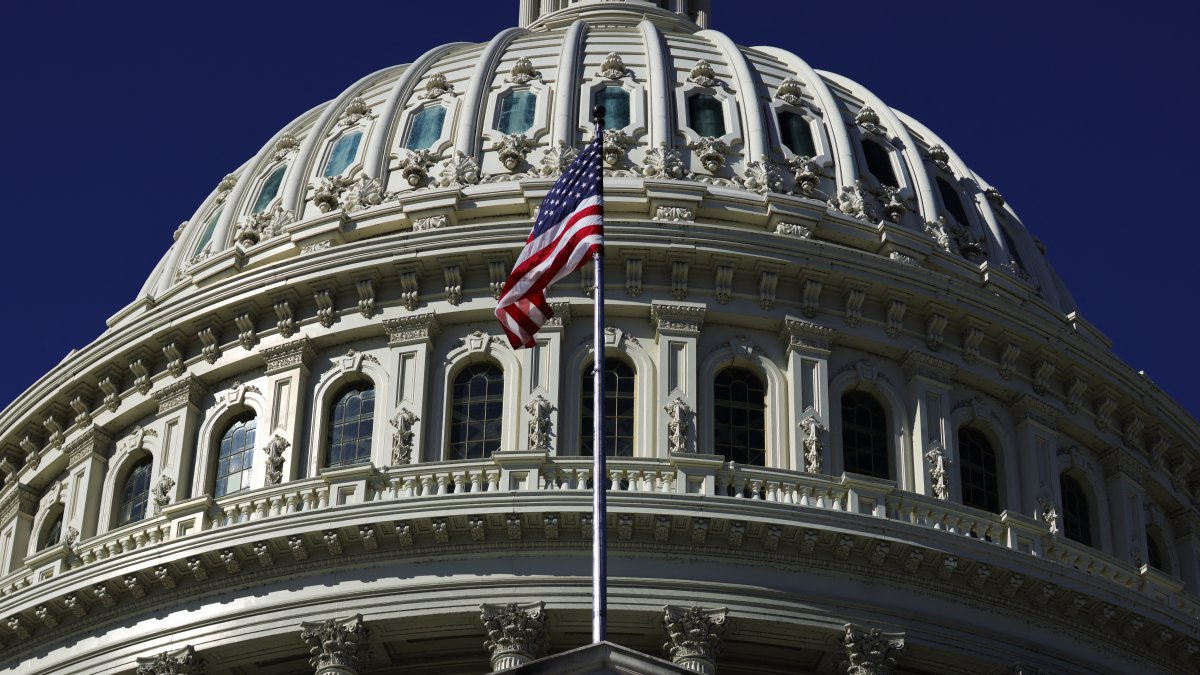
U.S. Capitol Building / Bryan Dozier
The 250th anniversary of the United States' Declaration of Independence is generating a flood of commentary. This is only natural, since those 13 colonies, which were viewed by their European contemporaries as distant lands and, outside the major cities, semi-wild, have for decades been the world's hegemonic power, whose influence is felt across the globe. Anyone interested will have no trouble, at this point, finding abundant information on the lives and exploits of the Founding Fathers, the debates that accompanied that momentous declaration, or the crucial role Spain played during the colonies' war with the British mother country.
But I want to focus here on another matter: the unique character of the United States of America. There are nations whose roots run deep in history, others that are clearly shaped by factors such as geography, ethnicity, language and religion. These are, so to speak, organic nations. This is not the case with the United States, a nation whose distinctiveness was observed with his usual insight by Chesterton, who, in his book What I Saw in America, published in 1922, wrote that "the United States is the only nation in the world founded on a creed. That creed is set forth with dogmatic and even theological lucidity in the Declaration of Independence." If this is not understood, one cannot comprehend the United States, which, for better or worse, is not a nation like so many others, but rather was born of an idea and conceives of no constraints or limits to the expansion of that idea.
This explains that famous anecdote involving Benjamin Franklin: when, upon leaving the Constitutional Convention in 1787, Elizabeth Willing Powel asked him, "Well, Dr. Franklin, what do we have, a republic or a monarchy?" Franklin replied with a phrase that has gone down in history: "A republic, if you can keep it." This response highlights that the United States is not like other nations but is in fact an ongoing political experiment. A nation, then, that requires a certain permanent tension, an endless effort, as its own founding fathers were already aware that relaxing and taking it for granted carries great risk.
This is also why the United States has, from its very beginnings, viewed its expansion as something natural and legitimate. Ultimately, the United States has conceived of itself as an open project to which territories and peoples could join. It is the manifest destiny of a republic that, on the other hand, will also experience the tension and contradictions between its expansionist dynamic and its rejection of imperialism, which it will regard as one of the vices of that old Europe that the Mayflower pilgrims abandoned, considering it definitively lost.

This tension between what has been characterized as expansionism and isolationism would run through the history of the United States. With some nuances, however, for example, isolationism has never been a significant factor when it came to the United States' position on the American continent: the Monroe Doctrine, now updated as the Donroe Doctrine within the framework of the Western Hemisphere, has always enjoyed broad majority support. Another matter is interventions overseas, something that proved much more difficult and did not become the norm until the United States' participation in the two world wars of the 20th century (although as early as 1805, U.S. Marines were deployed to Libya in the war against Barbary pirates), a step that on both occasions was taken when the conflict had already been underway for some time and amid strong resistance. Shedding American blood in distant conflicts, whose direct impact on life in the United States, protected by two oceans, is not so evident, always met with opposition, which on many occasions was far from marginal.
However, the die was cast. One might debate whether this was already the case as early as 1776, but it was undoubtedly so by 1865. The path the new nation would take during its first decades of existence left room for some uncertainty. In fact, even the term "nation," in its modern sense, would have been rejected by many Americans of those early days, with a weak federal government and loyalty to each individual state taking precedence for many. Confederation or Federal Republic? The Civil War decided the future of slavery in North America, of course, but in reality what was at stake was the institutional structure of the United States. Only in this light can one understand, for example, why Southerners opposed to slavery fought in the Confederate ranks. The outcome of the war gave rise to, this time for good, what would become a nation conceived as a unified whole, though without eliminating the enormous influence of the states or avoiding deep divisions, as evidenced, for example, by the punitive Reconstruction of the South or the persistence of Jim Crow laws until the 1960s. In any case, Lincoln earned his place alongside Washington as a founding father and shaped a united nation ready to increasingly spread its founding ideals.
This expansion was facilitated, of course, by the enormous industrial and economic power with which a continental United States, capable of uniting its two coasts and exploiting its vast resources, emerged during the so-called Gilded Age of the last third of the 19th century. Then came the decisive U.S. intervention in the two world wars, Wilson's largely failed attempt to reshape Europe, and the Cold War with the communist bloc, which culminated in the collapse of the USSR and its satellite states. It was a time of optimism and high expectations, which were tragically shattered by the attacks of Sept. 11, 2001. Since then, U.S. global leadership, far from being unchallenged, has had to face growing challenges: from jihadism to the rise of China, including Putin's Russia and the Iran of the ayatollahs. But perhaps the greatest challenge, as is always the case, lies at home. This is probably the moment, in its 250-year history, when more Americans no longer believe in that creed Chesterton spoke of. "A republic, if they can keep it," said Franklin; the great challenge facing the United States today, as with any political project that can rely neither on inertia nor on organic momentum, is to have a sufficient number of Americans willing to fight and sacrifice for those ideas that makes the United States a unique experiment.
LATEST