No, Colombia Is Not Split in Two: Guerrillas and Drug Trafficking Prevented a More Decisive Victory for Abelardo de la Espriella
In this historic and remarkable election, the vast majority of Colombians chose a platform that promises order, common sense, and democracy.
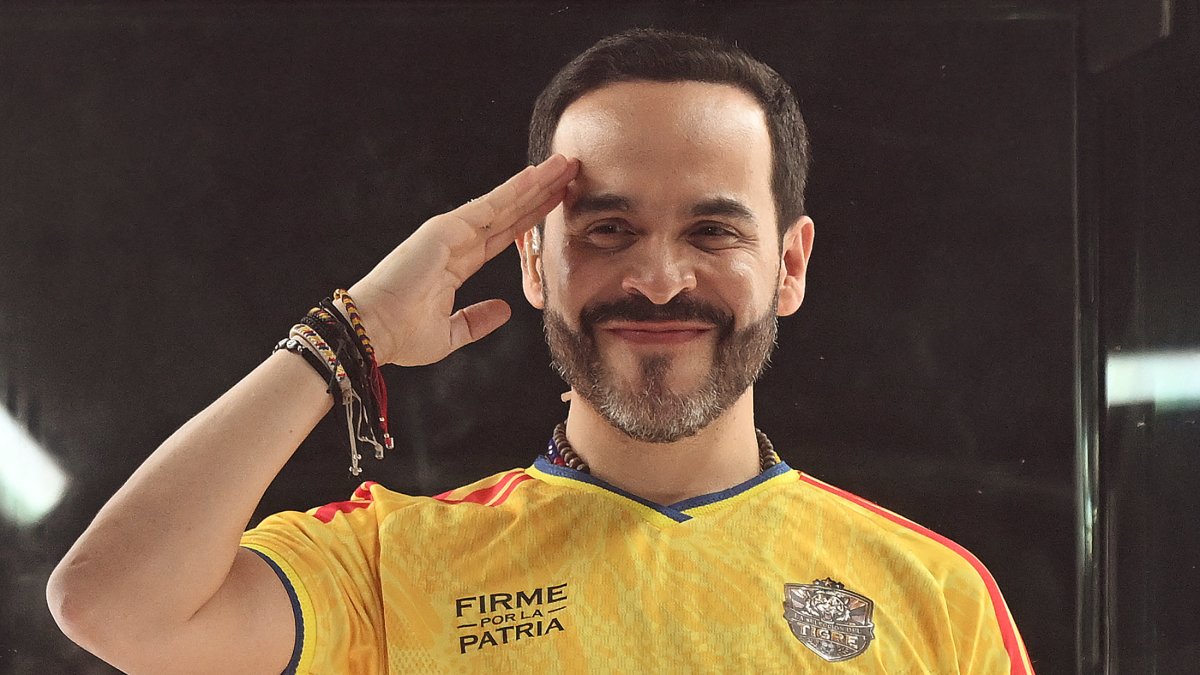
Abelardo de la Espriella after his victory in Sunday’s election.

The victory of conservative candidate Abelardo de la Espriella, backed by Donald Trump, in Colombia’s presidential election is of enormous significance. It is also an extraordinary achievement.
Iván Cepeda, the left-wing candidate endorsed by current President Gustavo Petro—a former guerrilla fighter—maintained close ties to organized criminal groups. One could argue that Cepeda was not only the candidate of Colombia’s political left, but also of the criminal organizations that have long orbited around Petro and his political project: guerrilla groups, drug traffickers, and corrupt networks.
During Gustavo Petro’s administration, criminal organizations have grown significantly stronger. Their ranks have expanded, and coca cultivation has surged. In other words, illegal armed groups have not been this powerful in years.
De la Espriella defeated Cepeda in what is being described as the closest presidential election in Colombian history: record voter turnout and a margin of just over 200,000 votes—a narrow but unquestionable victory.
These figures have led many observers to raise concerns about political polarization. According to these analyses, Colombia is a nation divided in half, with two irreconcilable camps locked in bitter opposition, making it difficult for a government led by Abelardo de la Espriella to restore social cohesion.
But while such concerns are understandable, they are overstated. Yes, the numbers suggest a deeply divided country, but they fail to account for a decisive factor in this election.
For criminal organizations, an Iván Cepeda victory was a matter of survival. It was a risk they could not afford to take. And although the election increasingly appeared to favor De la Espriella —thanks to the momentum of his innovative campaign and the weaknesses of the left-wing candidate—the Colombian right was never competing on a level playing field. Cepeda benefited from resources and forms of pressure that guerrilla groups and drug trafficking networks were uniquely positioned to provide.
According to two sources who closely monitored the electoral process, between 500,000 and one million votes may be linked to what is commonly known as the “gun vote.” Compared with the first round, polling stations located in guerrilla-controlled regions on Colombia’s periphery produced results that showed unusually strong gains for only one candidate.
In a typical runoff election, both candidates increase their vote totals compared with the first round. That growth generally follows patterns already visible in earlier voting and public opinion polls. The candidate whose gains appeared abnormal was Cepeda.
To this phenomenon of coerced voting, one must add other irregularities that likely influenced the outcome.
First, vote buying—a longstanding practice in Colombian politics. Campaign operatives may offer voters sums ranging from a few dollars to several hundred dollars in exchange for proof that they voted for a particular candidate. Gustavo Petro himself became embroiled in a major scandal after his 2022 election victory when leaked recordings captured his current interior minister discussing the expenditure of millions of dollars on vote-buying operations along Colombia’s Caribbean coast.
Finally, the state itself, operating in support of a political campaign, deployed its institutional machinery, patronage networks, and coercive influence to mobilize hundreds of thousands of votes.
Taken together, these factors suggest that a substantial share of Iván Cepeda’s vote may not have been entirely genuine and therefore does not necessarily reflect the level of polarization that Colombia appears to be experiencing.
It is reasonable to argue that, if one excludes the impact of illegal activities and the influence of guerrilla groups and drug trafficking networks, Abelardo de la Espriella’s victory was considerably more decisive than the narrow margin ultimately reported by Colombia’s National Registry.
Yes, Colombia is a polarized country, much like many Western nations affected by the global rise of populist movements. But it is not a country evenly split in two. In this historic and remarkable election—remarkable above all because of the circumstances described above—the overwhelming majority chose a project that promises order, common sense, and democracy.
Most voted for reasons. Others voted under the shadow of the gun.

LATEST