The United States' strategic alliance with Chavismo is eroding Trump's leadership in Venezuela
Despite public discontent, leading U.S. diplomats have expressed strong support for the interim government.
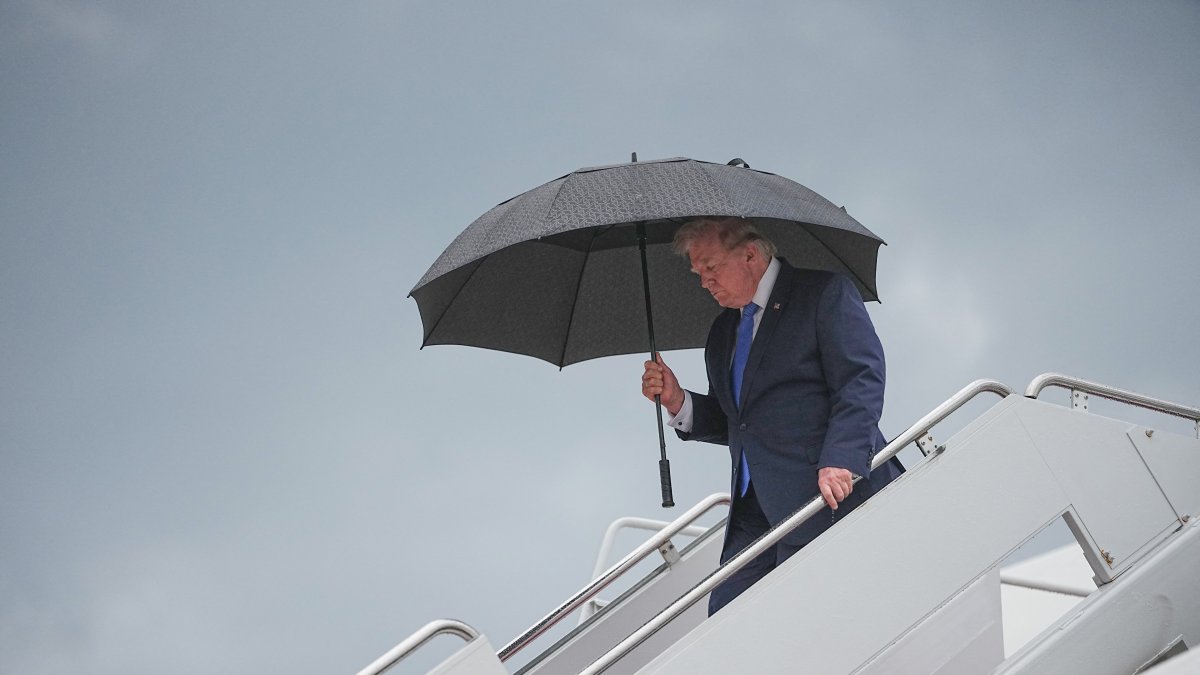
President Donald Trump walks under an umbrella as he disembarks from Air Force One at Joint Base Andrews in Maryland on August 2, 2026.

A report published by Politico reveals that Venezuelans' public perception of the Trump administration's foreign policy has severely deteriorated.
The initial enthusiasm seen at the beginning of the year has given way to deep frustration over what various social sectors and analysts consider Washington's open support for an inefficient and corrupt political system.
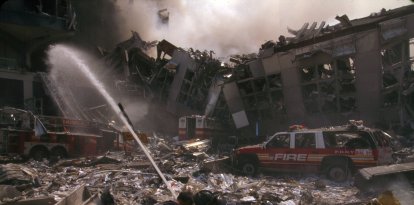
This turning point has accelerated following the devastating double earthquake on June 24. In hard-hit areas such as La Guaira, the response by local authorities has been perceived by those affected as slow, passive, and lacking in basic supplies.
While volunteer brigades and international nongovernmental organizations are clearing debris with makeshift tools, members of the Armed Forces and state security agencies are largely limited to surveillance duties.
"My mom is trapped there, and no one has helped me get her out," Cristian, a 22-year-old man who continues to search for his mother amid the rubble of a collapsed building, said in statements to Politico.
Testimonies like his reflect the discontent of a population that maintains that the Chavista social housing projects collapsed due to a lack of oversight and structural corruption.
The political cost of supporting the interim administration
Despite public discontent, leading U.S. diplomats have expressed firm support for the interim government.
U.S. Chargé d'Affaires John Barrett went so far as to state that he had "great confidence" in the authorities' handling of the crisis, praising an alleged "transparency" in the disaster's management.
At the same time, senior White House officials have held meetings with prominent figures in the state apparatus, including Interior Minister Diosdado Cabello. These actions have been interpreted by relatives of political prisoners and human rights defenders as an implicit endorsement of the continuation of the status quo.
"After January we had hopes, but seven months later it all boils down to oil negotiations and nothing else," the wife of a detainee complained during a protest in Caracas, as reported by Politico.
"U.S. diplomats are sitting down with the very same people who are holding our loved ones hostage," she added.
The exclusion of key leaders and the plunge in the polls
Dissatisfaction also extends to the institutional political sphere. The agenda promoted by Washington to resume talks in August has sidelined María Corina Machado, the opposition figure with the greatest popular support in the country.
This sidelining of leaders with social legitimacy has fueled doubts about the U.S. administration's genuine commitment to an effective democratic transition.
Public opinion analyses reflect this shift in sentiment. According to data from the consulting firm Poder & Estrategia, led by analyst Ricardo Ríos, the interim president's disapproval rating stands at around 90% due to the government's failure to adequately address the disaster.
Ríos told Politico that perceptions of the U.S. have changed significantly: "Since January, the perception of the U.S. has shifted from being the hero of the story to being increasingly questioned by the public."
Likewise, surveys by firms such as AtlasIntel show a 15-percentage-point drop in the approval rating of Secretary of State Marco Rubio, bringing the overall assessment of U.S. foreign policy to its lowest levels in recent years.
World
Talks stalled from day one? Chavismo and the '2015 Assembly' postpone the start of US-backed negotiations
Andrés Ignacio Henríquez
World
Venezuelan oil funds under congressional scrutiny: Lawmakers want to know the fate of the $13 billion collected by the US
Emmanuel Alejandro Rondón
LATEST