Betrayal on all fronts: Keir Starmer’s legacy
His tenure can be summed up in a single word: betrayal. Betrayal of a historic ally, betrayal of the victims the state was supposed to protect, betrayal of the freedom that set Great Britain apart, and betrayal of the electorate that asked for control and received chaos, bureaucracy, lies and decline.
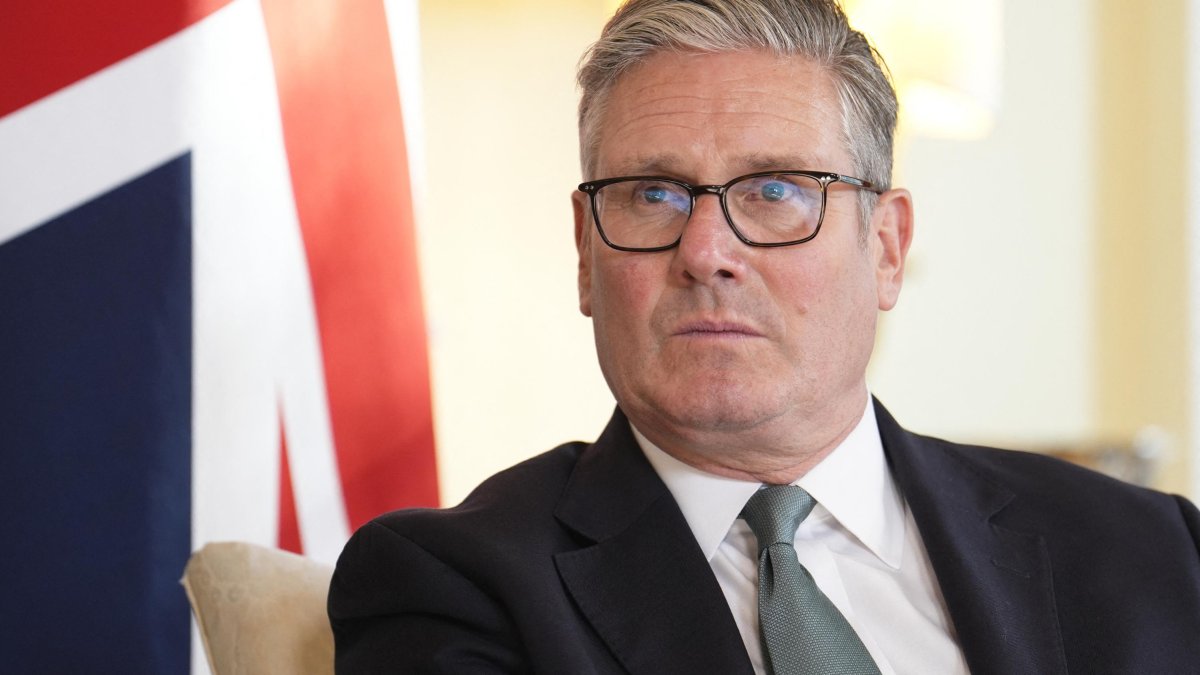
Former British Prime Minister Keir Starmer
He’s gone. This morning, from the podium at Downing Street and with a choked voice, Keir Starmer announced his resignation, unable to weather Andy Burnham’s highly publicized entry into Parliament and, above all, the collapse of his own party throughout his tenure—all in record time.
The lawyer who came to power promising “a government of service” is leaving as the most unpopular prime minister in recent British history, toppled not by the opposition, but by his own ranks. We should not be fooled by the tear-jerking farewell rhetoric. The assessment of these nearly two years is not that of a competent technocrat defeated by circumstances, but rather that of a power project that, time and again, chose to take the wrong side on every issue that mattered to the British people.
His tenure can be summed up in a single word: betrayal. Betrayal of a historic ally, betrayal of the victims the state was duty-bound to protect, betrayal of the freedom that set Great Britain apart, and betrayal of the electorate that asked for control and received chaos, bureaucracy, lies and decline.
The betrayal of Israel
Let’s start with foreign policy, because that’s where the shift was most pronounced. In September 2025, Starmer made the United Kingdom one of the first major countries to formally recognize a Palestinian state, just two years after the worst massacre of Jews since the Holocaust and with Israeli hostages still in Hamas’ tunnels. He had signaled this months earlier; he had even suspended arms export licenses to Jerusalem. The move was presented as humanitarian diplomacy; in reality, it was a diplomatic reward granted while Hamas was still holding captives, and an unequivocal message to the hostages’ families—whom the prime minister himself claimed to have listened to—that their pain carried less weight than the pressure from the pro-Palestinian base of his party. Starmer’s pattern was always the same: yield to the most fanatical, anti-Western and vocal faction, and then try to disguise his capitulations as principles.

Cowardice in the face of the rape gang scandal
If there was one episode that laid bare the moral hierarchy of Starmerism, it was that of the grooming gangs. For months, Starmer dismissed calls for a national investigation into the gangs—composed disproportionately of men of Pakistani origin—who for years abused working-class white girls, accusing those who demanded it of jumping on the far-right “bandwagon.”
Only when Baroness Casey’s report made that stance untenable—documenting how the ethnic issue had been “sidestepped for years,” to the point of uncovering files where the word “Pakistani” had been crossed out— did the prime minister perform yet another of his famous about-faces and agree to the investigation that he had previously ridiculed.
The fact that a former director of the Crown Prosecution Service needed an external audit to explain this to him speaks volumes. And what the left calls “community cohesion” was revealed for what it always was: the state’s willingness to sacrifice the most vulnerable victims so as not to upset a particular identity group.
On June 16, the investigation into rape gangs in Great Britain, a project funded by donations from more than 20,000 citizens. The report demonstrates that these networks operated in 149 districts for decades. The estimated 250,000 victims and the testimonies of survivors in Rotherham, Rochdale and elsewhere are so staggering and terrifying that they constitute one of the greatest institutional failures in British history.
That same perverse and treacherous logic explains the government’s insistence on adopting an official definition of “Islamophobia” so vague that, as legal experts, freedom-of-speech advocates and even the independent reviewer of counterterrorism legislation himself have warned, would effectively function as a blasphemy law. It would protect an ideology rather than people and shield practices from criticism that no free society should be afraid to discuss. That false label of Islamophobia was precisely one of the mechanisms that silenced witnesses to the gang scandal. Starmer did not learn his lesson: he sought to institutionalize it.

The war on free speech
Under Starmer, Britain became an international case study on the erosion of free speech, to the point that the Trump administration raised the issue in the Oval Office and later in Munich. Another critic of the attacks on freedom of expression was Elon Musk, one of the most persecuted by this freedom-destroying ideology.
There are many scandalous and pathetic cases. The symbol of these was Lucy Connolly, sentenced to 31 months in prison for a tweet. She described herself as a political prisoner of the Starmer regime. But Connolly was just the tip of the iceberg. We’re talking about more than 12,000 arrests in a single year for “offensive” posts on Twitter, people arrested for praying silently near abortion clinics, a Telegraph columnist investigated over a message, hundreds detained for protesting the banning of an activist group. This is a two tiered system (the nickname “Two-Tier Keir” didn’t come about by chance), where a joke in a parents’ chat group mobilizes six police officers while common crimes go uninvestigated.
Added to this drive for control is the government’s determination to impose a mandatory digital identity, marketed as a tool against illegal immigration but claimed even by civil liberties groups as the first step toward a “surveillance society” in which citizens—not criminals— must constantly prove who they are. The human rights lawyer ended up building the framework for the surveillance state.
Betrayal of the people at the border
And then there’s immigration, the arena where Starmer promised to “crush the gangs” and ended up breaking his own records. Having scrapped the Rwanda plan on his first day without a real alternative, he presided over the worst record of small-boat crossings of any prime minister: tens of thousands of illegal crossings of the Channel in his first 19 months, surpassing Boris Johnson’s record in nearly half the time. Net immigration had reached an all-time high of nearly 945,000 people, and the criminal gangs he was supposed to dismantle continue to operate, with more than 10,000 illegal arrivals so far in 2026. The slogan proved to be little more than words. The problem, however, is still growing.
The legacy
Added to all this is the litany of errors in judgment that even his own M.P.s could no longer forgive: the giveaways of the early months, the cuts to heating assistance for pensioners and the embarrassing promotion of Peter Mandelson to ambassador in Washington—a position he had to relinquish when his ties to pedophile Jeffrey Epstein came to light. It was a short tenure, but one so embarrassing that it’s hard to list every single misstep, many of which will shape British politics and society in the future.
Starmer’s farewell speech listed achievements that almost no one will recognize as real. His personal tragedy is that he will probably never understand why they abandoned him. But the political verdict is clear: he is leaving the country more divided, less free and more poorly governed than he found it. He arrived promising stability and delivered betrayal—a broken, impoverished and demoralized society.
What lies ahead does not bode well; it falls to Andy Burnham—chosen by default and possibly more radicalized to the left—to attempt what Starmer could not. If Labour believes that replacing the man will salvage its image, it has understood nothing.
LATEST