Why they blame Netanyahu for antisemitism and the Iran war
The attempts to portray the prime minister as the reason why people hate Jews or for having “bullied” President Trump into the conflict are rooted in traditional blood libels.
Published
Even for those who are old enough to remember, it may be hard to recall considering all that has happened since then. But four decades ago, Benjamin Netanyahu seemed like the answer to the problems that Israel had encountered in getting its message across to the world. During the 1980s, when he served for two years as deputy chief of mission at the Israeli embassy to the United States (1982-84) and then for four years as the Jewish state’s ambassador to the United Nations (1984-88), the future prime minister was his country’s leading spokesperson.
Speaking fluent, American-accented English that he had learned from spending many of his formative years growing up in suburban Philadelphia, and later, studying for bachelor’s and master’s degrees at the Massachusetts Institute of Technology, Netanyahu was an eloquent advocate for his nation’s policies. And he was widely applauded by Jews and non-Jews on both sides of the political aisle. At a time when there were exponentially fewer venues for the discussion of foreign policy in a pre-Internet and cable media environment, his voice wasn’t just an important factor in bolstering support for the Jewish state. Given what many rightly considered his bright political future, it seemed a harbinger of an era in which Israel could speak directly to Americans in a way they understood and liked, as well as a guarantee that a burgeoning bipartisan pro-Israel consensus would continue to flourish.
What happened to Bibi?
But four decades later, the most surprising thing about this isn’t that Netanyahu remains a dominant figure in Israeli politics and is his country’s longest-serving prime minister (18 and a half years and counting). It’s that the man who was the Jewish state’s best spokesperson in the last years of an era when most people had fewer than 10 channels to watch on their television sets is now considered by many the reason for the collapse of that bipartisan consensus, and even why so many Americans hate Jews and Israel.
This reversal of fortune is itself as remarkable a historic development as what turned out to be Netanyahu’s lengthy against-the-odds career at the pinnacle of Israeli politics.
The animus toward the prime minister on the part of much of the mainstream American media dates back to his earliest days as a TV talking head when he was in his 30s and wouldn’t give an inch to those who, even then, sought to blame the lack of peace in the Middle East on the Jewish state. But the fact that he is now widely considered by so many leading figures in American politics and journalism as not merely a bad leader, but as a plausible rationalization for a surge in antisemitism and decline in support for Israel, shouldn’t be accepted at face value. Indeed, it’s such an extraordinary development that it deserves serious scrutiny.
That Netanyahu’s reputation would become inseparable in the public mind from that of Israel throughout the West is unsurprising. He’s been a leading figure in Israeli politics since he returned home from his diplomatic stints in the United States.
He became leader of the Likud Party in 1993 and led it to victory in the 1996 elections that brought him his first term as prime minister. After a decisive defeat at the hands of Labor and Ehud Barak in 1999, he resigned as head of his party, and many thought his political career might be over. Netanyahu would not resume his party’s leadership until 2006, after his successor, Prime Minister Ariel Sharon, blew it up as part of his disastrous decision to withdraw from Gaza the previous summer. And except for the 18 months when he was replaced as prime minister in 2021 and 2022, he’s led Israel’s government since 2009, winning several elections.
That longevity in office and the public eye is one reason for the way opinion about him is strongly divided in both Israel and abroad.
Many Israelis have come to the not-unreasonable conclusion that he should leave office simply because he’s been in power far too long or because they blame him for the Hamas-led terror attacks that happened on his watch on Oct. 7, 2023. Yet his supporters claim, with justice, that no figure in Israeli public life can match Netanyahu for his skill in governing, or his knowledge of security and diplomatic issues.
The debate about which of those positions will prevail will determine the outcome of the next Israeli election, which is likely to occur late in 2026, after the term of the Knesset elected with him in 2022 expires. Yet the fact that none of his potential replacements have any real alternatives to the policy positions on war and peace with Iran—and their Palestinian Arab and Lebanese terror auxiliaries—that Netanyahu holds should complicate any simplistic analyses about potential changes should he be defeated.
The embodiment of antisemitic tropes
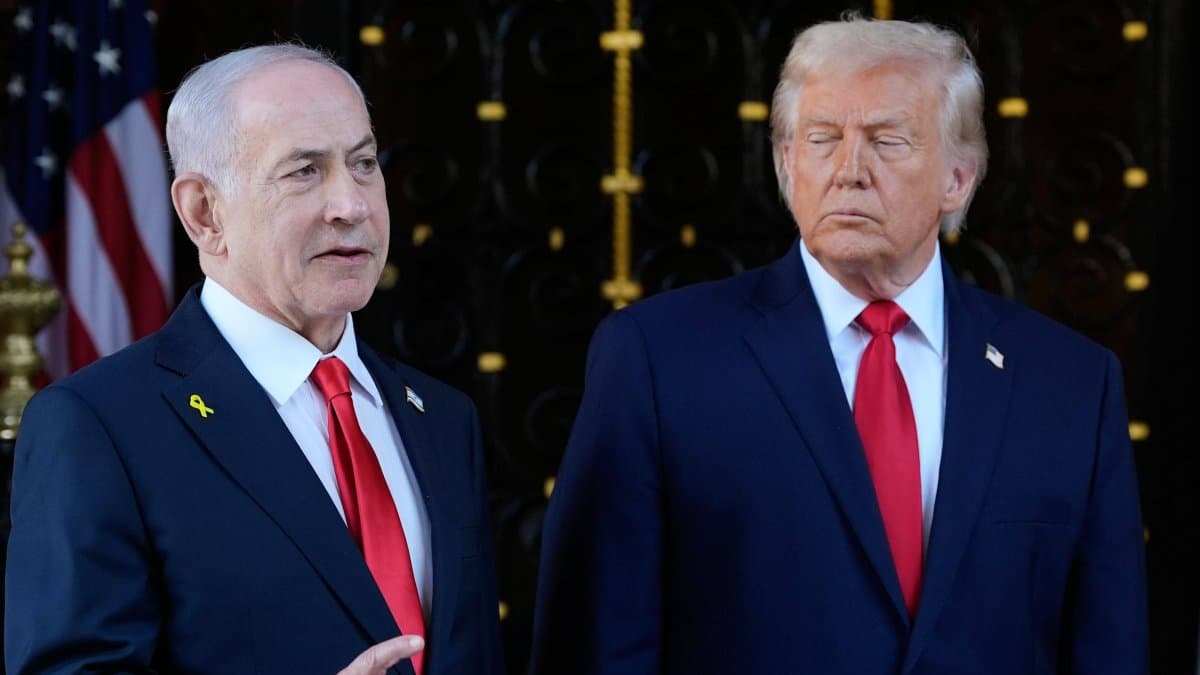
That’s how Israelis view him. Abroad, and especially in the United States, Netanyahu has taken on a reputation that goes beyond his status as a fixture in Jerusalem. He has become not just a symbol of everything that some people don’t like or even hate about Israel. He’s also become the embodiment of traditional antisemitic tropes about Jews manipulating non-Jews and a host of conspiracy theories.
And that is the context with which we should view the way he’s being discussed in the American public square, especially since the start of the current war on Iran.
The conflict with Tehran has catalyzed a growing chorus of criticism of Netanyahu that has served as an excuse for those who were once supporters of the Jewish state but now oppose it on virtually every issue. The belief that it was the prime minister who persuaded a reluctant Trump administration to go to war, despite it allegedly being against American interests and the instincts of the president and his leading deputies, sounds like an antisemitic trope. But it has become conventional wisdom on the political left and among some noisy Trump critics on the right.

Iran war conspiracy theory
The debate about whether the United States was right to launch joint airstrikes with Israel against the Islamist regime that has been waging war on the West and killing Americans since 1979 is one about which reasonable questions can be raised. But the belief that Trump’s decision to act on the policy imperative about stopping Iran’s nuclear-weapons program and terrorism, embraced by every president—both Democrats and Republicans—for the last 30 years, is something that could only happen as the result of a Jewish conspiracy is something very different.
The narrative about Netanyahu manipulating President Donald Trump into an Iranian “quagmire” is embraced by The New York Times, which has published two lengthy pieces which purport to quote comments made in top secret administration meetings that are undoubtedly the result of leaks from officeholders who oppose the president’s decisions, as well as conspiracy-peddling podcasters on the right like Tucker Carlson, Megyn Kelly and Candace Owens. It’s so ubiquitous a trope that the claim that Netanyahu was “the man controlling” the U.S. military was a throw-away line broadcast on the increasingly unfunny “Saturday Night Live” show that thinks it has to kowtow to antisemites to stay in sync with liberal fashion.
The notion that Trump is being led around by the nose (or a leash, as shown in a since-retracted cartoon published by the Times) by Netanyahu is a vile trope that unites both left and right-wing haters of Jews. It contradicts the belief on the left that claims that the president is a power-mad authoritarian fascist and the belief among many on the right that Trump is a masterful commander-in-chief. It also goes against everything about Trump’s longstanding hostility to the Iranian regime and the tough policies against it that he pursued during his first term in office.
But declaring that the Israelis have bewitched or conned Trump into doing something that he supposedly wouldn’t do is believed because it provides a simple explanation for a complicated conflict, as well as a convenient Jewish scapegoat.
Still, the narrative that Netanyahu is a hardline right-winger—an extremist determined to prevent peace in the Middle East—predates the Iran war or even the surge of antisemitism that has spread across the globe in the aftermath of Oct. 7.
Shapiro’s betrayal
It’s become particularly commonplace among Democrats. It’s not so much heard among the party’s intersectional base, which has already embraced toxic theories about race that incline them to view Zionism as “white supremacy” and largely backs the Marxist-Islamist coalition that supports Israel’s destruction. Damning Netanyahu is also a way for “moderate” or even “centrist” Democrats, like Pennsylvania Gov. Josh Shapiro, to signal to that base that they aren’t so pro-Israel as to support the war against genocidal Hamas and Hezbollah terrorists, and their Iranian paymasters.
Shapiro has complained bitterly about being the focus of antisemitic attacks and about being asked whether he was an Israeli secret agent by those vetting him for the vice presidency in 2024 on behalf of former vice president Kamala Harris. In doing so, he sought to carve out a path in the 2028 presidential race for a Jew who is not opposed to the Jewish state. But, he, too, went down the same antisemitic rabbit hole as the Times and Tucker Carlson when he pointed to Netanyahu as the one to blame for fighting Iran.
In an interview on the popular liberal “All-In” podcast, Shapiro spouted the usual contemporary talking points about Israel when he claimed that Netanyahu’s policies on the Palestinians and Iran had “isolated” Israel and fractured support for the Jewish state. But he also denounced the war against Iran as not in America’s interests and also said that Trump was “bullied” into it by Netanyahu.
“All-In” host Jason Calacanis built upon Shapiro’s statements and then directly blamed Netanyahu’s policies in Gaza, Lebanon and Iran for antisemitism, even claiming that the left-wing Jews that he knows agree with him.
American liberals claim that they don’t like Israel because of Netanyahu’s decisions or his opposition to a putative two-state solution to the conflict with the Palestinians. But they seem utterly ignorant of or simply don’t care about the fact that in doing so, he is representing a consensus of Israeli opinion that stretches from the left to the right. The overwhelming majority of Israelis, including many of those who will vote against Netanyahu, don’t think they should replicate Sharon’s calamitous decision that led to the creation of a Hamas terror state in Gaza and the horrors of Oct. 7. They understand that the Palestinians—and their international Islamist and Marxist cheerleaders—don’t want peace. They want the end of the Jewish state. The same goes for Iran since more than 90% of Israeli Jews support the war.
Yet some Democrats, including those like Shapiro who pose as opponents of antisemitism and supporters of Israel, think that they can talk their way out of being attacked by the left. By joining in the scapegoating of Netanyahu and misinformation about the nature of the conflict that is being waged against the Jewish state, they hope to remain politically viable in a party where the pro-Israel faction is becoming an endangered species.
In so doing, they are unfortunately validating even more extreme conspiracies about Netanyahu and Israel manipulating American policy floated by left- and right-wing extremists that seem lifted straight out of The Protocols of the Elders of Zion.
Antisemites cause antisemitism, not Jews
Let’s be clear. Netanyahu hasn’t caused the post-Oct. 7 surge of antisemitism, any more than the actions of Israel or Jews have ever been responsible for the age-old scourge. Antisemitism is always about the antisemites; it’s an excuse used for targeting Jews. That’s true whether it is about them being rich or poor, assimilated or refusing to assimilate, being powerless and stateless, or because they now have a state of their own and a military to defend themselves. These are all just lame rationalizations for singling out Jews for prejudice and bias not applied to any other group.
If Americans on the left and on the right refuse to support an Israel that is still under siege from an international hate movement that thinks one Jewish state on the planet is one too many, it isn’t because Netanyahu is too tough in defending his country’s security and interests, or too persuasive when he speaks with Trump. It’s because they are ignorant of the truth about the history and ongoing conflict in the Middle East, have been manipulated by those who target Jews, or because they simply look for any reason to discriminate against Jews.
To say this is not to assert that Netanyahu is faultless or that Israel is perfect. Yet like every other nation in the world, it has the right to protect its borders and its citizens, and refuse to let jihadists and their enablers destroy them.
The demise of the bipartisan pro-Israel consensus wasn’t the result of Israeli behavior. It’s due to the capture of one of America’s two major parties by ideologues who are prejudiced against Zionism, the national liberation movement of the Jews for a right to live in their homeland. The same thing is happening on what is, at least for now, the anti-Trump minority on the far right.
It is no small irony that the man who is arguably the best able to make Israel’s case to the English-speaking world is being demonized in this fashion. For some on the left, his sensible decision to stick as close as possible to the most pro-Israel president in history is indefensible since that means being friendly with the “bad orange man” they hate with a passion. For many other antisemites, on the right as well as intersectional leftists, it’s even simpler. They hate Netanyahu simply because he is the leader of the Jewish state.
In this way, like Israel itself, Netanyahu has become the stand-in for traditional antisemitic tropes about evil Jews. And nothing he does, whether wise or foolish, is likely to persuade those who embrace this symbolism.
That is unfortunate. But what is arguably even more disgraceful is the willingness of those who claim to disdain Jew-hatred and even support Israel’s existence to fall prey to such blood libels. In doing so, they aren’t so much harming Netanyahu as they are legitimizing the demonization of Israel and the Jews.
🛠 Do you think there is an error in this article?
Recommendations







LATEST