Iranian official: Nuke talks with US planned for early March
Source says an interim agreement remains possible, as Sen. Lindsey Graham urges Trump to order airstrikes despite opposition from some advisers.
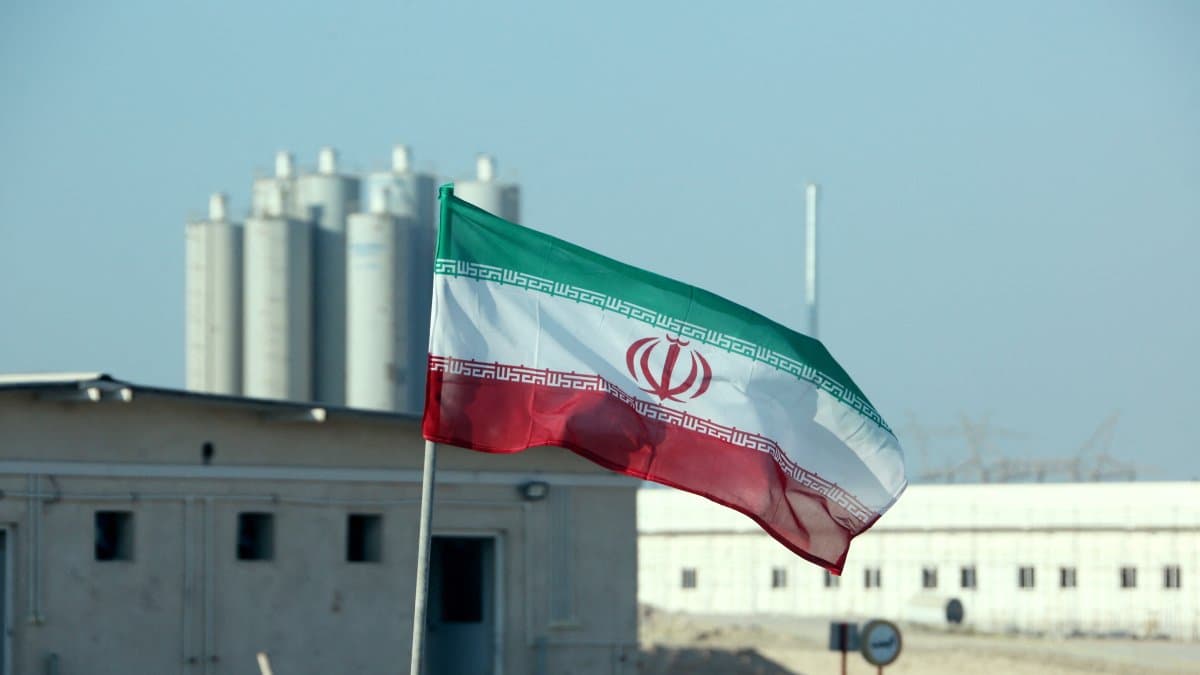

A third round of indirect nuclear talks between Washington and Tehran is planned for early March, a senior Iranian official told Reuters on Sunday.
“The negotiations continue and the possibility of reaching an interim agreement exists,” the official said.
The session would be a continuation of Oman-mediated meetings held earlier this month in Muscat and Geneva. The talks are taking place amid a massive U.S. military buildup in the Middle East and rising tensions.
Iran and the United States remain divided over how far and how fast to lift sanctions on Tehran in exchange for nuclear constraints, the official said, asserting that the regime could seriously consider exporting part of its highly enriched uranium stockpile, diluting the purity of that material and joining a regional uranium enrichment consortium, provided its right to “peaceful nuclear enrichment” is formally recognized.
Washington and Jerusalem have long accused Iran of seeking a nuclear weapons capability, a charge Tehran denies. The White House says stopping Iran from obtaining a bomb is a top priority, and Israeli Prime Minister Benjamin Netanyahu has voiced strong skepticism about any deal with Tehran, arguing the regime cannot be trusted.
Iranian Foreign Minister Abbas Araqchi said on Friday that he expected to have a draft counterproposal ready within days following the indirect nuclear talks with the U.S. in Geneva earlier in the week, while President Donald Trump has said he is weighing limited military strikes against Iran as two aircraft carriers and hundreds of warplanes are positioned in Middle Eastern waters ready for the president to authorize an attack if he decides to do so.
The senior Iranian official added that Tehran will not cede control over its oil and mineral resources, though U.S. companies could participate as contractors in Iran’s oil and gas fields.
Graham vs Trump advisers on Iran strike
Sen. Lindsey Graham (R-S.C.) is urging Trump to move ahead with military strikes on the Iranian regime despite opposition from some of the president’s own advisers, Axios reported on Sunday.
“I understand concerns about major military operations in the Middle East given past entanglements. However, the voices who counsel against getting entangled seem to ignore the consequences of letting evil go unchecked,” the Trump ally told reporter Barak Ravid on Saturday.
Ravid reported that Trump has been presented with military options that include targeting Iran’s Supreme Leader Ayatollah Ali Khamenei and his son and possible successor, Mojtaba Khamenei, even as U.S. officials signal limited flexibility in possible nuclear talks with Tehran, including openness to an Iranian proposal allowing only “token” uranium enrichment under strict conditions that bar any path to a bomb.
Graham, who recently visited Israel, the United Arab Emirates and Saudi Arabia, told Axios he believes there is a chance “to bring about historic change” in Iran but warned that “voices opposing entanglement and the risk associated with decisive action are getting louder.
“I have a lot of respect for President Trump. He is his own man. And as with all presidents, he will be held responsible for his decisions on such weighty matters,” Graham said, adding that “history will be very clear as to where I stood, for better or worse.”
Other Trump advisers are pressing the president to hold off on airstrikes and instead use the threat of force to extract concessions, and some in his inner circle question the wisdom of embarking on a regime-change operation in Iran, Axios reported.
Ali Larijani tapped to ensure regime survives
Iran’s supreme leader has handed sweeping authority to Ali Larijani, his top national security official, to steer the Islamic Republic through the prospect of war with the United States and potential succession turmoil, effectively sidelining President Masoud Pezeshkian, The New York Times reported on Sunday.
Drawing on senior Iranian officials and Revolutionary Guards members, the report said Larijani is overseeing the crackdown on anti-government protests, managing nuclear talks with Washington and partners such as Russia, Qatar and Oman, and drafting wartime contingency plans that assume U.S. strikes are imminent.
Khamenei has ordered several layers of successors for key military and government posts and empowered a tight inner circle, including Larijani and parliamentary Speaker Mohammad Bagher Ghalibaf, to ensure the state can function even if top leaders are killed or communications are cut.
Protests resume in Iran
Students at several Iranian universities held rare anti-government demonstrations on Saturday, the largest since last month’s deadly crackdown on protesters.
Verified footage showed students at Tehran’s Sharif University of Technology marching on campus before clashes erupted with government supporters. A sit-in was reported at another Tehran university and a rally in Iran’s northeast, as students commemorated those killed in the January unrest.
Trump said on Friday that the Islamic Republic killed 32,000 people “over a relatively short period of time,” referring to the regime’s crackdown on nationwide protests that erupted in late December.
“It is a very, very sad situation …, they were going to hang … some by crane. They lift them up with a tall crane, and they play them around the square. They were going to hang 837 people. … I feel very badly for the people of Iran, they’ve lived in hell,” the president said.
🛠 Do you think there is an error in this article?
Recommendations


LATEST