Why Machado’s Economic Blueprint Could Deliver the U.S. Its Strongest Ally in Latin America

María Corina Machado en una manifestación en Caracas
Venezuela went from being the wealthiest country in Latin America to the most miserable nation in the hemisphere, now experiencing the largest mass migration in the world. Roughly 8 million Venezuelans have fled their homes in search of better living conditions abroad, after the economic model imposed by Chavismo —“21st-century socialism”— pushed 94.5% of the population into poverty.
It is almost impossible to believe that the nation with the largest proven oil reserves on the planet, a privileged strategic location in the Caribbean, and highly skilled human capital, ended up in ruins—with a GDP reduced to less than one-third of what it was in the 1990s, collapsed public services, and over half a million businesses shut down. Yet, on the horizon, a new leadership has emerged that promises to end socialism and statism once and for all, and to open the country to economic freedom: María Corina Machado.
For many years, Venezuela’s main opposition leaders came from center-left movements that sought to establish a “less radical socialism.” In fact, it was María Corina Machado who first openly embraced capitalism, back in 2011, during opposition presidential primaries, where her slogan of “popular capitalism” became famous, despite criticism from the then-dominant social democratic coalition.
The Venezuelan crisis devastated the nation but paved the way for classical liberal ideas. Machado herself traveled the country from north to south and east to west, often driving her own car after being banned by the regime from taking commercial flights, to spread her message of free markets, privatization, and reduced state control. More than a decade later, her discourse became the most popular in the nation, establishing her as the undisputed leader of Venezuela’s real opposition.
“Land of Grace”: María Corina Machado’s Economic Plan for Venezuela
Machado’s economic proposal, outlined in the plan “Venezuela, Land of Grace,” is her roadmap to transform Venezuela into the most important energy hub of the Western Hemisphere and the most reliable trade partner of the United States.
The document rests on three central pillars:
- Rule of law: reestablishing legal security and the protection of private property.
- Security and defense: regaining control of territory and expelling criminal groups and foreign forces.
- Economic relaunch: opening the country to private investment and reintegrating it into the global economy.
These pillars are not theoretical—they are the starting point to triple the size of Venezuela’s economy in just fifteen years. According to the plan’s projections, under stable democracy, Venezuela’s GDP could grow from today’s $120 billion to more than $400 billion by 2040.
The engine for this leap lies in seven strategic levers: natural resource endowment, geographic location, infrastructure, technical know-how, cultural shift toward freedom, the power of the Venezuelan diaspora, and the historic opportunity to make a decisive development leap.
Twelve Sectors for a New Country
The program identifies twelve key productive sectors, grouped into three clusters, representing a private market opportunity of $1.7 trillion over the next fifteen years:
- Energy-intensive sectors: oil, gas, metals and minerals, energy infrastructure.
- Diversified economy: transportation, financial services, technology and professional services, tourism, real estate, agriculture.
- Capacity builders: healthcare and education.
The numbers are striking:
- Oil: $120 billion by 2040 (25% of the total).
- Gas: $26 billion, with an annual growth rate of 18%.
- Real estate: $38 billion, with a 28% growth rate.
- Technology and professional services: $61 billion.
- Transportation: $32 billion.
- Tourism: $15 billion.
- Agriculture and healthcare: $22 billion combined.
In total, a market with a net present value of $1.7 trillion that can be captured by those who invest early in Venezuela’s reconstruction—backed by the privatization of the country’s vast subsoil resources and the participation of international investors in the new Venezuela.
The Country of Wasted Reserves
Venezuela holds more than 303 billion barrels of proven oil reserves, about 18% of the global total, making it the largest in the world. With nearly 195 trillion cubic feet of natural gas, it ranks as the eighth-largest reserve worldwide and the largest in South America. The Guayana Shield also contains world-class iron and gold deposits, along with coltan and bauxite.
All these resources, wasted, looted, and trafficked in the black market by the Chavista elites, will shape the vision of a new Venezuela—transformed into the energy hub of the Americas, where private property and the rule of law will be the foundation for integration into the global economy.
Alignment with the United States
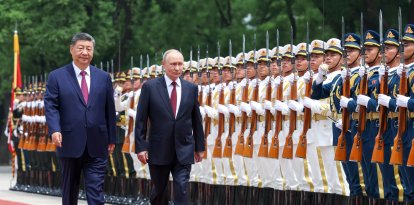
Here lies the decisive point: this is not only an economic plan—it is a geopolitical strategy. Machado has been clear that she intends to make Venezuela the main U.S. ally in Latin America, stressing that Venezuela’s recovery cannot be achieved alongside the very actors who sustained Chavismo for decades: Russia, Iran, or China.
With Machado in power, Venezuela has the opportunity to align directly with the United States and its allies, consolidating an economic and energy front in the Caribbean and South America. For Washington, this would mean:
- Diversified energy security in the hemisphere.
- Containing Russian and Chinese influence in the region.
- Access to an emerging market worth more than one trillion dollars for the U.S. private sector.
The equation is simple: Venezuela needs capital, technology, freedom, and open markets; the United States needs stable allies and reliable energy sources. The alliance between the two nations is natural—the only question is whether Machado can finally assume power after the electoral fraud carried out by Chavismo in 2024.
LATEST