The unexpected rise of Britain's Mamdani: Why Polanski is no joke
A few months ago, a victory for the "eco-populism" leader of the British Green Party would have sounded absurd. But a year ago, the idea of Mayor Zohran Mamdani also sounded absurd.

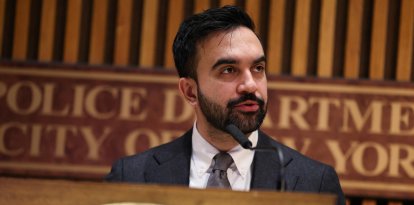
Zack Polanski (left) and Zohran Mamdani (right)
A few weeks ago, Zohran Mamdani was being sworn in as mayor of New York. As he placed his hand on the Quran, many in the British political class looked on with a mixture of alarm and horror. For across the Atlantic, the star is rising of another such politician, a faithful representative of the new identitarian left, with an equally questionable resume and a similar arsenal of outlandish proposals. His name: Zack Polanski.
Transatlantic déjà vu?
The parallels are irresistibly obvious. Mamdani, the relatively unknown former rapper and state assemblyman, defeated the New York Democratic establishment and then was enshrined mayor in an election that attracted the highest turnout since 1969. Now governs the capital of capitalism with promises of the rankest socialism.
Polanski, the former hypnotherapist who, though it may seem like a joke, claimed that women could increase the size of their breasts through hypnosis, today leads a British Green Party that has grown exponentially in membership, becoming the third largest party in the United Kingdom. YouGov polls in January revealed that, in a straightforward question on who would make a better prime minister, Polanski received 28%. In London, the Greens have experienced a meteoric rise to 18%, an eight-point jump since the fall.
Polanski and Mamdani share not only socialist ideology, but an uncanny ability to master social media and connect with disillusioned young voters. Mamdani's posts on Instagram, TikTok and X racked up tens of millions of views during his campaign. Polanski, meanwhile, recently launched his Bold Politics podcast, which reached No. 4 on the U.K. news podcast charts in a matter of days.
"Polanski has been strategically clever in his power building...he has suddenly become a formidable force."
The temptation to dismiss Polanski as a political buffoon is understandable. His credentials include being a London Assembly alderman, having worked in community theater and hospice, and yes, that unfortunate story about breasts and hypnotherapy. His policies seem straight out of a sitcom: abolish private landlords, arguing that their existence brings no positive value to the economy. He also proposes rent controls and outlawing the Israel Defense Forces. He also promised to persuade Vladimir Putin to give up his nuclear weapons by getting Britain to give up first, a proposal difficult to frame outside of a psychiatric context.
But here's the rub: no one expected that with the delusions Mamdani claimed he would win either. In March 2025, when Andrew Cuomo announced his candidacy for mayor of New York, polls showed him leading handsomely among all Democratic candidates. Mamdani was a fringe assemblyman from the 36th district in Queens. However, Mamdani defeated Cuomo in the June Democratic primary and then defeated both the former governor and Republican Curtis Sliwa in the November general election. His victory was fueled by a record turnout of young voters, precisely the demographic that is now responding to Polanski in the United Kingdom.
According to recent data, the Green Party has seen its membership soar more than 45% since Polanski was elected leader in September 2025. Turnout among young people is particularly notable: one-third of young British women plan to vote for Polanski, a pattern that mirrors the support of four out of five young New York women who voted for Mamdani. This is a profound sociological phenomenon: the generational disconnect with traditional politics.
Polanski calls himself an "eco-populist," linking the cost-of-living crisis to climate change, and his slogan "Tax Wealth, Not Work" resonates with both working and middle-class voters. He proposes a 1% tax on assets over £10 million and 2% on assets over £1 billion, funding for public services through wealth taxes.

Opinion
Where is the EU? Refuses to Designate Iran's Brutal Islamic Revolutionary Guard Corps a Terrorist Organization
Nima Gholam Ali Pour

The signs of momentum are undeniable. Polanski has been strategically clever in his power building, is already national leader of his party, has significant visibility and has suddenly become a formidable force. It would be remiss to ignore legitimate red flags.
Polanski's second-in-command, Mothin Ali, shouted "Allahu Akbar" during an election recount and posted anti-Semitic comments after Oct. 7, 2023, the day of the Hamas attack on Israeli civilians. Polanski himself, being Jewish, repeats the Islamist narrative regarding the war in Gaza, a characterization that alienates many in British Jewish communities who accuse him of anti-Semitism. He was the only political leader to support the police when they arrested writer Graham Linehan for his tweets against gender ideology, accusing him of inciting violence. This kind of authoritarianism is deeply troubling, but here's the paradox: all these legitimate concerns didn't matter for Mamdani, and they probably won't matter for Polanski either.
Could Polanski be the U.K.'s Mamdani? The next general election is scheduled for 2029, but the Labour government is in free fall. Young voters, particularly in urban areas, are increasingly disillusioned. In that context, with an electoral system that favors geographic concentration of votes, it is not unreasonable to imagine the Greens becoming the third party and potentially being arbiters of parliament. A few months ago, the idea would have sounded absurd. But a year ago, Mayor Mamdani's idea also sounded absurd.
What Polanski and Mamdani share, beyond their specific politics, is an intuitive understanding of how politics works in the digital age. It's not about parliamentary debates or editorial pieces in the Times. It's about viral TikTok clips, sincere podcasts and authentic moments captured on Instagram. Polanski dancing with young followers, appearing onstage with the band Rizzle Kicks chanting "tax the rich," are not accidents or embarrassing moments. They are deliberate and effective strategy. They build an image of accessibility that resonates powerfully with voters under 40.
Is Polanski a clown? Possibly, but being serious is no longer a requirement for winning elections. The issue is not whether Polanski is serious, but whether he is serious about winning a crucial election. To deny that possibility would be not only arrogant, but potentially catastrophic. The hypnotherapist who wants to abolish landowners might get a laugh. But so did the rapper who promised socialist supermarkets, and that rapper now controls the $109 billion budget of the world's largest city.
LATEST