The bomb, 80 years later
Unfortunately, the war in Ukraine has once again revived interest in nuclear weapons, and one of the strategic consequences of this conflict has been a renewed view among some countries that atomic weapons remain the most effective tool for deterring an aggressor.

Nuclear bomb dropped on Nagasaki, Japan, August 9, 1945
At 8:30 a.m. on August 6, 1945, the Enola Gay, a B-29 bomber from the U.S. Army Air Forces’ 509th Composite Group, dropped the first atomic bomb ever used in warfare. The bomb, developed under the accelerated Manhattan Project—now widely known thanks to Christopher Nolan’s Oppenheimer—was nicknamed Little Boy, and its target was the city of Hiroshima.
The devastating consequences for Hiroshima and its population are well known, as is the bomb’s profound impact on the international order. Its use ushered in a new era of strategic arms competition, ultimately leading to the doctrine of mutually assured destruction, where any nuclear exchange would mean catastrophic consequences for all parties involved.
In 1968, in an effort to curb the spread of nuclear weapons, the Non-Proliferation Treaty (NPT) was signed. Under this agreement, non-nuclear states pledged not to develop atomic arsenals, while existing nuclear powers committed to pursuing negotiations aimed at reducing and ultimately eliminating their stockpiles, as well as refraining from using nuclear weapons against non-nuclear countries under their protection.
For decades, nuclear proliferation remained largely contained, though the “atomic club” gradually expanded beyond the original two members — the United States and the USSR (now Russia) — to include China, India, Pakistan, and, more alarmingly, North Korea.
Unfortunately, the war in Ukraine has reawakened the atomic genie, and one of its strategic consequences has been a renewed interest among some nations in nuclear weapons as the most effective tool for deterring aggression. Nuclear arms, offering immense destructive power at relatively low cost, have historically imposed a degree of restraint on nuclear powers, discouraging direct confrontation and preventing escalation toward mass death.
To put it in perspective: when the USSR dissolved in 1991, Ukraine had around 6,000 nuclear warheads on its territory, many mounted on long-range ballistic missiles. Fearing that these weapons or their components could fall into the wrong hands—a major concern at the time—the United States, along with key European powers like London and Paris, pressured Ukraine to return them to Russia in exchange for security guarantees. As we now know, those guarantees were a dead letter. Therefore, the reflection that many in Kiev are now making is "if we had kept the atomic weapons on our soil, in all probability Vladimir Putin would not have embarked on his adventure to invade us." And this is a legitimate and logical reflection. After all, it has always been thought that possessing an atomic arsenal turned one's own territory into a sanctuary.
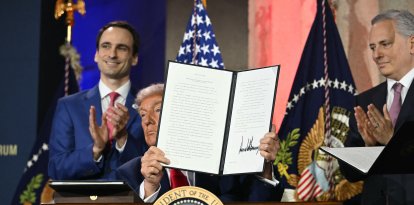
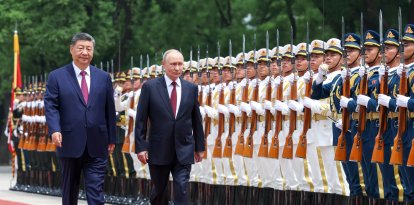
That the atomic weapon has returned as an instigator of fear and, therefore, usable to dissuade the opponent, is evident. Since the invasion of Crimea in 2014, Putin has repeatedly reminded NATO members that Russia is a nuclear power and does not renounce the use of its atomic weaponry to achieve its military and political objectives. The latest episode of this growing recourse — for now rhetorical — to nuclear weapons came from former prime minister, former president, and current head of Russia’s security council, Dmitri Medvedev, who affirmed that Russia does not feel constrained by the non-use of tactical and short-range nuclear weapons. This is not the first time he has uttered apocalyptic threats, and although he is fond of verbal excesses, it should not be downplayed. As early as 2023, Western intelligence services warned of the possibility of Russia using tactical nuclear weapons on Ukrainian soil to prevent what looked like a catastrophic defeat at the time. The fact that President Donald Trump has authorized the deployment of two nuclear missile submarines in undetermined areas, presumably within Russia’s range, underscores the need to take such threats seriously.
Thus, a first lesson from Ukraine would be that a nuclear power can afford to launch aggression against a non-nuclear country in the confidence that its aggression will meet a reaction that the fear of nuclear escalation is going to make it very limited.
Of course, such "extended" nuclear deterrence beyond the invaded—in this case, Ukraine—has worked. Both Joe Biden’s United States and its NATO allies carefully considered what assistance to give Kiev, then limited the scope of material supplied to Ukrainian forces, and have been very cautious not to cross that ambiguous non-co-belligerent threshold to which Kiev has always wanted to push them. And although the logic of war has eroded many of the limits self-imposed by NATO allies, the fear of atomic apocalypse continues to act as a brake.
Secondly, a new reflection is needed on the role of the atomic arsenal: conventional deterrence has historically tended to fail, and the only guarantee of avoiding a new war with Russia in Europe—something many see as inevitable—is to rely on nuclear deterrence. But at a time when the Western bloc is fracturing and under constant stress over whether Washington would risk total destruction to defend Tallinn, or whether Paris would commit suicide by responding to an attack on Berlin, the idea that deterrence is not shared—or is poorly shared—and that it would be better to have one’s own arsenal is gaining ground. This is already being openly discussed in Germany and, outside Europe, even in countries as averse to atomic weapons as Japan.
Moreover, in a world where the Western order that emerged from World War II is in question and where the so-called Global South aspires to have greater weight in global affairs, the lessons of Ukraine also point to a greater temptation to go nuclear. The case of Colonel Gaddafi’s Libya has not gone unnoticed: as soon as it renounced its atomic program, its regime became existentially vulnerable.
And the more proliferation there is in the South—from Brazil to Algeria, Turkey, and Saudi Arabia—the greater the incentive for some Europeans to jump into the race.
Here appears another strategically relevant factor: when a regime is convinced it needs the atomic weapon, the only effective way to make it give up its nuclear ambitions is through the use of force. Diplomatic efforts, economic sanctions, and all kinds of covert actions only succeed in slowing down the timetable of its nuclearization, not in achieving its renunciation.
We have seen this abundantly clear in the case of Iran. Decades of diplomatic efforts to prevent its march to the bomb ended with Tehran accelerating its latest efforts and obtaining its first bomb in a matter of weeks. Something neither Israel nor Trump's United States could afford—actually, something the international community as a whole could not afford. Neither the UN, nor the Europeans, nor international sanctions managed to convince the Iranian leadership. Only Operation Rising Lion, culminating with the American operation Midnight Hammer, managed to shatter Iran's clandestine nuclear program.
Therefore, it is not unreasonable to say that because of the vicissitudes of the war in Ukraine, we are entering a new stage in the history of nuclear proliferation where, clearly, the security provisions instituted in the NPT of 1968 are considered obsolete, if not counterproductive, to national security.
Now, with all the advantages that atomic weapons apparently entail in the field of deterrence (there has been no atomic use since 1945), two facts should also be underlined: first, they cannot and should not replace conventional armies because, as we are seeing in Ukraine, it is possible to fight intensively without provoking the feared atomic escalation. Moreover, when one is convinced that there will be no atomic first use by the aggressor, even a country without nuclear weapons can risk attacking another that does have them, as happened in April last year and in June this year with Iran, launching hundreds of missiles directly against Israel.
The second strategic warning is this: operating in a bipolar order is very different from one where atomic powers number in the dozens. The risk of errors in perception and miscommunication among stakeholders rises exponentially. No one really knows how to manage a situation where everyone is eyeing each other warily, fingers hovering over the trigger just in case. It’s easy to imagine such a world existing permanently on the edge of the abyss.
In conclusion, on the 80th anniversary of Hiroshima and Nagasaki, the atomic weapon has returned—for better and for worse. As always, it depends on who wields them. The weapons may be loaded by the Devil, but it is the finger of man that pulls the trigger. In this case, he presses the button. Guns do not fire by themselves. At least, not yet.
LATEST