Researchers develop AI capable of predicting cancer survival based on facial photograph
U.S. researchers trained a system using more than 40 million facial images to calculate indicators of aging and mortality risk in cancer patients. The technology could help doctors personalize treatments.
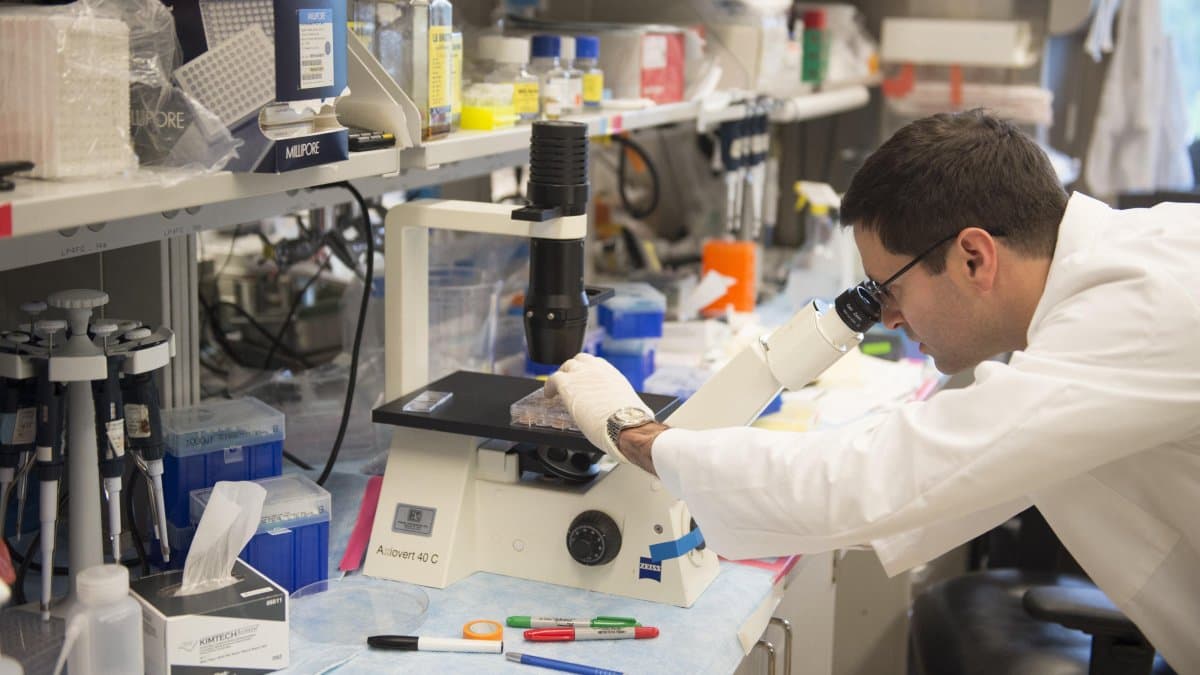

A team of American researchers developed an artificial intelligence (A.I.) system capable of analyzing a simple photograph of a face to estimate a person's biological age and predict their risk of mortality when suffering from cancer.
The breakthrough, developed by scientists at Mass General Brigham—one of the leading hospital and medical research systems in the United States—was presented in a study published in the scientific journal The Lancet Digital Health.
The tool, called FAHR-Face, was trained using more than 40 million facial images and aims to provide specialists with new indicators for assessing patients' physical condition before subjecting them to intensive treatments, such as surgery, radiation therapy, or systemic therapies.
The system operates using two complementary algorithms. The first, FAHR-FaceAge, estimates biological age based on facial characteristics, while the second, FAHR-FaceSurvival, analyzes facial cues associated with the survival of patients diagnosed with cancer.
Unlike chronological age, which reflects the number of years since birth, biological age seeks to describe the body's state of aging, which is influenced by genetic and environmental factors as well as lifestyle habits.

Health
Melania Trump promotes new women's health initiatives on World Breast Cancer Day
Diane Hernández
What can a photograph reveal?
The researchers discovered that certain facial features provide information related to health status and survival prognosis.
The algorithm that estimates biological age primarily analyzes the wrinkles that form between the nose and mouth, on the forehead, and at the temples. Meanwhile, the model designed to calculate mortality risk focuses on the areas below the eyes and around the bridge of the nose.
The results showed that the difference between the age estimated by the A.I. and the patient's actual age was associated with their survival.
Furthermore, by combining both algorithms, the scientists were able to improve the accuracy of survival predictions in an independent group of cancer patients used to validate the system.
According to Hugo Aerts, director of the Artificial Intelligence in Medicine program at Mass General Brigham and one of the study's lead authors, this is a pioneering demonstration that an A.I. model can directly estimate cancer survival prognosis using only a facial photograph.
A tool for personalizing treatment
Currently, doctors use various clinical assessments to make these decisions, but the new technology could provide complementary information.
Raymond Mak, a radiation oncologist at Mass General Brigham and author of the study, explained that the goal is to develop more accurate and consistent methods for assessing patients' physical reserve before recommending intensive interventions.
The research also found that the model's results remained relatively stable despite differences in lighting, facial expressions, makeup and facial position.
Even after analyzing photographs of people who had undergone certain cosmetic surgeries, the system showed limited variations, although the researchers identified small changes in the estimates following rhinoplasty.
Smoking also leaves traces detectable by A.I.
The study identified associations between certain lifestyle habits and estimates of facial aging.
Among the factors examined were excessive alcohol consumption, drug use and smoking.
The researchers observed that current smokers tended to have a higher facial biological age than former smokers, while the latter had higher estimates than those who had never smoked.
The results suggest that automated facial analysis could provide information on certain factors related to aging and overall health.
When might it be used in hospitals?
Although the results are promising, the technology still requires further research and validation before it can be widely incorporated into clinical practice.
The system does not diagnose cancer based on a photograph, nor does it determine on its own what treatment each patient should receive. Its potential utility lies in complementing available medical information to estimate risks and guide treatment decisions.
Scientists are also seeking to verify its accuracy in larger and more diverse populations.
As part of that process, Mass General Brigham launched the FaceAge Research Study, a study open to volunteers who can provide photographs to help refine and validate the algorithms.
This development represents a new advance in the application of artificial intelligence to personalized medicine, especially in a field such as oncology, where a better understanding of each patient's physical condition and prognosis can be decisive in choosing the most appropriate treatment.
🛠 Do you think there is an error in this article?
Recommendations





LATEST